
Spray Foam vs. Traditional Insulation: Which Is Best for Seattle Homes?
Spray foam insulation offers superior moisture resistance and air-sealing properties that make it ideal for Seattle’s rainy climate, while traditional insulations like fiberglass and cellulose provide more budget-friendly options with simpler installation. The best choice depends on your specific needs—spray foam excels in preventing moisture problems and reducing energy costs in the long run, while traditional options cost less upfront and work well in less moisture-prone areas of your home.
Seattle’s unique climate demands insulation that can handle persistent moisture and temperature fluctuations. Spray foam creates an airtight seal that prevents moisture infiltration, while fiberglass and cellulose require proper vapor barriers to perform effectively in our damp environment.
Comparing Insulation Types for Seattle Homes
|
Feature |
Spray Foam |
Fiberglass |
Cellulose |
|---|---|---|---|
|
R-value per inch |
3.7-6.5 |
2.2-4.3 |
3.1-3.8 |
|
Moisture resistance |
Excellent |
Poor-Fair |
Fair |
|
Air sealing |
Excellent |
Poor |
Fair |
|
Lifespan |
50+ years |
15-20 years |
20-30 years |
|
Installation complexity |
High (professional only) |
Moderate |
Moderate |
|
Initial cost |
$1.50-$3.50 per sq ft |
$0.40-$1.20 per sq ft |
$0.60-$1.80 per sq ft |
|
Installation time |
1-2 days |
1 day |
1 day |
|
Noise reduction |
Excellent |
Good |
Very good |
|
Environmental impact |
Mixed (high GWP but energy savings) |
Moderate |
Low (recycled materials) |
How Seattle’s Climate Affects Insulation Performance
Seattle’s combination of rain, humidity, and moderate temperatures creates unique challenges for home insulation. The city averages 152 rainy days per year, with relative humidity often exceeding 70%. This persistent moisture makes proper insulation crucial for preventing mold growth and structural damage.
Spray foam creates a water-resistant barrier that blocks moisture intrusion—a significant advantage in our climate. Unlike traditional insulation, it doesn’t sag or lose effectiveness when exposed to humidity. This property makes spray foam particularly valuable for crawl spaces, attics, and exterior walls where moisture infiltration is common in Seattle homes.
Traditional insulation can work effectively in Seattle when properly installed with vapor barriers, but requires more attention to prevent moisture problems. Recent data shows homes with spray foam insulation in Seattle save an average of 15-20% on heating costs compared to those with traditional insulation due to superior air sealing.
Bonus Tip: For Seattle homes with existing moisture issues, installing spray foam can help resolve these problems by eliminating air leaks that contribute to condensation.
Technical Specifications of Insulation Options
|
Specification |
Open-Cell Spray Foam |
Closed-Cell Spray Foam |
Fiberglass Batts |
Blown Fiberglass |
Cellulose |
|---|---|---|---|---|---|
|
Density (lb/ft³) |
0.5-0.8 |
1.7-2.2 |
0.5-1.0 |
0.5-1.0 |
2.2-3.5 |
|
Water vapor permeability |
16-22 perms |
0.8-1.5 perms |
50+ perms |
50+ perms |
5-10 perms |
|
Air leakage rating |
0.004-0.005 L/s/m² |
0.001-0.003 L/s/m² |
0.4-0.65 L/s/m² |
0.3-0.5 L/s/m² |
0.2-0.3 L/s/m² |
|
Soundproofing (STC) |
37-43 |
35-39 |
25-30 |
25-30 |
30-36 |
|
Fire resistance |
Fair (Class I with fire retardants) |
Good (Class I) |
Good (Class A) |
Good (Class A) |
Good (Class I with fire retardants) |
|
VOC emissions |
Initial high, then low |
Initial high, then low |
Low |
Low |
Very low |
Best Applications for Different Insulation Types in Seattle Homes
Understanding where each insulation type performs best helps Seattle homeowners make targeted decisions for their specific needs.
Spray Foam Insulation: Ideal Applications
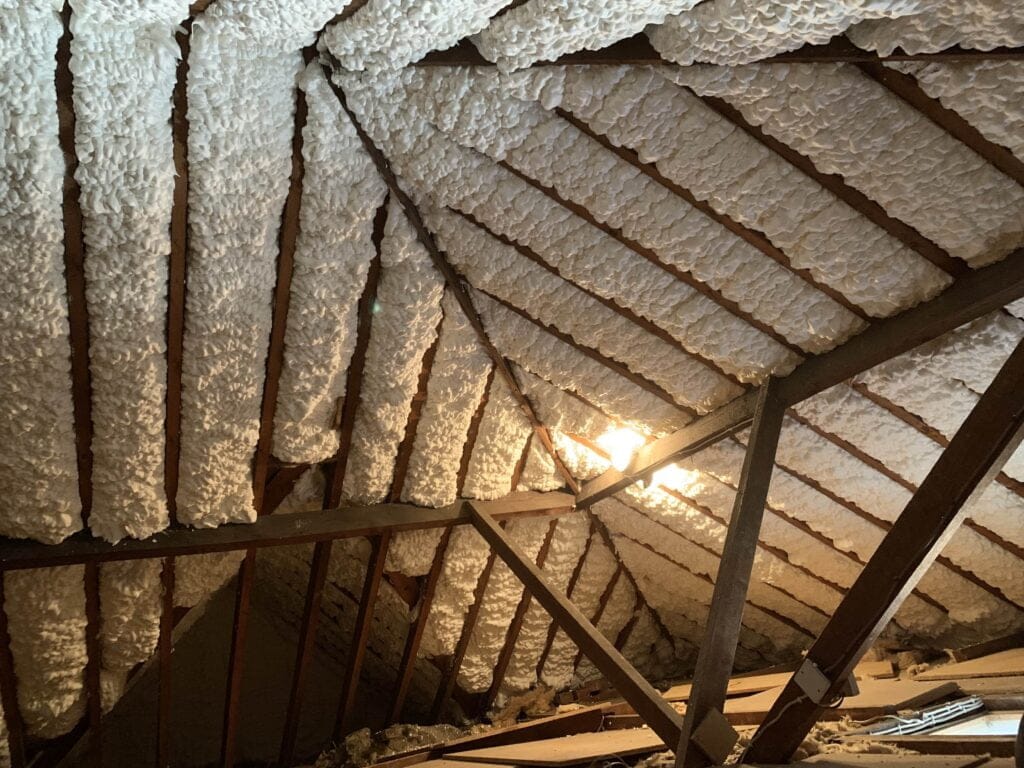
Spray foam works exceptionally well in areas vulnerable to moisture infiltration, making it perfect for:
- Crawl spaces and basements where moisture control is crucial
- Attics, especially those with complex shapes or many penetrations
- Rim joists and other hard-to-insulate areas
- Homes near bodies of water like Lake Washington or Puget Sound
- Older Seattle homes with significant air leakage issues
The airtight seal created by spray foam prevents warm, moist indoor air from contacting cold surfaces, dramatically reducing condensation risk—a common problem in Seattle’s climate.
Traditional Insulation: Ideal Applications
Fiberglass and cellulose remain practical options for:
- Interior walls where moisture control is less critical
- Budget-conscious projects with simple installation requirements
- DIY installations by homeowners
- Homes in Seattle’s less rainy microclimates
- Retrofit projects where removing existing walls isn’t practical
Bonus Tip: Consider a hybrid approach—use spray foam in moisture-prone areas and traditional insulation elsewhere to balance performance and cost.
Installation Process and Considerations
The installation process differs significantly between spray foam and traditional insulation, affecting both timeline and disruption to your home.
Spray Foam Insulation
Spray foam requires professional installation with specialized equipment and safety measures. The process typically includes:
- Preparation of the area (removing old insulation, cleaning surfaces)
- Protection of non-target surfaces with plastic sheeting
- Mixing and application of the foam using specialized equipment
- Curing time of 24-48 hours (ventilation required during this period)
- Trimming of excess foam and cleanup
Most Seattle homes can be completely insulated with spray foam in 1-2 days, though residents may need to vacate during application and initial curing due to fumes.
Traditional Insulation Installation
Fiberglass and cellulose insulation is typically simpler:
- Measuring and cutting batts to fit (for fiberglass batts)
- Installing vapor barriers where needed
- Placing or blowing in the insulation material
- Ensuring complete coverage with no gaps
- Minimal cleanup required
Traditional insulation can often be installed in a single day with less disruption to household activities.
Things to Consider Before Making a Decision
Before choosing between spray foam and traditional insulation for your Seattle home, consider these crucial factors:
Budget Considerations
While spray foam costs 2-3 times more upfront than traditional options, it provides energy savings that typically recoup the investment over 5-7 years. Seattle homeowners should consider both immediate costs and long-term savings.
Home Characteristics
The age, construction type, and current moisture issues of your Seattle home affect which insulation will perform best. Older homes with irregular framing often benefit more from spray foam’s ability to fill unusual spaces.
Climate Resilience
With climate models predicting increased rainfall in the Pacific Northwest, investing in moisture-resistant insulation may provide long-term protection against changing weather patterns.
Environmental Concerns
While spray foam creates an energy-efficient home, some formulations contain high global warming potential (GWP) blowing agents. Cellulose, made from recycled paper, offers the lowest environmental impact but less moisture protection.
Local Rebates and Incentives
Seattle City Light and Puget Sound Energy offer rebates for energy-efficient insulation upgrades. These incentives can significantly reduce the cost difference between spray foam and traditional options.
Common Questions About Insulation in Seattle
Seattle homeowners often have specific concerns about insulation performance in our unique climate:
- Will traditional insulation develop mold in Seattle’s damp climate? With proper vapor barriers and ventilation, traditional insulation can resist mold growth, but spray foam provides superior moisture protection.
- How long will different insulation types last in Seattle? Spray foam typically lasts 50+ years without degradation, while fiberglass and cellulose may need replacement or supplementation after 15-30 years in Seattle’s climate.
- Can I install insulation myself to save money? Traditional insulation can be DIY-friendly, while spray foam requires professional installation due to specialized equipment and safety requirements.
Frequently Asked Questions
How much can I save on energy bills with spray foam versus traditional insulation in Seattle?
Seattle homes with spray foam insulation typically save 15-25% on heating costs compared to those with traditional insulation. The exact savings depend on your home’s size, existing insulation, and energy usage patterns.
Is spray foam insulation worth the higher cost for Seattle homes?
For most Seattle homes, spray foam’s superior moisture resistance and air-sealing properties justify the higher upfront cost, especially in moisture-prone areas like crawl spaces and attics. The investment typically pays off through energy savings, moisture protection, and longer lifespan.
Can I install spray foam over existing insulation?
In most cases, existing insulation should be removed before applying spray foam to ensure proper adhesion and performance. This adds to the installation cost but provides better long-term results.
How does insulation affect indoor air quality in Seattle homes?
Properly installed spray foam creates an air barrier that can improve indoor air quality by preventing outside pollutants from entering. However, inadequate ventilation with any insulation type can trap indoor pollutants and moisture, so balanced ventilation systems are recommended.
What’s the best insulation approach for a Seattle home renovation on a limited budget?
Consider a hybrid approach—use spray foam in the most moisture-vulnerable areas (crawl spaces, attics) and traditional insulation elsewhere. This strategic allocation maximizes moisture protection where it’s most needed while keeping costs manageable.
Making the Right Choice for Your Seattle Home
The ideal insulation choice for your Seattle home depends on your specific priorities, budget, and your home’s unique characteristics. Spray foam offers superior performance in moisture resistance and energy efficiency, making it particularly well-suited to Seattle’s damp climate. Traditional insulation provides more affordable options that work well when properly installed with appropriate moisture management.
For optimal results, many Seattle homeowners choose a targeted approach—using spray foam in areas most vulnerable to moisture and traditional insulation in drier, less critical areas. This balanced strategy provides effective climate protection while managing installation costs.
Whichever insulation you choose, proper installation remains crucial for performance. Working with experienced professionals familiar with Seattle’s specific climate challenges ensures your insulation will effectively protect your home for years to come.
Ready to Upgrade Your Seattle Home’s Insulation?
The right insulation makes all the difference in your home’s comfort, energy efficiency, and long-term protection against Seattle’s damp climate. Whether you choose spray foam for maximum moisture resistance or traditional insulation for its cost-effectiveness, taking action now will improve your home’s performance for years to come.
For expert guidance on choosing and installing the best insulation for your specific Seattle home, contact Cascadia Spray Foam of Seattle at (425) 386-3500 or [email protected].

Reviewer:
Olivia Thompson has spent 10 years working in spray foam insulation, helping companies grow their visibility. She reviewed this article and provided valuable suggestions on how to better align the content with the needs and expectations of customers, ensuring it resonates with the target audience.