
5 Ways Spray Foam Insulation Makes Homes Comfortable and Efficient
Spray foam insulation dramatically improves a home’s comfort and efficiency by performing as two products in one: a high-performance insulator and a superior air barrier. This dual function is the key to its effectiveness. It works by not only slowing the transfer of heat but also by stopping the air leaks that are the primary source of energy waste and discomfort in most homes. The five key benefits that result from this are a complete air seal that eliminates drafts, high thermal performance that maintains steady temperatures, improved air quality through moisture control, a quieter indoor environment, and long-term durability that ensures performance for decades.
This article will explore each of these five benefits in detail, explaining how they contribute to a home that feels better to live in and costs less to operate. The information is based on years of real-world application, reflecting what homeowners consistently find to be the most valuable outcomes of a professional spray foam insulation upgrade.
1. It Creates a Complete Air Seal
The single biggest advantage of spray foam is its ability to stop air leakage. In a typical home, countless small gaps and cracks around windows, framing, and electrical outlets allow conditioned air to escape and outside air to get in. This uncontrolled air exchange is a major source of energy loss and is the reason many homes have annoying drafts or rooms that are hard to keep comfortable.
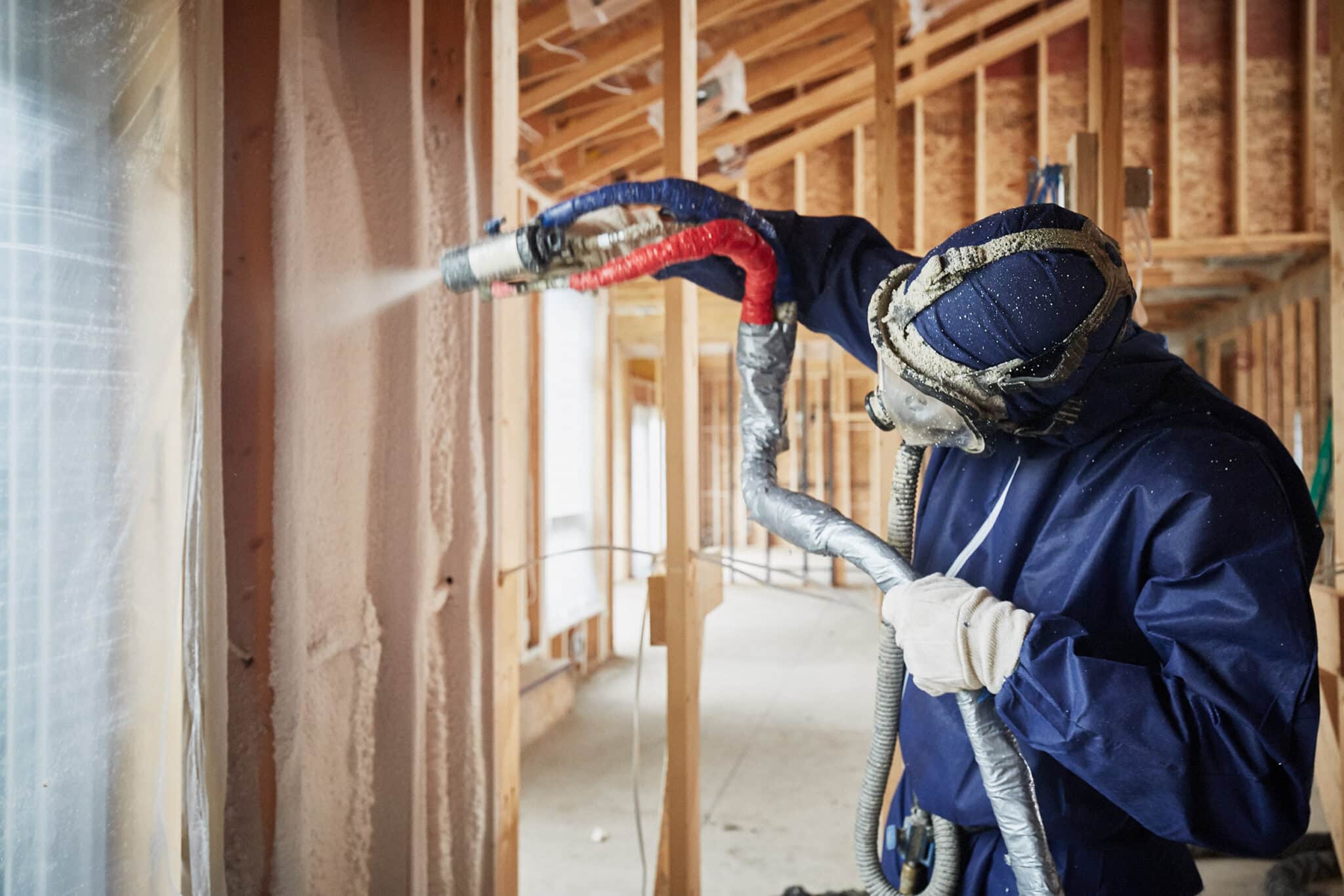
When spray foam is applied, it expands to fill every one of these gaps, creating a single, continuous air barrier.
- Eliminates Drafts: By sealing the building envelope, it stops the cold drafts that make a home feel chilly in the winter.
- Keeps Conditioned Air In: It prevents the expensive cooled or heated air from leaking out, which is a common problem with traditional insulation types that don’t stop airflow.
- Improves HVAC Performance: A sealed home allows the HVAC system to work more effectively, as it’s no longer fighting a constant battle against incoming outside air.
2. It Delivers High Thermal Performance
Beyond stopping air leaks, spray foam is also an excellent insulator. Its ability to resist the flow of heat is measured by its R-value, and closed-cell spray foam, in particular, has one of the highest R-values per inch of any common insulation material.
This high thermal resistance, combined with its air-sealing properties, makes it extremely effective at maintaining stable indoor temperatures year-round. In a hot climate, it dramatically slows the movement of oppressive summer heat through the roof and walls into the house. In the winter, it keeps the valuable heat from the furnace inside. This thermal stability means the HVAC system runs less often and for shorter periods, which is the primary driver of energy savings.
3. It Manages Moisture and Improves Air Quality
A comfortable home is also a healthy one, and spray foam contributes to this by managing moisture and blocking outdoor pollutants. Closed-cell spray foam is a vapor barrier, meaning it resists the passage of moisture. When applied in crawl spaces or on foundation walls, it prevents ground moisture from entering the home, which is a leading cause of mold, mildew, and musty odors.
By creating an airtight seal, spray foam also prevents outdoor allergens like dust, pollen, and other pollutants from infiltrating the living space.
- Reduces Mold Risk: By stopping moisture, it eliminates a key ingredient needed for mold growth within the building structure.
- Cleaner Indoor Air: It physically blocks airborne irritants, which can provide significant relief for people with allergies or asthma.
- Prevents Pest Intrusion: The seal also blocks the small entry points used by insects and rodents.
4. It Creates a Quieter Home
Comfort isn’t just about temperature; it’s also about creating a peaceful environment. Open-cell spray foam is an exceptional sound-dampening material. Its soft, spongy structure absorbs sound waves, preventing them from traveling through walls and floors.
This acoustic insulation can make a noticeable difference in a home’s atmosphere. It can muffle the sound of outside traffic, noisy neighbors, or even the noise from plumbing pipes running inside the walls. Using open-cell foam in interior walls between a home office and a living area, or between floors, can create separate, quiet zones within the house, adding another layer of comfort to daily life.
Bonus Tip: In homes with HVAC systems in the attic, applying spray foam to the roof deck not only improves efficiency but also reduces the noise of the air handler running, which can be disruptive to rooms below.
5. It Provides a Durable, Long-Term Solution
Spray foam is a permanent home improvement. Unlike traditional insulation like fiberglass, which can sag and lose contact with framing over time, or cellulose, which can settle, spray foam is a rigid material that does not degrade. It adheres to the structure and stays in place, maintaining its R-value and air-sealing properties for the life of the building.
This means the comfort and efficiency gains are not temporary. A home insulated with spray foam will perform just as well in 30 years as it does on day one. This eliminates the need for future re-insulating projects and provides consistent, reliable performance. Closed-cell foam even adds structural strength to the building assembly, making the home more resilient.
How Spray Foam’s Benefits Compare
|
Benefit |
Spray Foam Performance |
Traditional Insulation Performance |
|---|---|---|
|
Air Sealing |
Excellent (creates a continuous air barrier) |
Poor (allows air to pass through) |
|
Thermal Control |
Excellent (high R-value plus air sealing) |
Good (R-value is compromised by air leaks) |
|
Moisture & Air Quality |
Excellent (closed-cell is a vapor barrier) |
Poor (can trap moisture and allow pollutants in) |
|
Sound Dampening |
Good to Excellent (open-cell is superior) |
Fair (provides some sound reduction) |
|
Long-Term Durability |
Excellent (does not sag, settle, or degrade) |
Fair (can sag or settle, losing effectiveness) |
Things to Consider Before Making a Decision
To get the best results from spray foam, homeowners should keep a few key things in mind.

The Importance of Professional Installation
This is not a DIY product. Its performance and safety are entirely dependent on being mixed and applied correctly by a certified professional. An experienced installer will also manage the necessary safety protocols, including proper ventilation.
The Upfront Investment
Spray foam has a higher initial cost than other insulation types. It’s best to view this as a long-term investment that provides a return through energy savings and improved home value.
Home Ventilation Needs
Because spray foam makes a home very airtight, it’s important to have a plan for mechanical ventilation. This ensures a steady supply of fresh air, which is essential for a healthy indoor environment. This can be as simple as using bathroom and kitchen exhaust fans, or it could involve a whole-house ventilation system.
Questions People Ask About Spray Foam
Is spray foam insulation worth the money?
For many homeowners, the long-term energy savings, combined with the significant improvements in comfort and air quality, make it a worthwhile investment. The typical payback period is often between 3 and 7 years.
Can spray foam be installed in an existing house?
Yes. It is a very common retrofit application. Installers can work in open areas like attics and crawl spaces, and they can inject foam into closed walls through small, easily patched holes.
What is the difference between open-cell and closed-cell foam?
Open-cell foam is soft, spongy, and an excellent sound absorber. Closed-cell foam is dense, rigid, has a higher R-value, and acts as a moisture barrier. A professional will recommend the right type for the right location.
Does spray foam have a chemical smell?
During the installation, there is a distinct smell, which is why the home must be vacated. Once the foam is fully cured (usually within 24 hours), it becomes an inert, odorless plastic.
How much can I really save on my energy bills?
Savings vary based on the home, climate, and lifestyle, but many homeowners report reductions in their heating and cooling costs of up to 40% or even more after a comprehensive spray foam installation.
A Complete Solution for Home Performance
Spray foam insulation offers a complete package of benefits that work together to make a home more comfortable and efficient. By addressing the root causes of energy loss and discomfort, it provides a powerful, long-lasting solution that improves a home’s performance from the day it’s installed.
Getting a Professional Evaluation
To understand how spray foam could benefit your specific home, the best first step is a professional assessment. An experienced contractor can identify areas of energy loss and recommend the most effective solutions. For homeowners in the Fresno area, a company like Supreme Spray Foam – Fresno can provide a detailed consultation. Their team is available to discuss your home’s needs and can be reached at (559) 545-0800 or by email at [email protected].
Reviewer: Emma Robinson contributed her knowledge from 8 years working with the spray foam industry. Her review helped shape this content with ideas grounded in what contractors and homeowners actually value.