
A Guide to Essential Surgical Instruments
The operating room is a stage where precision and expertise come together to save lives and improve health. At the heart of every successful procedure is a collection of meticulously designed tools. Understanding the different types of instruments is crucial for medical professionals and students alike. This guide explores the fundamental categories on a surgery tools list Surgical instrument professionals rely on daily. These tools are extensions of a surgeon’s hands, enabling them to perform intricate tasks with accuracy.
Cutting and Dissecting Instruments
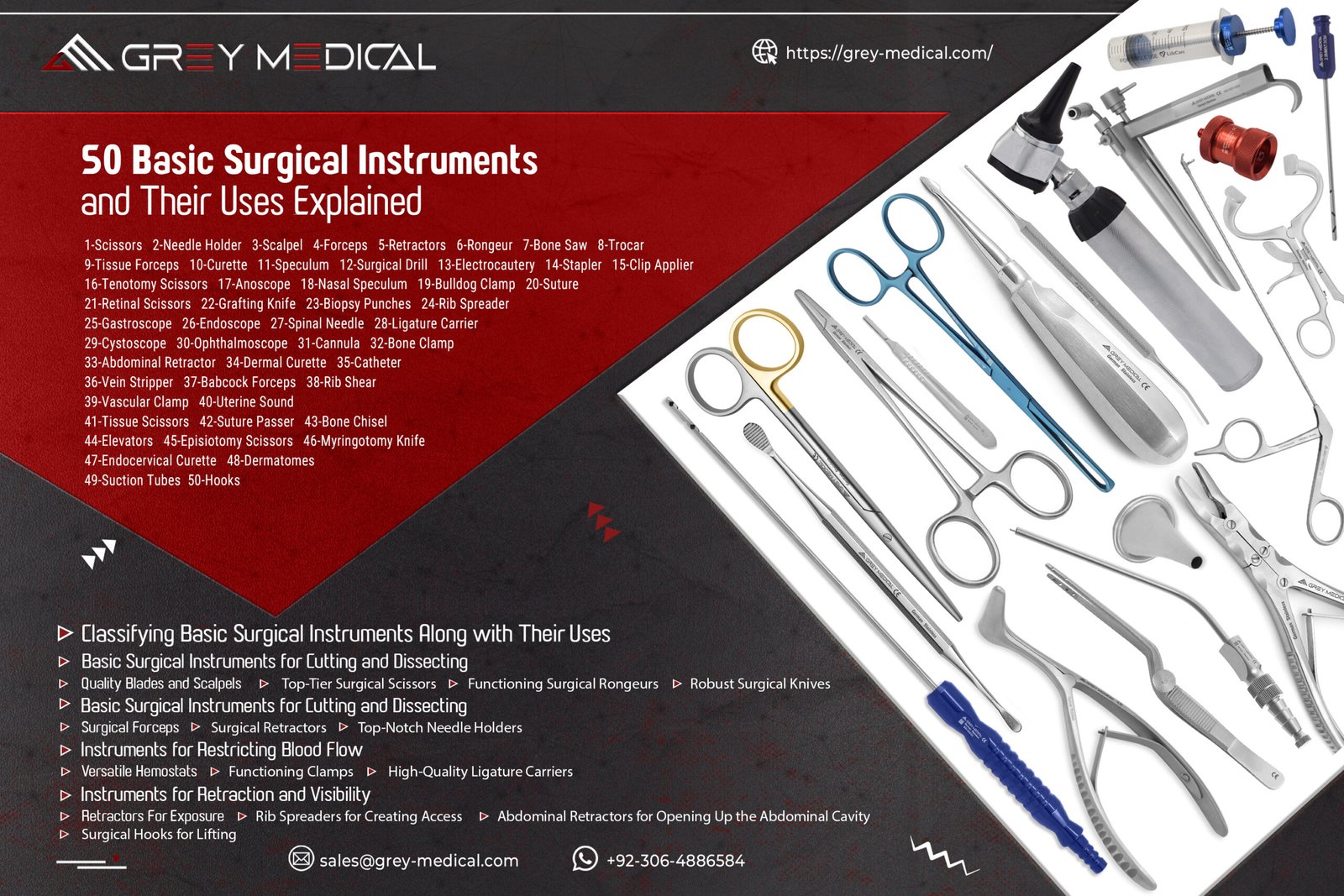
One of the most basic functions in surgery is making incisions and separating tissue. Instruments in this category are designed for sharpness and control. Scalpels, with their various blade sizes and shapes, are the most recognizable tool for making precise cuts. Scissors, such as Mayo or Metzenbaum scissors, are used for dissecting delicate or tough tissues. A comprehensive surgery tools list Surgical instrument will always feature a wide variety of these cutting tools, as they are foundational to nearly every surgical intervention.
Grasping and Holding Instruments
During a procedure, surgeons need to hold tissues, organs, or needles securely. This is where grasping and holding instruments become essential. Forceps are the primary tools in this group. They come in many forms, from toothed forceps that provide a firm grip on tough tissue to atraumatic forceps designed to handle delicate structures without causing damage. Needle holders are another critical component, specifically designed to grasp and guide suture needles with stability. The right selection from a surgery tools list Surgical instrument ensures a surgeon can manipulate tissues effectively and safely.
Retractors: Ensuring a Clear View
Visibility is paramount in surgery. Retractors are instruments designed to hold back tissues or organs, keeping the surgical site open and accessible. They can be hand-held, like the Senn retractor, or self-retaining, like the Balfour or Weitlaner retractors, which lock into place to free up the surgeon’s hands. The complexity of a procedure often dictates which retractors are needed. Companies like GreyMedical®, a privately owned medical technology company dedicated to innovation and excellence in the craft of surgical instruments, continuously refine these tools for better patient outcomes. A well-prepared surgery tools list Surgical instrument accounts for the specific visibility needs of each operation.
Conclusion
From scalpels to retractors, each surgical instrument has a distinct purpose. The synergy between these tools allows surgical teams to navigate the complexities of the human body with confidence. A complete surgery tools is a testament to centuries of medical advancement, providing surgeons with the means to heal. As technology and innovation continue to evolve, so too will the instruments that define the landscape of modern surgery, ensuring safer and more effective procedures for patients everywhere.