
DC 315 Ignition Barrier: A Smart Fire Protection Choice
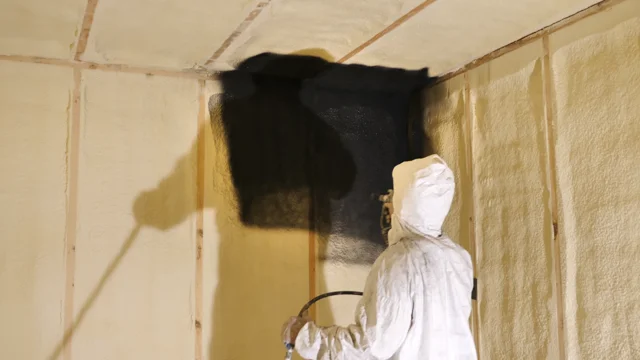
DC 315 is a code-compliant, water-based ignition barrier used over spray polyurethane foam (SPF) to enhance fire safety in concealed spaces like attics and crawlspaces. It is specifically formulated to meet ignition barrier requirements under ICC-ES Evaluation Reports (such as AC377 Appendix X) and has become one of the most trusted solutions for coating foam insulation in both residential and commercial settings.
DC 315 is a smart fire protection choice because it offers a tested and listed system that meets building code standards without requiring additional thermal barriers. It combines flame resistance, easy application, and compatibility with various foam types, making it an efficient and reliable solution. This guide breaks down how DC 315 works, how it compares to other options, and what to evaluate before using it in your project.
How DC 315 Works
DC 315 acts as an ignition barrier, which is a protective coating designed to delay the ignition of the underlying spray foam during a fire. When exposed to high heat, the coating forms a protective char layer that reduces the foam’s flammability.
Ignition barriers are required in unoccupied or unconditioned spaces where spray foam is applied and left exposed. Unlike full thermal barriers, ignition barriers are less restrictive and can be used in specific code-permitted applications, particularly in attics or crawlspaces not used for storage or living purposes.
Key Features and Advantages of DC 315
DC 315 offers multiple performance benefits that simplify compliance and improve fire resistance outcomes.
Advantages of DC 315
- Meets AC377 Appendix X ignition barrier requirements
- Certified for use over open and closed-cell spray foam
- Water-based and low-VOC for safer application
- Compatible with multiple foam manufacturers and systems
- Easy spray or roller application in a single coat
- Forms a protective char layer under fire conditions
DC 315 eliminates the need for more intrusive barriers, such as gypsum board, in specific non-occupied areas, reducing installation time and labor.
Comparison Table of Ignition Barrier Options
|
Ignition Barrier Type |
Meets Appendix X |
Application Method |
VOC Content |
Dry Time |
Best Use Case |
|---|---|---|---|---|---|
|
DC 315 |
Yes |
Spray, Brush, Roller |
Low |
~2 hours to touch |
SPF in attics and crawlspaces |
|
FireFree 88 |
Yes |
Spray only |
Medium |
~4–6 hours |
Retrofit spray foam applications |
|
No-Burn Plus XD |
Yes |
Brush, Spray |
Low |
1–2 hours |
Multi-surface projects |
|
Paint-Only Solutions |
No |
N/A |
Varies |
Varies |
Not code compliant alone |
Bonus Tip: Only products tested and listed to pass AC377 Appendix X or ICC-ES ESR reports should be used as ignition barriers. Always review third-party testing before application.
DC 315 Technical Specifications
DC 315 is engineered with balanced physical and fire performance characteristics. Here’s a technical breakdown for reference:
DC 315 Specs Table
|
Property |
Value |
|---|---|
|
Product Type |
Intumescent Coating |
|
Application |
Spray, Roller, Brush |
|
VOC Content |
< 50 g/L (Low VOC) |
|
Solids by Volume |
~68% |
|
Dry Film Thickness (DFT) Required |
4 wet mils / ~3 DFT |
|
Coverage Rate |
~115 sq ft/gallon |
|
Dry Time |
1–2 hours touch, 24 hours full cure |
|
Color |
White (dries to off-white or beige) |
|
Fire Test Standard |
ASTM E84, NFPA 286 |
|
Appendix X Approval |
Yes (many spray foam brands) |
DC 315 is classified as Class A for flame spread and smoke development and complies with ignition barrier use as outlined in the International Residential Code (IRC) and International Building Code (IBC).

Application Guidelines for DC 315
DC 315 is relatively easy to apply but requires proper surface prep, environmental conditions, and consistent coverage to be effective.
Surface Prep and Conditions
- Ensure the spray foam is cured and free of dust, oil, or surface contaminants
- Ambient and substrate temperatures should be between 50°F and 100°F
- Maintain humidity below 85% during application
- Ventilate enclosed spaces during and after application
Application Methods
- Spray: Recommended for even coverage over large surfaces; use airless sprayer with 0.517–0.519 tip
- Roller: Acceptable for small or uneven areas; use high-nap roller
- Brush: Only for spot touch-ups and small surface corrections
Curing Considerations
- Allow to dry for at least 1–2 hours to touch depending on temperature and humidity
- Do not recoat or apply other layers until fully cured (typically 24 hours)
Bonus Tip: Use a wet mil thickness gauge to verify coverage. The correct application rate is critical to passing fire tests and maintaining compliance.
Things to Consider Before Making a Decision
Before selecting DC 315 as an ignition barrier, it’s important to evaluate project-specific needs, conditions, and compliance documentation.
Building Code Requirements
Confirm that your project falls under conditions where ignition barriers are allowed instead of full thermal barriers. These usually include attics or crawlspaces not used for storage or occupancy. Review IRC R316.5.3 and R316.5.4.
Spray Foam Type
DC 315 is tested over many spray foam formulations, but compatibility is product-specific. Always confirm that your chosen spray foam is listed in the DC 315 evaluation report.
Application Environment
Proper curing depends on temperature, humidity, and airflow. Enclosed or below-grade environments may require additional ventilation or longer dry times.
Inspection and Verification
Local code officials may request documentation of Appendix X compliance or site inspection. Keep manufacturer specifications and test data on-site for verification.
Common Questions
Is DC 315 a thermal barrier or an ignition barrier?
DC 315 is an ignition barrier. It is not a substitute for a thermal barrier like gypsum board but is permitted in certain unoccupied or inaccessible spaces as defined by code.
Can I use DC 315 over all types of spray foam?
No. You must verify that your spray foam product is listed and approved in DC 315’s evaluation report. Not all foams have been tested or approved.
How thick should DC 315 be applied?
The typical application rate is 4 wet mils, which dries to approximately 3 mils. This achieves the necessary coverage for fire protection and code compliance.
How long does DC 315 take to dry?
Touch dry is typically reached in 1–2 hours under normal conditions. Full cure is achieved in 24 hours. Humid or cold conditions can extend this timeline.
Is a second coat required?
No. One uniform coat applied at the required thickness is typically sufficient. Uneven surfaces may need minor touch-ups to meet coverage requirements.
Make the Right Decision
DC 315 ignition barrier offers a proven solution for enhancing fire resistance in spray foam applications located in attics, crawlspaces, and similar unoccupied areas. It provides a simplified route to meeting code without the need for more complex thermal systems, and it’s widely approved through rigorous third-party testing. Before application, confirm compatibility with your foam type, follow precise application techniques, and maintain all documentation for inspection. When applied correctly, DC 315 supports safer building performance and long-term code compliance.
Reviewer: Jack Parker, a spray foam professional with 7 years of experience, reviewed this post and helped improve sections dealing with brand clarity and customer communication.