
Discover the Power of High-Performance Spray Foam Insulation
High-performance spray foam insulation offers one of the most effective ways to create a sealed, energy-efficient, and climate-controlled building envelope. Unlike traditional insulation methods that rely on friction fit or bulk fill, spray foam expands upon application, creating a tight seal that significantly reduces air infiltration and thermal bridging.
Within minutes of application, the material transforms from a liquid into a rigid or semi-rigid foam, adapting to the surrounding surface. This makes it ideal for sealing gaps, irregular cavities, and hard-to-reach areas—enhancing the building’s energy performance and long-term durability. In this guide, we will break down how spray foam works, key differences between types, technical specifications, and considerations before installation.
How Spray Foam Insulation Works
Spray foam insulation is composed of two chemical components—an isocyanate and a polyol resin—that are mixed on-site during application. Once sprayed, the mixture rapidly expands up to 100 times its original volume, filling all voids, gaps, and joints. This process forms a monolithic barrier that effectively reduces both conductive and convective heat transfer.
The result is a high-R-value insulation system that also acts as an air and moisture barrier. Unlike batt or blown insulation, spray foam doesn’t shift, settle, or compress over time. Its adhesion to surfaces enhances structural strength, reduces air leakage, and eliminates thermal bypassing.
Types of High-Performance Spray Foam
Open-Cell vs Closed-Cell Foam
Understanding the two main types of spray foam is critical to selecting the appropriate material for your project. Both offer air sealing properties but differ significantly in moisture resistance, structural strength, and cost.
|
Feature |
Open-Cell Spray Foam |
Closed-Cell Spray Foam |
|
Cell Structure |
Soft, sponge-like |
Hard, rigid |
|
R-Value (per inch) |
~3.5 to 3.7 |
~6.0 to 7.0 |
|
Density |
~0.5 lb/ft³ |
~2.0 lb/ft³ |
|
Air Barrier |
Yes |
Yes |
|
Vapor Barrier |
No |
Yes |
|
Moisture Resistance |
Absorbs moisture |
Repels water |
|
Cost |
Lower |
Higher |
|
Best Use Case |
Interior walls, soundproofing |
Roofs, basements, exterior walls |
Bonus Tip: For projects where space is limited, closed-cell foam offers superior thermal insulation per inch and added structural integrity.

Technical Performance and Specifications
High-performance spray foam insulation is engineered to deliver precise physical and thermal characteristics. Understanding these specifications will help match the product to your environmental and structural needs.
|
Specification |
Open-Cell Foam |
Closed-Cell Foam |
|
R-Value (per inch) |
3.5–3.7 |
6.0–7.0 |
|
Air Sealing Capability |
Excellent |
Excellent |
|
Water Vapor Permeability |
High |
Low (acts as vapor retarder) |
|
Structural Rigidity |
Low |
High |
|
Sound Attenuation |
High (STC 37–39) |
Moderate (STC 33–35) |
|
Expansion Rate |
Up to 100:1 |
30–40:1 |
|
Flammability (ASTM E84) |
Class 1 |
Class 1 |
|
Lifespan |
20–25 years |
30+ years |
|
Curing Time |
24–72 hours |
24–72 hours |
Bonus Tip: When insulating metal buildings or areas prone to condensation, always use closed-cell foam for its built-in vapor resistance.
Installation Process Overview
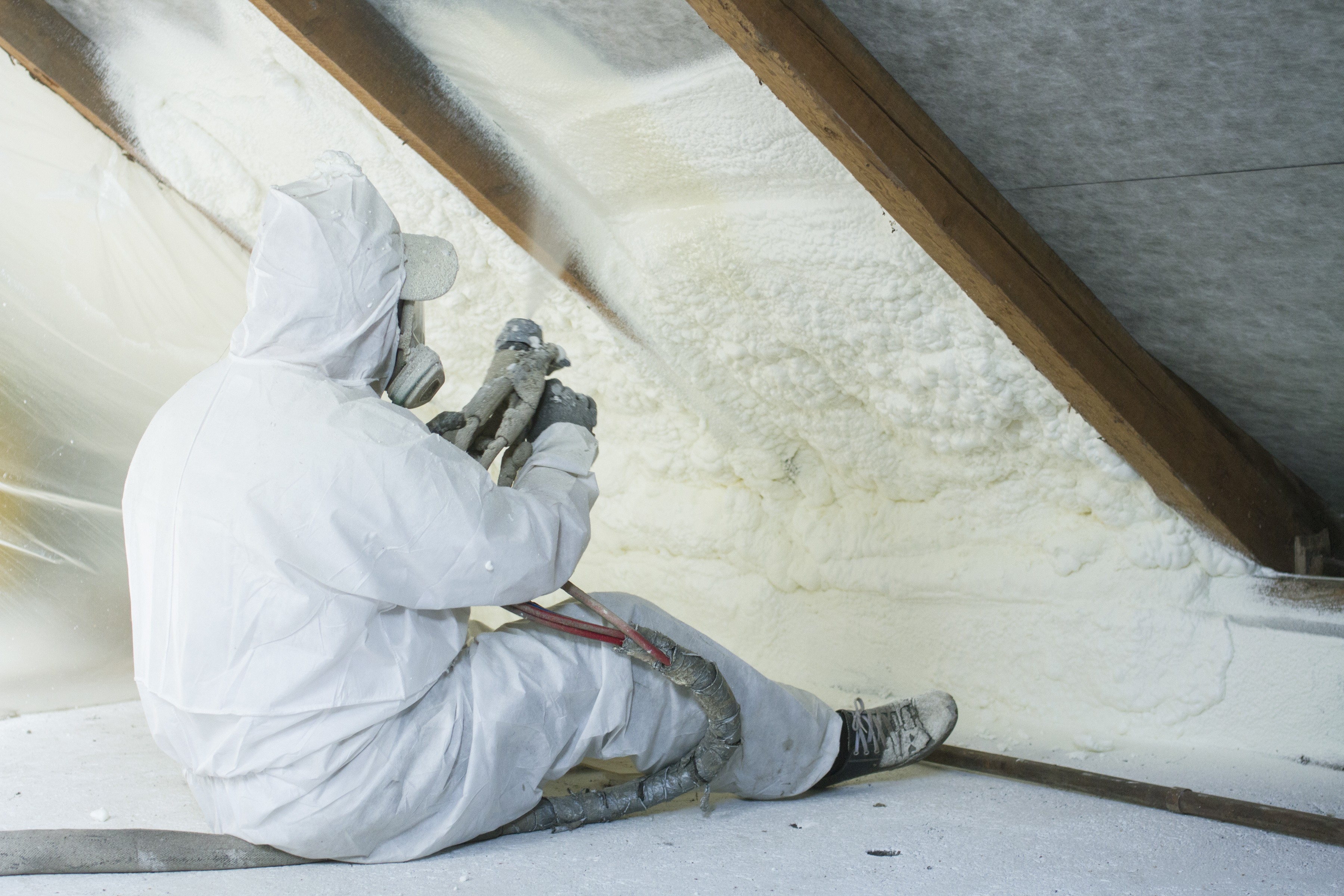
Spray foam insulation requires skilled professional application to ensure safety and effectiveness. The chemicals used in the process must be handled precisely to avoid health risks and guarantee performance.
Installation Steps
- Site Prep
Remove loose material, cover sensitive surfaces, and ventilate the space. Technicians wear full PPE, including respirators, gloves, and goggles. - Application
Foam is sprayed directly into wall cavities, attic slopes, or other target areas in thin layers (“lifts”) to prevent overexpansion. - Expansion & Cure
Foam expands and hardens within seconds. Full curing can take up to 72 hours, during which the building must remain ventilated. - Finishing
Excess foam is trimmed. Surfaces can then be drywalled, paneled, or sealed.
Safety Reminder: Proper air handling and curing time are essential to avoid exposure to chemical vapors during and after application.
Energy Efficiency and Market Data
Spray foam insulation significantly enhances a building’s thermal envelope. By tightly sealing leaks and boosting R-values, it cuts energy waste and stabilizes indoor climates.
According to the U.S. Department of Energy:
“Proper air sealing and insulation can reduce heating and cooling costs by up to 50% in some homes.”
The global spray foam insulation market is projected to reach $2.6 billion by 2026, driven by sustainable construction trends and stricter energy codes.
Bonus Tip: Many states offer rebates or tax credits for spray foam upgrades through energy efficiency incentive programs. Check local government and utility websites.
Things to Consider Before Making a Decision
Before committing to spray foam insulation, assess these important factors:
- Climate Conditions
Closed-cell performs better in cold, humid, or coastal environments due to its higher R-value and vapor control. - Wall Depth and Framing
If cavity depth is limited, closed-cell delivers more insulation per inch. - Moisture Exposure
Use closed-cell in basements, crawlspaces, and roofs to prevent mold and water damage. - Budget and ROI
Open-cell is more cost-effective upfront but may not meet code in extreme climates. Consider long-term savings and efficiency gains. - Building Type
Commercial structures often require closed-cell due to code, fire, or strength specifications.
Market Insight: A study by the Building Performance Institute found that homes insulated with closed-cell foam achieved payback on investment in under 5 years through energy savings alone.
Common Questions
Is spray foam safe for indoor air quality?
Yes, once cured, spray foam becomes inert. All off-gassing occurs during the curing phase. Proper ventilation is essential during installation.
Can I install spray foam myself?
DIY kits exist but are not recommended for whole-building applications. Inconsistent mixing or poor application can cause performance issues or health hazards.
Does spray foam prevent mold?
Closed-cell spray foam reduces mold risk by preventing air and moisture intrusion. It doesn’t support mold growth on its own.
Can it be used in renovations?
Yes, but accessibility to wall cavities or attics is required. Injection foam may be an option for closed spaces.
How long does spray foam last?
Most spray foams maintain their performance for 25–30 years without degradation when applied correctly.
Make the Right Decision
Spray foam insulation offers unmatched performance when installed correctly. Its air-tight seal, moisture resistance, and thermal efficiency make it a top-tier choice for both new and existing buildings.
Evaluate your goals: energy savings, moisture control, sound dampening, or structural support. Weigh the upfront cost against performance longevity. With proper planning, high-performance spray foam can provide lasting benefits and a measurable return on investment.
FAQ
Is spray foam worth the extra cost compared to fiberglass?
Yes, due to its superior air sealing, durability, and long-term energy savings, especially in hard-to-seal areas.
What is the minimum thickness required?
Closed-cell: 2 inches minimum for vapor barrier and R-value compliance. Open-cell: 3–5 inches for full cavity fill.
Does spray foam meet code?
Most closed-cell foams exceed code requirements. Open-cell may need additional vapor barriers in certain climates.
Can pests get through spray foam?
Spray foam is not a food source for pests, but they can tunnel if not sealed at entry points.
Will it make my home quieter?
Open-cell foam is excellent at absorbing sound and is ideal for interior partition walls.