
Excavation Services for Safe and Efficient Landscaping Projects
Professional excavation services ensure safe and efficient landscaping projects by providing proper site preparation, precise grading, and utility line protection through specialized equipment and trained operators. The se services handle everything from basic soil removal and trenching to complex drainage installation and foundation work, eliminating safety risks while achieving precise results that DIY methods cannot match.
Successful landscaping excavation requires understanding soil conditions, utility locations, and drainage requirements before breaking ground, with professional services offering expertise in permit acquisition, safety protocols, and proper equipment selection. The investment in professional excavation prevents costly mistakes, protects underground utilities, and establishes proper foundations for long-lasting landscape installations.
Types of Excavation Services for Landscaping
Site Preparation and Grading
Site preparation forms the foundation of successful landscaping projects by creating level surfaces, proper drainage slopes, and stable soil conditions. Professional grading services use laser-guided equipment to achieve precise elevations and slopes that ensure water flows away from structures while creating optimal growing conditions for plants and lawn areas.
Rough grading establishes basic site contours and elevation changes needed for the overall landscape design, while finish grading creates smooth, precise surfaces ready for lawn installation or hardscape construction. This process requires understanding soil compaction, drainage patterns, and the specific requirements of planned landscape features.
Bonus Tip: Professional operators can achieve grade tolerances within 1/4 inch over large areas, ensuring proper water management and eliminating low spots that collect standing water.
Utility and Infrastructure Excavation
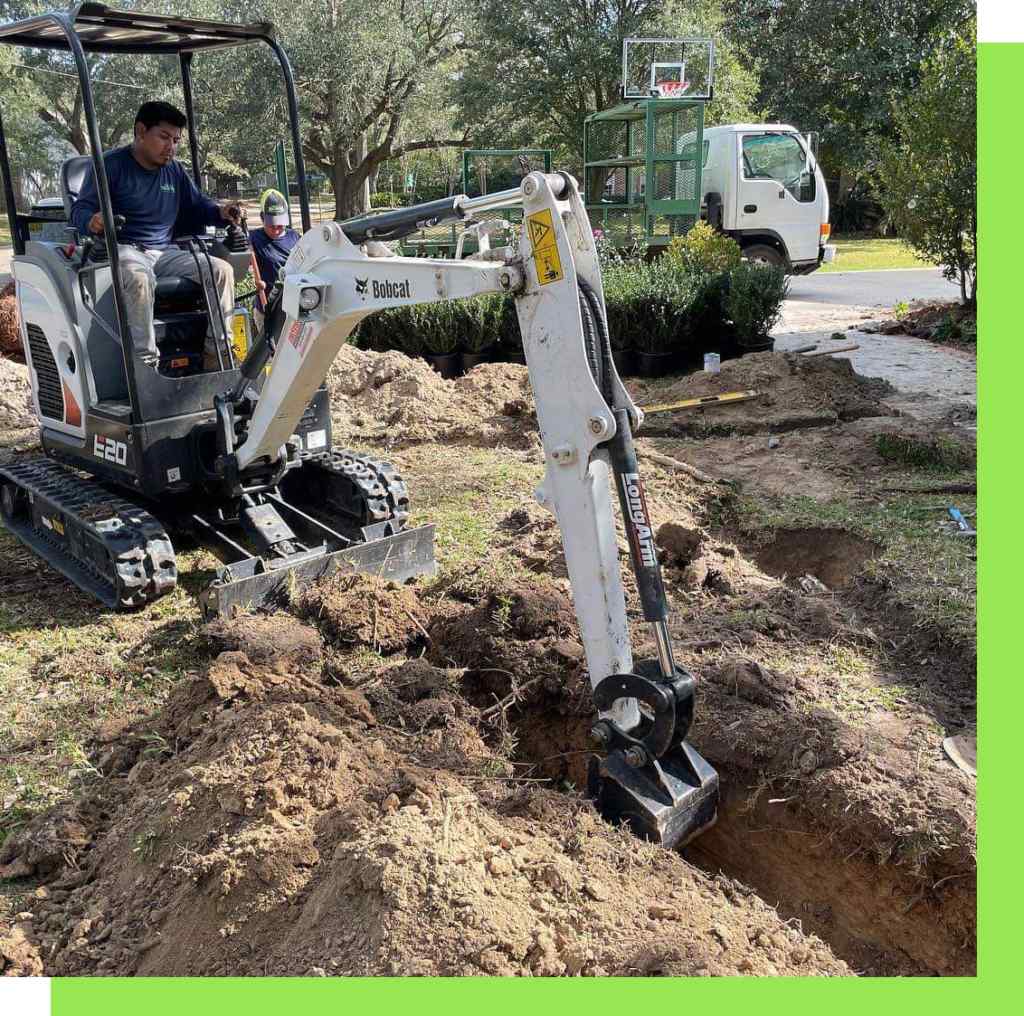
Utility excavation involves careful digging around existing underground lines while installing new systems like irrigation, drainage, and electrical connections for landscape lighting. Professional services use specialized locating equipment and follow strict safety protocols to prevent damage to gas, electric, water, and communication lines.
Trenching for irrigation systems requires precise depth control and proper bedding materials to protect pipes from damage while maintaining adequate water pressure throughout the system. Professional excavation ensures trenches maintain proper slopes for drainage while avoiding conflicts with existing utilities and landscape features.
Foundation and Hardscape Preparation
Foundation excavation for retaining walls, patios, and outdoor structures requires precise dimensions and stable soil conditions to ensure long-term structural integrity, with professional services understanding soil bearing capacities, frost line depths, and proper excavation techniques that prevent settlement and structural failure. Hardscape preparation includes excavating areas for driveways, walkways, and patio installations with proper depth calculations for base materials and final surface elevations, requiring understanding of drainage requirements, soil compaction needs, and proper transitions between different surface materials.
Excavation Equipment and Capabilities Comparison
|
Equipment Type |
Best Applications |
Reach/Depth |
Precision Level |
Typical Project Size |
|
Mini Excavator |
Tight spaces, residential |
8-12 ft reach |
High precision |
Small to medium yards |
|
Standard Excavator |
General excavation |
15-25 ft reach |
Medium precision |
Medium to large projects |
|
Skid Steer |
Material handling, grading |
8-10 ft reach |
High maneuverability |
Small residential projects |
|
Track Loader |
Large area grading |
10-12 ft reach |
Efficient coverage |
Large residential/commercial |
|
Trenching Machine |
Utility installation |
3-8 ft depth |
Precise trenching |
Linear utility work |
Technical Specifications for Common Excavation Work
|
Service Type |
Typical Depth Range |
Equipment Requirements |
Soil Handling Rate |
Safety Zone Requirements |
|
Drainage Trenching |
2-6 feet |
Mini excavator, trencher |
50-100 linear ft/hour |
10 ft utility clearance |
|
Foundation Excavation |
3-8 feet |
Standard excavator |
20-40 cubic yards/hour |
25 ft from structures |
|
Utility Installation |
2-4 feet |
Trenching machine |
100-200 linear ft/hour |
Call 811 before digging |
|
Site Grading |
Surface to 2 feet |
Track loader, excavator |
100-300 cubic yards/hour |
Property line clearance |
|
Pool/Water Feature |
6-12 feet |
Standard excavator |
30-60 cubic yards/hour |
50 ft utility clearance |
Safety Protocols and Regulations
Utility Location and Protection
Professional excavation services follow strict utility location protocols before beginning any digging work, starting with contacting 811 services to mark underground utilities at least 48-72 hours before excavation begins. Hand digging within designated tolerance zones around marked utilities prevents damage to gas, electric, water, and communication lines.
Private utility location may be required for irrigation systems, landscape lighting, and other non-public utilities not covered by 811 services. Professional excavators use electronic locating equipment and ground-penetrating radar when necessary to identify unmarked utilities and prevent costly damage.
Soil Stability and Excavation Safety
Soil analysis determines proper excavation techniques and safety requirements for different soil types and conditions. Clay soils require different approaches than sandy or rocky conditions, with professional services understanding soil classification systems and appropriate safety measures for each type.
Excavation safety includes proper sloping, shoring, or benching techniques to prevent cave-ins when working in trenches deeper than 4 feet. Professional operators follow OSHA regulations for excavation safety, including atmospheric testing in deep excavations and proper entry/exit procedures.
Bonus Tip: Professional services carry liability insurance specifically covering underground utility damage, protecting property owners from potentially expensive repair costs and service interruptions.
Project Planning and Execution Process
Pre-Excavation Assessment
Site evaluation begins with reviewing landscape plans, identifying existing conditions, and determining access routes for equipment and material removal while professional services assess soil conditions, drainage patterns, and potential obstacles that could affect project timeline and costs. Permit requirements vary by location and project scope, with professional excavation services understanding local regulations for excavation work, soil disposal, and temporary road access since many municipalities require permits for excavation work near public utilities or within certain distances of property lines.
Execution and Quality Control
Professional excavation follows systematic approaches that minimize site disruption while achieving precise results, beginning with establishing reference points and grade stakes that guide equipment operators throughout the project. Laser-guided equipment ensures consistent elevations and slopes across large areas.
Material handling includes proper soil segregation, with topsoil preserved for reuse and unsuitable materials removed from the site. Professional services understand soil amendment needs and can coordinate delivery of appropriate fill materials when existing soils prove inadequate for landscape use.
Quality control measures include final grade verification, compaction testing where required, and coordination with other contractors for seamless project transitions. Professional services provide documentation of completed work including final elevations and utility locations for future reference.
Things to Consider Before Making a Decision
Project Scope and Complexity Analysis
Evaluate your landscaping project’s excavation requirements by examining the extent of grading, drainage, and utility work needed to achieve your design goals. Simple projects involving minimal grade changes may be suitable for smaller equipment and shorter timelines, while complex installations requiring extensive excavation benefit from comprehensive professional planning.
Consider seasonal timing factors that affect excavation efficiency and costs since wet weather conditions can significantly impact soil workability and project schedules. Spring and fall typically offer optimal conditions for excavation work, while winter projects may require special considerations for frozen ground conditions.
Access and Site Constraints
Assess equipment access routes to work areas including gate widths, overhead clearances, and ground conditions that support heavy machinery. Standard excavators require 8-10 foot access widths, while larger equipment needs wider clearances and stronger ground support.
Evaluate material storage and disposal logistics since excavation projects generate significant soil volumes that require appropriate handling. Consider neighbor relationships and local regulations regarding noise, dust, and truck traffic during active excavation work.
Budget and Timeline Considerations
Professional excavation costs vary based on soil conditions, project complexity, and equipment requirements, with typical residential projects ranging from $2,000-15,000 depending on scope. Factor additional costs for permits, utility location services, and potential complications like rock removal or poor soil conditions.
Timeline planning should account for weather delays, permit processing, and coordination with other landscape contractors since excavation work typically occurs early in the project sequence. Quality excavation establishes foundations for all subsequent landscape work and prevents costly corrections later.
Bonus Tip: Schedule excavation services during off-peak seasons when contractors have more availability and may offer better pricing for non-urgent projects.
Common Questions About Excavation Services
When do landscaping projects require professional excavation?
Projects involving significant grade changes, utility installation, drainage systems, or structural foundations benefit from professional excavation services. DIY excavation works for small projects with minimal depth requirements and no utility conflicts, while complex work requires specialized equipment and expertise.
How do excavation services protect existing landscaping?
Professional services use precision equipment and careful planning to minimize disruption to existing trees, gardens, and lawn areas. Operators establish protection zones around valuable plants, use ground protection mats to prevent soil compaction, and plan equipment routes that avoid sensitive landscape features.
What permits are typically required for excavation work?
Permit requirements depend on project scope and local regulations, with many areas requiring permits for excavation exceeding certain depths or volumes. Professional services understand local requirements and can handle permit applications, ensuring compliance with building codes and environmental regulations.
Market Data and Industry Insights
According to the National Association of Landscape Professionals, proper excavation and site preparation account for 25-40% of total landscaping project costs but provide the foundation for long-term landscape success. Professional excavation reduces project failure rates by 60-75% compared to inadequate site preparation methods.
Industry data shows that utility damage during excavation costs property owners an average of $4,000-12,000 per incident, making professional utility location and careful excavation practices essential for project success. Professional excavation services carry specialized insurance coverage that protects property owners from these potential costs.
Excavation Services FAQ
How much do professional excavation services cost for landscaping projects?
Professional excavation costs range from $75-150 per hour for equipment and operator, with typical residential landscaping projects costing $2,000-15,000 depending on scope and complexity. Factors affecting cost include soil conditions, access difficulty, disposal requirements, and project timeline.
How long do excavation projects typically take to complete?
Excavation timeline depends on project size and complexity, with simple grading projects completed in 1-2 days and comprehensive site preparation taking 1-2 weeks. Weather conditions, soil type, and permit processing can extend timelines, making realistic scheduling important for project success.
What safety measures do professional excavation services follow?
Professional services follow OSHA safety regulations including utility location, proper excavation techniques, and equipment safety protocols. Operators receive specialized training in excavation safety, utility protection, and emergency procedures to prevent accidents and property damage.
Can excavation work damage my property or neighboring areas?
Professional excavation services use precision equipment and careful planning to minimize property damage, but some disruption is inevitable during active work. Reputable contractors carry comprehensive insurance coverage and follow protocols to protect existing structures, utilities, and landscape features.
What happens to excavated soil and materials?
Excavated materials are typically sorted with topsoil preserved for reuse and excess soil removed from the site. Professional services can arrange soil disposal at approved facilities and coordinate delivery of replacement materials when existing soils prove inadequate for landscape use.
 Make the Right Decision
Successful landscaping excavation requires matching service capabilities to project requirements while prioritizing safety and precision over cost savings. Professional excavation provides expertise in utility protection, proper grading techniques, and equipment selection that ensures project success.
Evaluate contractors based on experience with similar projects, proper licensing and insurance coverage, and understanding of local regulations and soil conditions. Quality excavation work establishes foundations for all subsequent landscape installations and prevents costly corrections later.
Consider the long-term value of professional excavation services since proper site preparation affects landscape performance for decades. Invest in quality excavation work that provides stable foundations, proper drainage, and safe utility installation for lasting landscape success.
Visit:
All Seasons Landscaping & Lawn Care
Reviewer: Sophie Williams looked over this post and brought 7 years of field experience to her suggestions, helping ensure the content stays relevant to business owners and practical for everyday use.