
Foodie’s Guide to Jordan: Must-Try Dishes With eVisa
Jordan is an ancient country with breathtaking sceneries and a diverse food culture. To the lovers of food, this nation is a travel experience of flavors, spices, and centuries-old traditions. In each city, such as Amman, Aqaba, there is a taste to be explored, both in the street Food stands and in the family restaurants. Then it might be one of your queries before you start eating your way to heaven: do you need a Jordan e-visa? The positive thing is that the e-visa to Jordan can be requested by the citizens of numerous countries online, and your visit may be easily organized without any problems.
Do You Need a Jordan e-Visa?
You could be asking yourself: do you need a Jordan e-visa? when you are planning to go to Jordan. This will depend on the nationality you are visiting or the reason behind your visit. Travelers are able to acquire an e-visa online easily and gain entrance to the country either on tourism or business. The Jordan e-visa makes the process easier, as one does not have to stand in long queues at the borders and the planning of travel becomes easier. The e-visa is usually issued with one or multiple entries depending on the choice that you make.
It is easy to apply: you fill in a short form on the Internet, attach your copy of the passport, pay a visa fee, and typically, your e-visa can be received in several business days. Upon approval, you will be in a position to travel to Jordan without extra documentation at the airport.
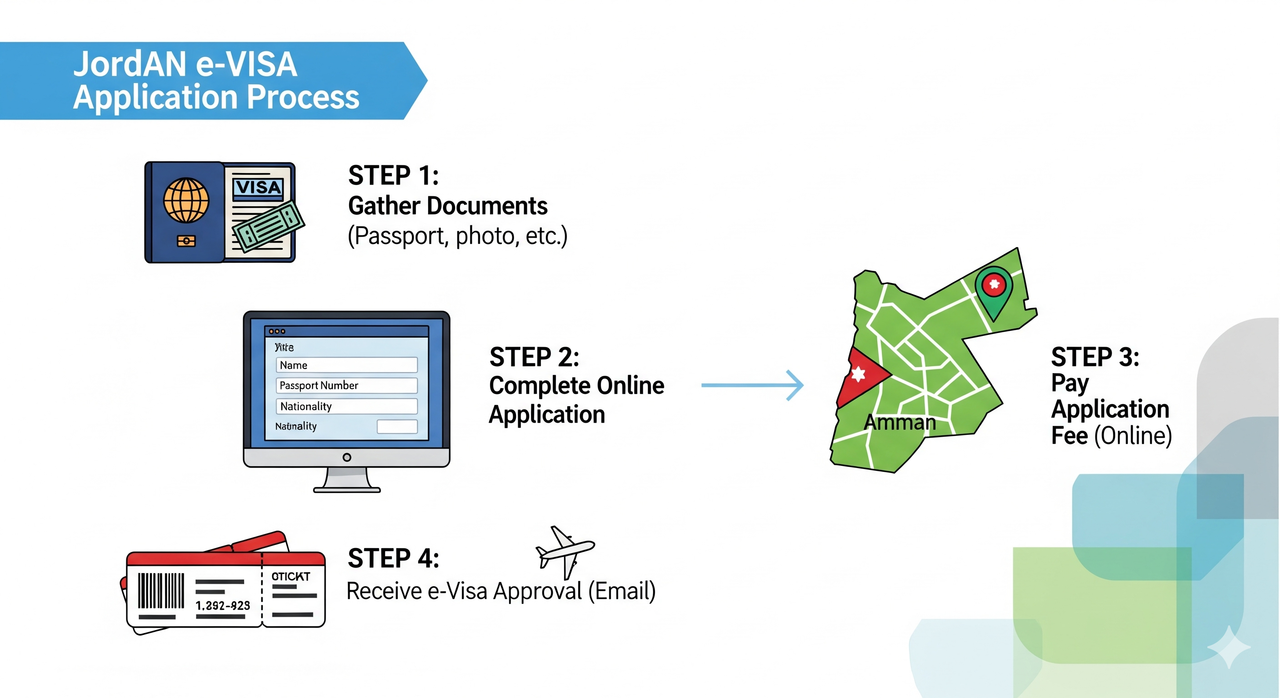
How to Apply for Jordan eVisa
Entry into Jordan is hassle-free with the eVisa system, through which one can enter without having to undergo a lot of paperwork. The step-by-step apply for Jordan e-visa:
Step 1: Visit the eVisa Portal
Make the online eVisa portal accessible through any device. Make sure that your passport is within a period of six months.
Step 2: Fill Out Your Details Accurately
Input personal details, passport, the travel dates you want to go and the address you have in Jordan. Precision is essential to avoid accidents or refuses.
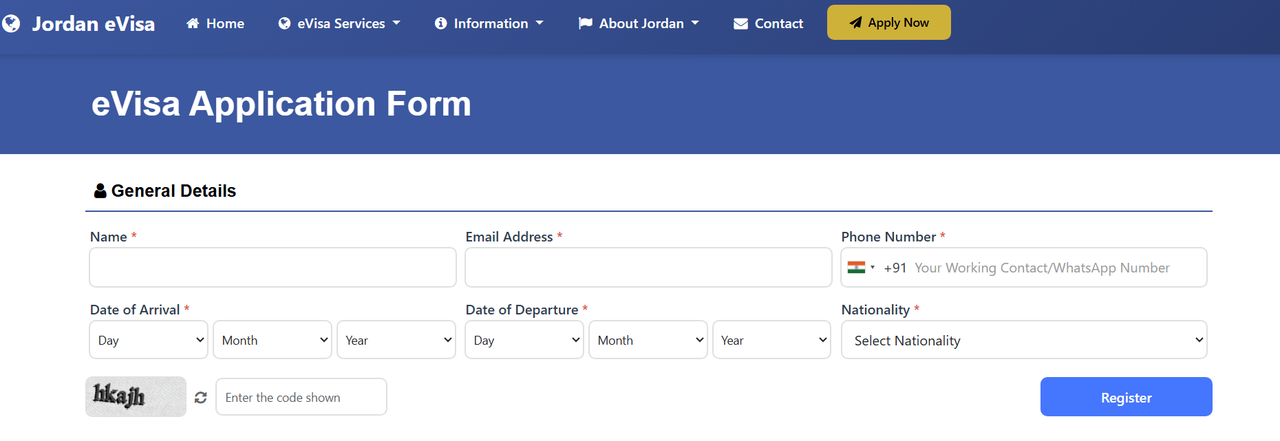
Step 3: Upload Documents
Send a scanned copy of your passport, recent photograph and other supporting documents, where necessary. Ensure that the files are clean and clear.
Step 4: Securely Pay the Fee
Make payment for the Jordan e-visa fee online through a safe payment system. On completion, you will be awarded a confirmation receipt through an email.
Step 5: Wait for Approval
Processing takes 1-3 business days to process. After being approved, your eVisa will be sent to you by e-mail.
Step 6: Print Your eVisa
Make a copy to bring with you. When arriving, border can also request a printed copy.
Must-Try Jordanian Dishes
1. Mansaf – The National Treasure
Mansaf is the legendary dish in Jordan. It is cooked over aromatic rice and served with almond and pine nuts as its garnish, with tender lamb that has been cooked in jameed (fermented yogurt). Mansaf is a traditional dish that is consumed on holidays and it is not just a meal, but a cultural phenomenon. It has numerous restaurants in Amman and Petra which have their own variations, such as vegetarian or chicken.

2. Falafel – Crisp and Flavorful
Falafel is a snack enjoyed by everyone in the Middle East, although in Jordan, they are prepared using newly harvested herbs, chickpeas and spices. It is crispy on the outside and soft on the inside and is served with tahini, fresh vegetables or in pita bread. Some of the most authentic versions are found in the street vendors in Amman and Irbid.

3. Shawarma – The Perfect Street Food
Jordan is a place where one should eat Shawarma. Sliced meat, usually chicken, beef or lamb, is marinated, and then cooked on a rotisseries hung upside down, then it is served with garlic sauce, pickles and pita bread. It is ideal among the people who travel in the cities and are on a tight budget but want to have the real cuisines.

4. Maqluba – The Upside-Down Wonder
Maqluba, which translates to upside down, is a dish that is served as a layered rice, vegetables and meat. The pot is then flipped after cooking and it looks like a work of visual art. Its tastes are full, balanced, and totally gratifying that it is a must-have to every food traveler.

5. Mujadara – Simple and Satisfying
Mujadara is a mixture of lentils, rice and caramelized onions. It is commonly consumed at home or in informal dining establishments and it is very nutritious, and ideal to a tourist who wants to get a taste of traditional Jordanian comfort food.

6. Stuffed Grape Leaves (Warak Enab)
The stuffing inside the grape leaves is savory and tangy as it is made of rice, herbs and in some cases, minced meat. This food is usually prepared as a part of a mezze plate or a family dinner and gives a clue about the light-weight balance of flavors that this cuisine of Jordan is famed as.

7. Mansaf Variations
Although the classic version of the dish is lamb Mansaf, visitors are not to miss regional versions that use chicken, vegetables or even seafood. The restaurants or regions use their own spices and make every bite a different flavor.

Travel Tips for Foodies in Jordan
- Visit Local Markets: Souks and street markets in Amman, Aqaba, and Jerash offer fresh ingredients and ready-to-eat traditional snacks.
- Try Street Food: Don’t miss falafel, shawarma, and sweets from local vendors—they often have the best flavor.
- Dine in Family-Run Restaurants: Many local eateries serve authentic dishes prepared using age-old recipes.
- Explore Regional Specialties: Petra, Aqaba, and Wadi Rum each have unique dishes and preparation styles.
- Pair Food with Drinks: Refresh your palate with mint lemonade, tamarind juice, or Jallab.

Conclusion
Jordan is not just a place to visit; it is a place where one story is written with each food. Tasting such dishes as Mansaf, Maqluba and Kanafeh will help the visitors to associate themselves with the tradition and hospitality of the country. Whether in the hustle of the markets or in a family restaurant every mouthful is a taste of the life, culture and history of Jordan. With the help of the Jordan eVisa, the visitors now can arrange their visits without making useless stops and sorts, avoiding all involved paperwork. The fusion of the exploration of the sights and the exploration of the cuisine will make your trip in Jordan a full sense experience as you not only experience the tastes of centuries-old recipes but also get to see impressive landscapes and historical sights.
Both food lovers, explorers, and cultural tourists will find a special chance to taste authentic traditional cuisine, have a warm welcome, and make their memories that will last a lifetime. The food and taste of Jordan will always stick in your head, regardless of your first time there or during your repeated visit to the country.
Frequently Asked Questions (FAQs)
Q1: How long does the Jordan eVisa take to process?
Most eVisas are approved within 1–3 business days.
Q2: Can I apply for a Jordan eVisa while traveling abroad?
Yes, the application can be completed online from anywhere in the world.
Q3: Can I extend my stay with an eVisa?
Extensions are possible but require online application after arrival.
Q4: Do I need to carry a printed copy of the eVisa?
Yes, it is recommended for border checks.
Q5: Are multi-entry eVisas available?
Yes, some eVisa options allow multiple entries. Check the portal for eligibility.
Q6: Is the eVisa application secure?
Yes, the portal uses secure encryption for all transactions and data.
Q7: Can I pay the eVisa fee with a credit card?
Yes, online payment options include major credit cards and digital payment methods.
Q8: Are children required to have a separate eVisa?
Yes, every traveler, including children, needs an individual eVisa.