
Hemostat vs Forcep: Key Surgical Differences
In the precise world of surgical procedures, the distinction between instruments is critical for successful outcomes. While many tools may look similar to the untrained eye, their specific functions are unique. This is especially true when discussing the hemostat vs forcep. Understanding their individual roles is fundamental for medical professionals. Although both are essential for grasping and holding, they are designed for very different primary purposes within the operating room.
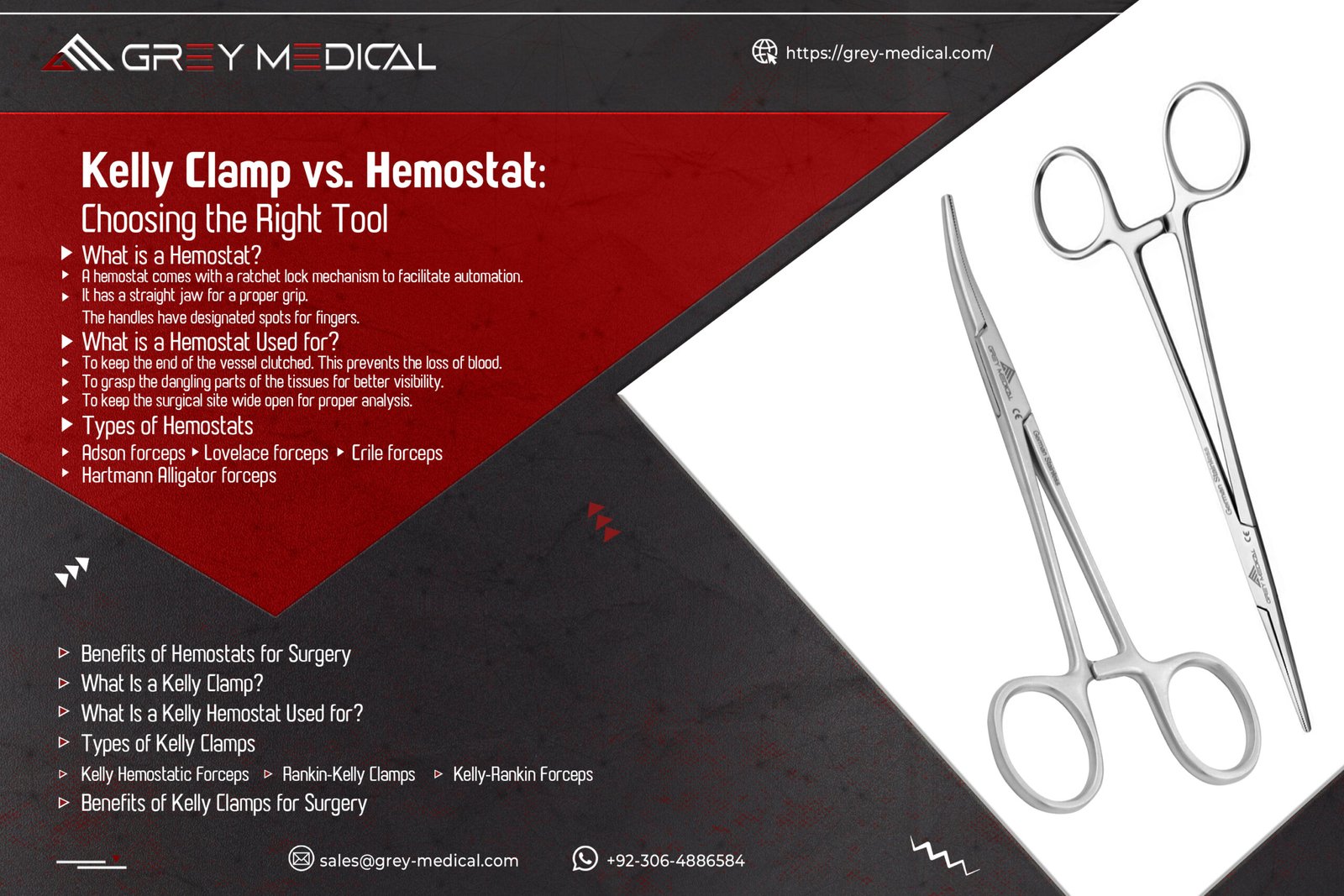
Defining the Role of a Hemostat
A hemostat, also known as an artery forceps, is primarily designed for one crucial function: hemostasis. This means its main purpose is to clamp and control bleeding by compressing blood vessels. The locking mechanism, a ratchet system near the finger loops, is a key feature. This lock allows the surgeon to clamp a vessel and leave the instrument in place, freeing their hands for other tasks. The jaws of a hemostat are often serrated to ensure a firm grip on the vessel, preventing slippage and ensuring effective blood flow control. When considering the hemostat vs forcep debate, the hemostat’s role in hemorrhage control is its defining characteristic.
Understanding the Versatility of Forceps
Forceps, on the other hand, are a much broader category of instruments with a wide range of applications. They are primarily used for grasping, holding, and manipulating tissue. Unlike hemostats, many forceps do not have a locking mechanism, requiring the surgeon to maintain manual pressure. Forceps come in numerous varieties, such as dressing forceps for handling gauze, or tissue forceps with fine teeth for gripping delicate tissues securely. The core difference in the hemostat vs forcep comparison is versatility; forceps are the surgeon’s extension for holding and moving, while hemostats are specialized for clamping.
Core Design and Functional Distinctions
The main distinction when analyzing hemostat vs forcep lies in their design related to function. A hemostat’s locking jaws are built for compression and occlusion. Surgical Forceps are designed for manipulation, with tips that can be toothed or smooth, straight or curved, depending on the tissue they are intended to handle. For companies like GreyMedical®, a privately owned medical technology company dedicated to innovation, creating instruments with clear functional excellence is paramount. Their dedication ensures surgeons have the precise tools needed for every task. The functional intent—clamping versus grasping—is the most important takeaway.
Conclusion
In summary, the discussion of hemostat vs forcep highlights a fundamental principle in surgery: every instrument has a specific job. A hemostat is a specialized clamp for controlling bleeding with its locking mechanism, while forceps are versatile grasping tools used to manipulate tissues. Recognizing these differences is not just academic; it is essential for the safety and efficiency of every surgical procedure. Choosing the correct instrument ensures precision and contributes to positive patient outcomes.