
How Commercial insulation helps soundproof an office space
Commercial insulation helps soundproof an office space by creating a physical barrier within the walls and ceilings that absorbs, blocks, and isolates sound energy. While chosen primarily for thermal control, certain types of insulation are exceptionally effective at improving a building’s acoustics. They work by filling the empty cavities in the framing, which would otherwise act like a drum, and by creating an airtight seal that stops airborne noise from passing through. The result is a quieter, more private, and more productive work environment.
Acoustic comfort is a critical, yet often overlooked, part of office design. Constant noise can be a major source of distraction and stress for employees. This guide explains the science of how sound travels in a building and details how specific types of commercial spray foam insulation can be used to create a better-sounding workspace.
The Two Types of Noise in an Office
To understand how to stop noise, it’s important to know how it travels. In an office building, there are two main types of sound that insulation can help control.
Airborne Noise
This is a sound that travels through the air. It’s the most common type of noise in an office and includes things like:
- Conversations and phone calls
- Ringing phones and office equipment
- Traffic or construction noise from outside
Airborne noise will pass through any opening it can find, including tiny cracks and gaps around walls, electrical outlets, and ductwork.
Structure-Borne (or Impact) Noise
This is sound that is created when an object makes direct contact with the building structure, causing it to vibrate. The vibration then travels through the framing and radiates as sound into adjacent rooms. Examples include:
- Footsteps from the floor above
- The vibration from a large piece of equipment
- A door slamming shut
How Insulation Controls Sound
Commercial insulation uses several different mechanisms to reduce the transmission of these two types of noise.
Sound Absorption
Materials with a soft, porous, or fibrous structure are excellent at absorbing sound. When sound waves hit these materials, they get trapped within the intricate network of fibers or cells, and their energy is converted into a tiny amount of heat. This prevents the sound from reflecting off the hard surfaces within a wall cavity and reduces the overall noise level. Open-cell spray foam and mineral wool are top performers in this category.
Sound Blocking
Denser, heavier materials are better at blocking sound. They create a solid barrier that is difficult for sound waves to pass through. Closed-cell spray foam, with its high density, is very effective at blocking lower-frequency sounds. For even better performance, a sound-blocking strategy often involves creating a wall with multiple layers of different materials, a technique known as “mass-loaded” construction.
Air Sealing
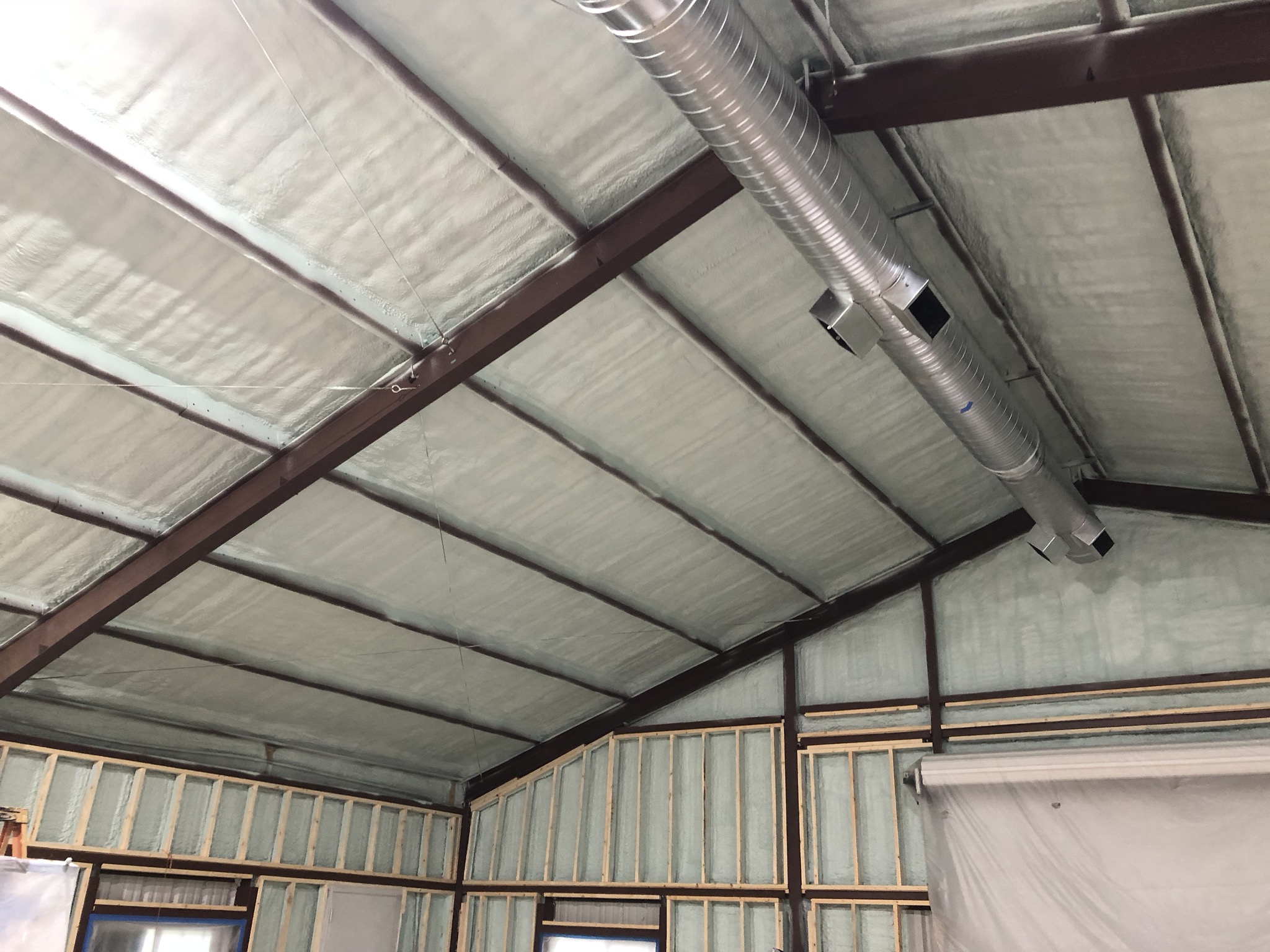
This is a critical function for controlling airborne noise. Sound will travel through the path of least resistance. A wall can be filled with the best sound-absorbing insulation, but if there are gaps around the edges or holes for wiring, sound will just go right through them. Spray foam insulation excels at this because it expands to create a perfect, seamless air seal, closing off these flanking paths for sound.
The Best Insulation Materials for Soundproofing
Different insulation materials have different acoustic properties. The right choice depends on the specific goals of the project.
|
Insulation Material |
Primary Acoustic Strength |
Best For |
Sound Transmission Class (STC) |
|---|---|---|---|
|
Open-Cell Spray Foam |
Superior Sound Absorption & Air Sealing |
Interior walls, ceilings, media rooms |
High |
|
Mineral Wool |
Excellent Sound Absorption & Fire Resistance |
Walls between offices, conference rooms |
High |
|
Closed-Cell Spray Foam |
Good Sound Blocking & Air Sealing |
Exterior walls, mechanical rooms |
Medium-High |
|
Fiberglass Batts |
Fair Sound Absorption |
Standard interior walls (basic sound control) |
Medium |
The Sound Transmission Class (STC) is a rating of how well a building partition, like a wall or ceiling, attenuates airborne sound. A higher STC rating means better soundproofing. A typical uninsulated interior wall has an STC of around 35. A properly insulated wall can easily achieve an STC of 45-55 or more, which makes a dramatic difference in speech privacy.
Designing a Quieter Office Space
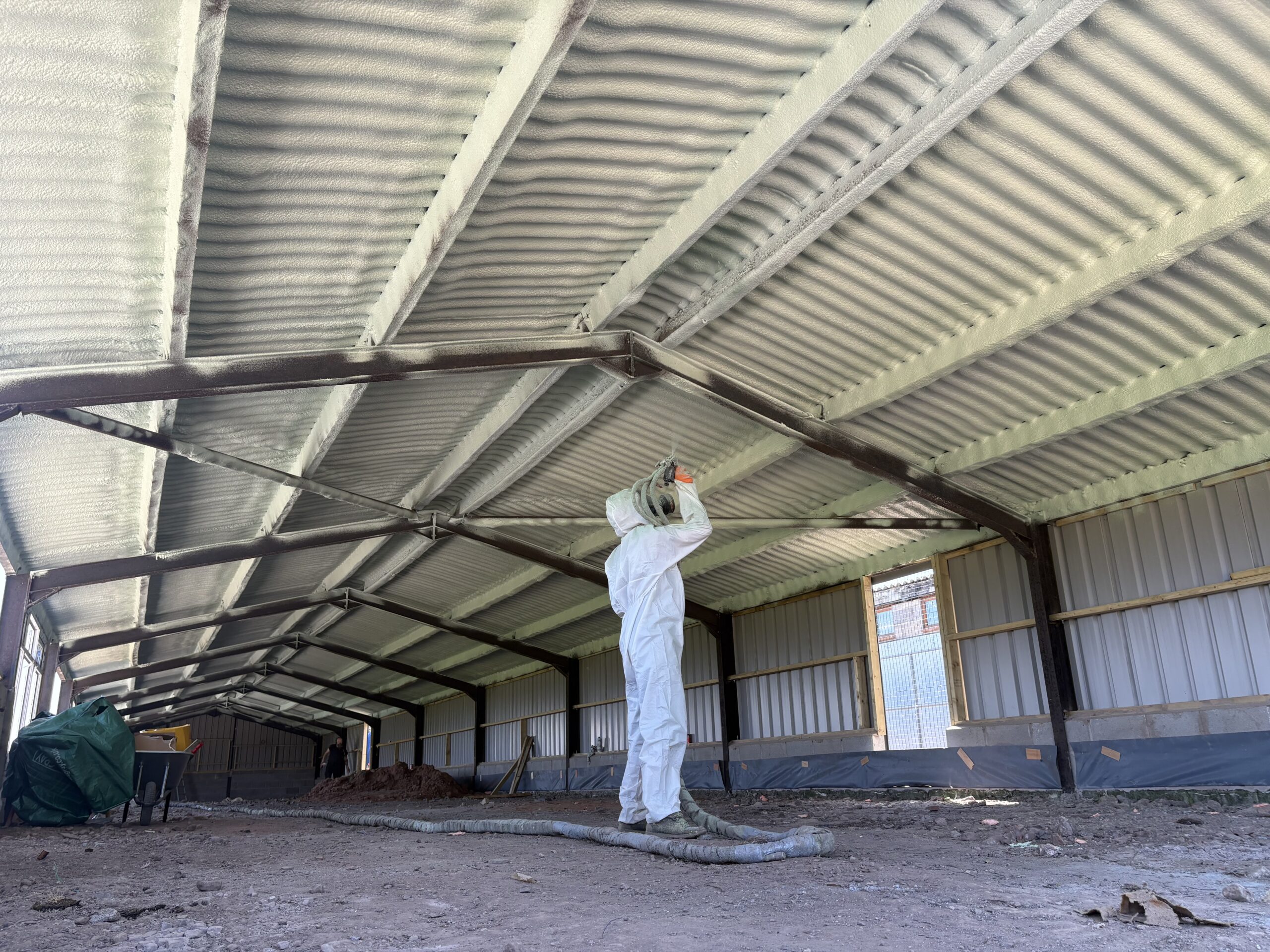
A professional insulation contractor can use these materials to target specific acoustic problems within an office.
- Conference Rooms and Private Offices: These spaces require a high degree of speech privacy. Insulating the walls with open-cell spray foam or mineral wool is an excellent way to prevent conversations from being overheard.
- Ceilings and Floors: To reduce the sound of footsteps and activity from the floor above, the cavities in the floor/ceiling assembly should be filled with sound-absorbing insulation.
- Exterior Walls: To block out traffic and other external noise, a combination of a high-performance insulation like closed-cell spray foam and high-quality, dual-pane windows is most effective.
- Mechanical Rooms: The noise from HVAC equipment, pumps, and elevators can be a major issue. Insulating the walls and ceiling of these rooms with a dense, sound-blocking material is essential.
For an even higher level of soundproofing, a technique called “decoupling” can be used in wall construction. This involves building a staggered-stud wall or using special resilient channels to separate the drywall on one side from the framing. When combined with sound-absorbing insulation in the cavity, this method creates a wall assembly that is extremely effective at stopping sound transmission.
Things to Consider Before Starting a Soundproofing Project
- Acoustic Goals: The level of soundproofing needed depends on the use of the space. A standard office has different needs than a recording studio or a doctor’s consultation room. A clear goal will help determine the right materials and construction methods.
- A Holistic Approach: Insulation is a huge part of soundproofing, but it’s not the only part. The STC rating of a wall is also affected by the type and thickness of the drywall, the presence of doors and windows, and how well the assembly is sealed. A professional will consider all of these factors.
- New Construction vs. Retrofit: It is much easier and more cost-effective to incorporate soundproofing measures during new construction. Retrofitting an existing office is possible, but it is more complex and may involve removing and replacing drywall.
Your Top Questions About Office Soundproofing Answered
Will soundproofing insulation also provide thermal benefits?
Yes, absolutely. All of the materials discussed here are also excellent thermal insulators. By soundproofing an office, you are also making it more energy-efficient. This is one of the reasons that using insulation is such a popular and cost-effective method for acoustic control.
What is the most common mistake in office soundproofing?
The most common mistake is ignoring the flanking paths. People will spend a lot of money on a thick, insulated wall but then fail to properly seal the gaps around it, or they will install a hollow-core door that lets sound pass right through. A successful soundproofing job requires attention to every detail.
How much quieter will the office actually be?
The difference can be dramatic. An increase of 10 points in a wall’s STC rating is perceived by the human ear as a halving of the sound. By taking a wall from an STC of 35 to 45, you can effectively make normal speech in the next room inaudible.
Final Thoughts on Acoustic Comfort in the Workplace
Commercial insulation expert is a powerful and multi-functional tool for creating a better work environment. By absorbing, blocking, and sealing against noise, it can transform a loud, distracting office into a quiet, private, and productive space. The key is working with an experienced contractor who understands acoustics and can recommend the right materials, which is why a professional consultation is often the most effective first step.
Getting a Professional Acoustic and Insulation Plan
To develop an effective soundproofing strategy for an office, a consultation with a commercial insulation expert is the best first step. They can assess the space, discuss acoustic goals, and create a plan that fits the budget and timeline. For business owners in Nevada and the surrounding areas, an example of a company with a strong commercial portfolio is Nevada Urethane, which provides these types of detailed evaluations. An expert consultation can be arranged by calling (775) 500-0024 or emailing [email protected].
Reviewer: Maria Lopez offered detailed feedback after reviewing this post. Her 10 years of experience in spray foam work helped guide the tone and suggestions toward realistic strategies.