
Key Installation Considerations for Commercial Spray Foam Projects
For commercial spray foam projects, success hinges on a handful of installation decisions made before and during the application process. At its core, a high-performing spray foam system depends on a clean, stable substrate, controlled application conditions, proper foam type selection, and rigorous adherence to building code requirements. Missing any of these factors can compromise insulation performance, create long-term safety concerns, or lead to costly rework.
This article breaks down the most critical aspects to consider during the planning and execution of spray foam insulation on commercial properties. We’ll explore how each factor influences durability, energy performance, code compliance, and overall system longevity.
Core Installation Priorities in Commercial Settings
Spray foam insulation is more than just a product—it’s a system that interacts with the building envelope, local climate, mechanical systems, and safety regulations. In commercial buildings, these interactions are magnified due to larger scale, higher occupancy loads, and diverse structural materials.
The first and most important priority is substrate preparation. Spray foam must bond well with the surface, whether it’s concrete, wood, metal, or masonry. Any residue, oil, frost, or debris can interfere with adhesion, leading to gaps or future delamination. For new construction, surface prep begins during framing. For retrofits, extensive cleaning or even surface abrasion might be needed.
Next is ambient condition control. Commercial spray foam is typically installed in environments where temperature and humidity fluctuate depending on construction phase, location, and time of year. The foam must be applied within a manufacturer-specified temperature window—usually between 60°F and 80°F—and under controlled humidity. Too much moisture in the air or substrate can cause poor cell structure, affecting thermal resistance and air seal continuity.
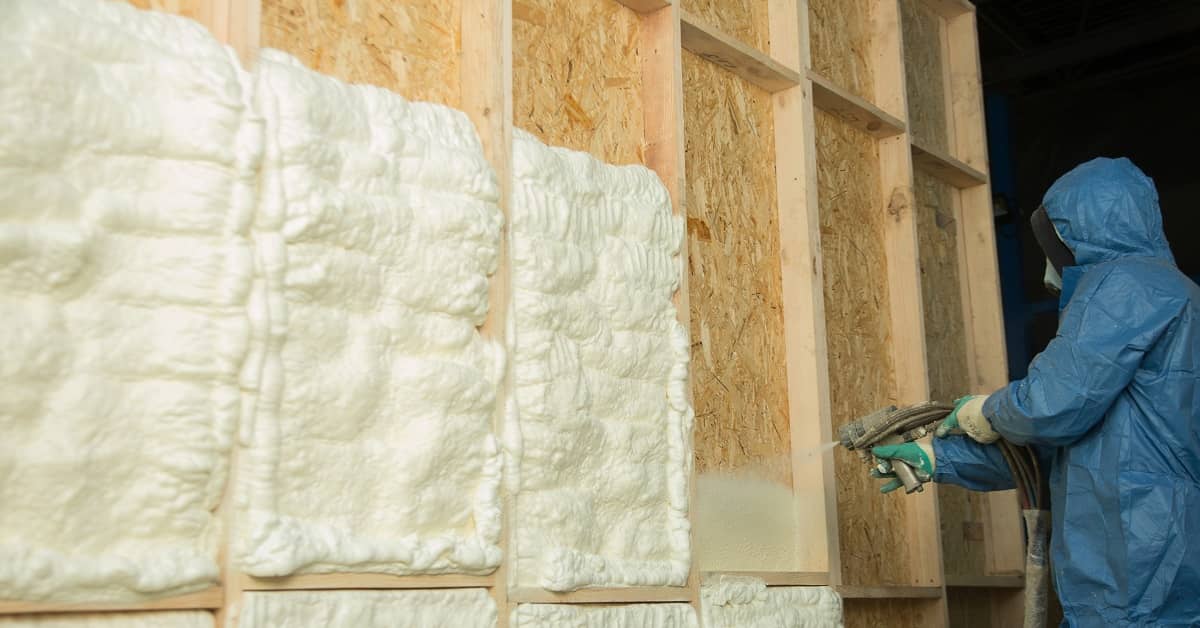
Another critical consideration is foam application technique. Foam is applied in lifts or passes, each layer allowed to cure before the next is added. Rushing this process, especially with closed-cell spray foam application, leads to shrinkage, warping, or off-gassing. Installers must know exactly how thick each pass should be—typically no more than 2 inches—to ensure chemical balance and proper rise.
In commercial jobs, fire safety cannot be an afterthought. All commercial spray foam installations must meet fire code requirements, which include specific flame spread ratings and the use of ignition or thermal barriers. This becomes even more critical in exposed areas such as mechanical rooms or warehouses. Code compliance is enforced by inspectors and fire marshals, and using the wrong foam or skipping the protective coating can result in mandatory rework.
Comparison of Foam Types for Commercial Use
|
Feature |
Open-Cell Foam |
Closed-Cell Foam |
|---|---|---|
|
Thermal Resistance (R-value per inch) |
~3.6 |
~6.5 |
|
Water Resistance |
Low |
High |
|
Air Barrier Performance |
Moderate |
Excellent |
|
Density |
~0.5 lb/ft³ |
~2.0 lb/ft³ |
|
Structural Strength |
Low |
High |
|
Typical Application Areas |
Interior partitions |
Exterior walls, roofs |
|
Cost per Board Foot |
Lower |
Higher |
|
Moisture Barrier |
No |
Yes |
|
Support for Mechanical Loads |
Minimal |
High |
In most spray foam building insulation scenarios involving exterior walls, roofs, or ground contact, closed-cell foam is preferred. It provides structural rigidity, water resistance, and air sealing in one layer. Open-cell foam may still be appropriate for interior walls where sound dampening is needed and moisture isn’t a concern.
Environmental and Safety Conditions During Installation
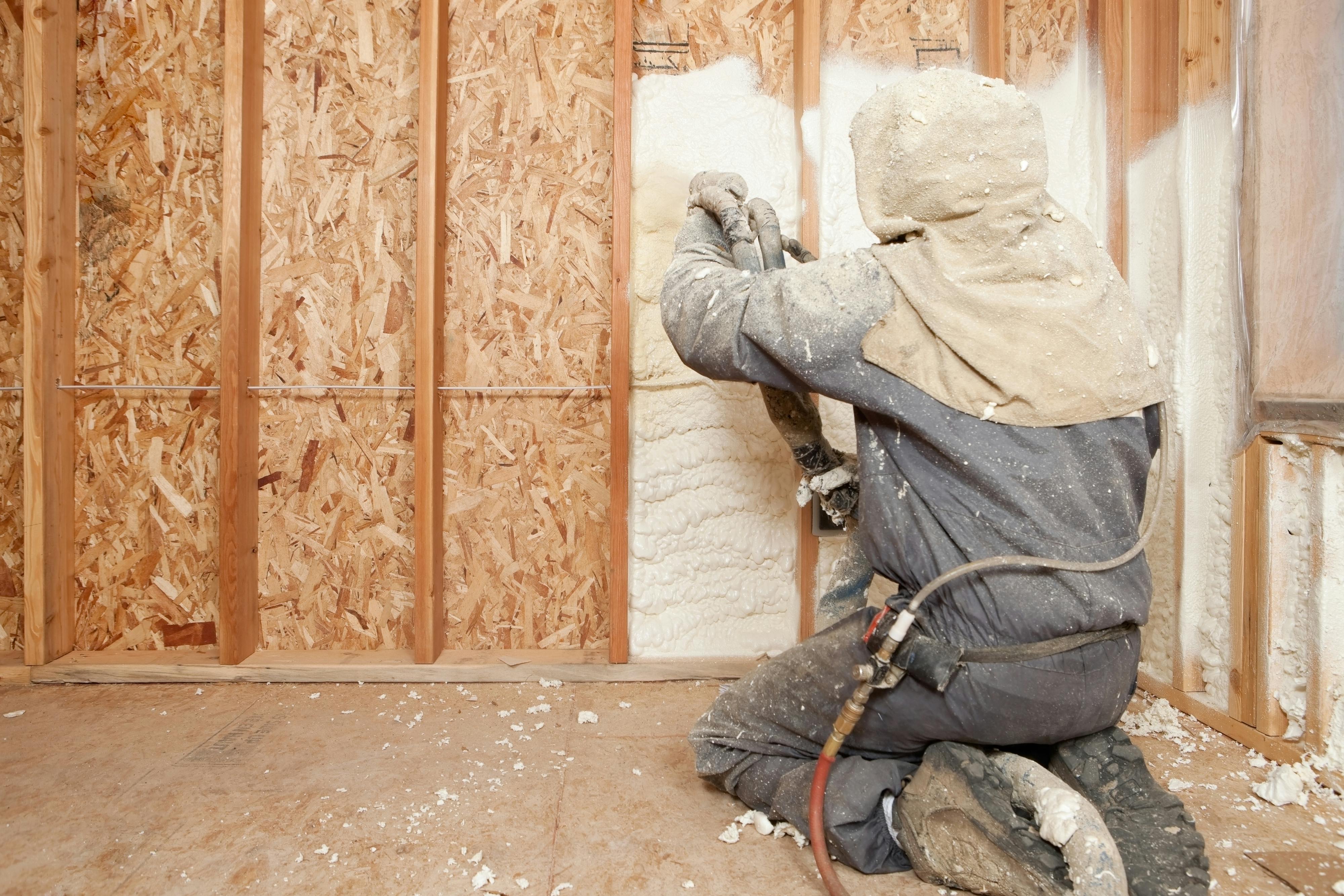
Environmental conditions play a vital role in foam performance and long-term adhesion. Commercial sites often face wide fluctuations in temperature due to building phase schedules or incomplete enclosures. Heated spray rigs can offset colder ambient temps, but the substrate temperature still needs to be within acceptable limits. Installing spray foam on cold or damp concrete, for example, can reduce adhesion and result in blistering or incomplete curing.
Moisture is a bigger threat than most realize. Even trace moisture in the substrate can cause chemical interference during the foaming process, affecting cell formation. In moisture control commercial spray foam systems, closed-cell foam provides a safer choice thanks to its very low permeability. It helps prevent vapor transmission in humid climates or below-grade spaces like basements or parking structures.
Ventilation is another essential requirement. Spray foam emits reactive vapors during installation. These must be vented effectively using mechanical ventilation systems—especially in enclosed or high-rise spaces. This ties directly into mechanical ventilation with foam insulation, a standard practice that keeps applicators safe and ensures air quality compliance.
Technical Data for Commercial Installations
|
Specification |
Typical Range |
Function |
|---|---|---|
|
R-Value (Closed-Cell) |
6.5–7.0 per inch |
Thermal insulation |
|
Lift Thickness |
≤2 inches per pass |
Safe curing and rise |
|
Compressive Strength |
20–30 psi |
Wall or roof rigidity |
|
Flame Spread Rating (ASTM E84) |
≤25 |
Fire resistance |
|
Smoke Development Index |
≤450 |
Code compliance |
|
Perm Rating |
≤1.0 |
Moisture vapor control |
|
Cure Time |
24–48 hours |
Work resumption post-install |
|
Substrate Temp Range |
60°F–80°F |
Optimal adhesion and cure |
Important Factors Before Making a Decision
The decision to use spray foam in a commercial project shouldn’t be made solely on R-value or price. Many other variables shape the correct system design and installation process. Begin by evaluating how the building will function. An office space, for instance, has different insulation needs compared to a food storage warehouse.
Climate plays a major role. In humid climates, managing vapor flow is essential. In cold climates, preventing condensation within wall assemblies becomes critical. For these reasons, closed-cell systems dominate the market for commercial spray foam where air barrier and vapor control are necessary.
Surface material also influences product selection and installation technique. For instance, foam bonds well with plywood or concrete when clean, but metal substrates may require primers or mechanical fasteners depending on finish type and corrosion concerns.
In large-scale buildings, HVAC design must also align with the insulation system. Spray foam air sealing commercial structures can reduce uncontrolled air exchange, which in turn affects ventilation and fresh air requirements. Coordination between insulation installers and mechanical designers ensures compliance and comfort.
Market Trends and Project Insights
The demand for commercial insulation installation best practices is growing, especially in new builds aiming for LEED or Energy Star ratings. Commercial developers are prioritizing energy efficiency and envelope tightness as part of their sustainability goals. According to data from the National Association of Home Builders, spray foam accounts for over 20% of insulation used in commercial builds over 50,000 sq ft—and that figure is rising annually.
Spray foam’s ability to meet multiple performance goals—insulation, air barrier, moisture protection—makes it a go-to for design-build firms working on hospitals, retail complexes, educational facilities, and more.
Common Questions
Can spray foam be applied in occupied commercial buildings?
Generally, no. The fumes and vapors released during application are hazardous and require proper venting. Installations are best done during unoccupied construction phases or at night with full HVAC shutdown.
How long does commercial spray foam insulation last?
Properly installed, spray foam can maintain its performance for 50 years or more. It doesn’t settle, sag, or lose R-value if protected from UV exposure and mechanical damage.
Does commercial foam require a thermal barrier?
Yes. Unless the foam is completely encapsulated behind drywall or concrete, it requires a thermal or ignition barrier coating as required by code.
Can spray foam replace traditional vapor barriers?
Closed-cell foam can act as a vapor retarder, eliminating the need for additional barriers in many assemblies. However, confirm this based on your climate zone and wall design.
What happens if spray foam is applied too thick?
If applied too thick in one pass, the foam may not cure properly. It can shrink, crack, or emit excess heat, creating fire risk and long-term performance issues.
FAQ
What’s the best foam for exterior commercial applications? Closed-cell foam is preferred for its structural integrity, moisture resistance, and superior R-value.
Do all commercial projects need fire-rated foam? Yes. Fire performance is required for commercial applications, especially in exposed or occupied areas.
What’s the biggest risk during commercial foam application? Improper curing due to low temperatures or high humidity can lead to adhesion failure or poor insulation performance.
Is foam suitable for retrofitting old commercial buildings? Yes, but surfaces must be prepared properly, and existing insulation or debris must be removed first.
What’s the average ROI for commercial spray foam insulation? Spray foam can reduce HVAC costs by 20-40%, typically resulting in ROI within 3–6 years depending on climate and energy rates.
Conclusion
Commercial spray foam insulation delivers significant benefits when installed under the right conditions and for the right building types. Success depends on careful control of substrate conditions, environmental variables, foam type, fire code compliance, and integration with mechanical systems. Every project requires coordination between insulation specialists, designers, and code officials to ensure long-term safety, energy savings, and performance.
Each building is unique, and your decision should reflect its use, climate, and long-term needs. Take the time to plan thoroughly, confirm technical specifications, and align all system components before installation begins.
Reviewer: Charlotte King reviewed this article based on her 7 years of spray foam experience, contributing thoughtful advice about building customer relationships and improving local visibility..