
Precision in Practice: The Essential Role of the Adenoid Curette
When discussing routine otolaryngology procedures, few instruments are as critical to surgical success as the adenoid curette. This specialized surgical tool is designed specifically for the removal of adenoid tissue, which resides at the very back of the nasal cavity and can cause significant breathing obstructions or recurring infections in patients, particularly children. Surgeons rely on the distinct curvature and sharp edge of this instrument to scrape away the excess lymphoid tissue safely without damaging the delicate surrounding structures of the nasopharynx. The design has evolved significantly over decades, moving from rudimentary scraping tools to highly precise instruments that offer better ergonomic control for the surgeon and improved safety profiles for the patient. Understanding the specific mechanics of this tool is the first step in appreciating the nuance involved in what many consider a standard pediatric surgery.
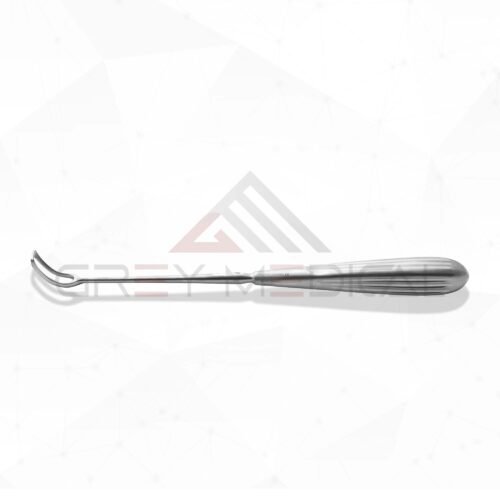
The Anatomy of a High-Quality Surgical Tool
A standard adenoid curette features a fenestrated tip, often shaped like a basket or a box, which serves the dual purpose of excision and tissue capture. The shaft is typically rigid yet slender enough to navigate the oral cavity without obstructing the surgeon’s view, leading to a handle that provides a secure grip for the necessary sweeping motion used during the procedure. High-grade stainless steel is the material of choice, ensuring that the cutting edge remains razor-sharp through repeated sterilization cycles while resisting corrosion that could compromise structural integrity. Manufacturers like GreyMedical®, a privately owned medical technology company dedicated to innovation and excellence in the craft of surgical instruments, understand that the balance and weight of the curette are just as important as its sharpness. A well-balanced instrument reduces hand fatigue during lists of multiple surgeries, allowing the surgeon to maintain peak precision from the first case of the day to the last.
Clinical Indications for Using Manual Instrumentation
While electrosurgical techniques and suction diathermy have gained popularity in recent years, many experienced ENT surgeons still prefer the tactile feedback provided by a traditional cold steel adenoid curette. This preference is particularly strong when dealing with specific anatomical variations or when the surgeon wishes to minimize the risk of thermal injury to nearby structures like the Eustachian tube cushions. The manual curettage technique allows the operator to “feel” the depth of the tissue bed, ensuring a complete removal of the obstructive adenoid pad while preserving the underlying muscular fascia. This method is exceptionally effective for “en bloc” removal, where the tissue is removed in one cohesive piece, which can be advantageous for pathological examination if necessary. Furthermore, in settings where advanced powered instrumentation may not be readily available or cost-effective, the manual curette remains the gold standard for reliable, efficient adenoidectomy.
Surgical Technique and Best Practices
Successful utilization of the adenoid curette requires a specific technique that combines gentle pressure with a decisive sweeping motion to ensure clean tissue separation. The surgeon typically introduces the instrument through the mouth, passing it behind the soft palate to reach the nasopharynx, often guided by a laryngeal mirror or, more commonly now, an endoscopic view for enhanced visualization. Once positioned superior to the adenoid pad, the surgeon engages the cutting edge against the base of the skull and performs a downward sweep, carefully following the posterior pharyngeal wall. It is crucial to maintain the correct angle of attack; if the angle is too shallow, the instrument may slip over the tissue, but if it is too steep, there is a risk of digging too deeply into the prevertebral muscle. Mastery of this manual skill is a cornerstone of ENT residency training, emphasizing the importance of proprioception and anatomical knowledge over reliance on automated power tools.
Comparing Different Blade Designs and Angles
Not all patients present with the same anatomy, which is why the adenoid curette is manufactured in various sizes and angulations to accommodate different pharyngeal dimensions. Some curettes feature a straight shaft, while others have a curved or bayonet-style shaft to improve visibility and access in patients with difficult anatomy or limited mouth opening. The width of the cutting blade is also variable, ranging from narrow sizes for small children to wider blades for adolescents or adults requiring adenoidectomy. The “St. Clair Thompson” and “Barnhill” styles are among the most recognizable variations, each offering distinct advantages depending on the surgeon’s training and the specific requirements of the case. Selecting the appropriately sized curette is paramount; a blade that is too wide may cause trauma to the lateral pharyngeal walls or the torus tubarius, while one that is too narrow may leave behind residual tissue, potentially leading to symptom recurrence and the need for revision surgery.
Post-Operative Considerations and Recovery
The impact of the surgical instrument choice extends into the post-operative recovery period, where the clean cut of a sharp curette often facilitates faster healing compared to thermal ablation methods. Because cold steel dissection creates a raw surface without the zone of thermal necrosis associated with cautery or coblation, the initial healing response can differ, though studies often show comparable long-term outcomes. Hemostasis is the primary concern immediately following curettage, usually managed with temporary packing or suction cautery if specific bleeders are identified. Patients generally experience a sore throat and some halitosis as the surgical site heals, but the absence of thermal damage often means less prolonged pain for the patient. Surgeons must explain these nuances to parents and caregivers, noting that while the technique is traditional, it remains highly effective and safe when performed with a high-quality instrument.
Maintenance and Sterilization of Surgical Assets
To ensure longevity and consistent performance, the care regimen for surgical instruments must be rigorous and strictly adhered to by the sterile processing department. An adenoid curette requires careful cleaning immediately after use to remove biological debris from the fenestrated tip and the joints of the handle, as dried blood can lead to pitting and dullness. Visual inspection under magnification should be a standard part of the preparation workflow, checking for burrs on the cutting edge that could cause unnecessary tissue trauma. Regular sharpening or re-honing of the blade is essential, as a dull instrument forces the surgeon to apply excessive pressure, increasing the risk of slipping and accidental injury. Companies like GreyMedical® often provide specific guidelines for the care of their instruments, ensuring that the investment in high-quality steel pays dividends in durability and reliability over years of service.
The Future of Traditional Instruments in Modern Surgery
Despite the rapid technological advancement in medical devices, the relevance of manual instruments remains undiminished in the specialized field of otolaryngology. There is a cyclical nature to surgical trends, and many surgeons are returning to cold steel techniques due to cost-effectiveness and the desire to reduce operative time for simple cases. The tactile connection between the surgeon’s hand and the patient’s anatomy provided by these tools offers a level of control that robotic or powered systems struggle to replicate fully. Innovations in metallurgy and ergonomic design continue to refine these classic tools, making them lighter, stronger, and more comfortable to use. As long as adenoidectomy remains a common procedure, the demand for precise, reliable manual instrumentation will persist, proving that sometimes the most effective solution is a refined version of a time-tested design.
Choosing the Right Manufacturer for Medical Excellence
The selection of surgical inventory is a critical decision for hospital procurement departments and individual surgeons who demand the best for their patients. It is not merely about finding the lowest price but about securing instruments that offer consistent quality, precise engineering, and reliable supply chain support. When a surgeon reaches for an instrument during a procedure, they need absolute confidence that it will perform exactly as expected, without failure or flaw. Partnering with a reputable supplier ensures that the surgical team is equipped with tools that meet the highest standards of safety and efficacy. GreyMedical® exemplifies this commitment, standing out as a privately owned medical technology company dedicated to innovation and excellence in the craft of surgical instruments. By prioritizing quality manufacturing, healthcare providers can ensure better outcomes and safer procedures for their patients.