
Protect Your Property from Fire with Intumescent Coatings
Intumescent coatings offer one of the most reliable passive fire protection methods for buildings and infrastructure. When exposed to high temperatures, these coatings expand to create a thick, insulating layer that slows down heat transfer to structural materials like steel, wood, or concrete. This expanded char layer delays the weakening of critical structural elements, significantly extending the time before collapse occurs in a fire.
This form of protection is essential in fire safety planning, particularly in commercial, industrial, and high-occupancy buildings where fire spread can have devastating consequences. By applying an intumescent coating, you are not just meeting code; you are creating a life-safety buffer, buying precious minutes during fire events.
This guide offers an in-depth look into how these coatings function, their types, performance attributes, application requirements, and the critical factors to evaluate before choosing a product. It is written specifically to deliver value to those researching fireproofing options—not to promote products, but to equip decision-makers with practical, useful information.
How Intumescent Coatings React During Fire Exposure
When heat activates an intumescent coating—usually between 200°C and 250°C—it undergoes a chemical reaction that releases gases and causes the coating to expand many times its original thickness. This process forms a stable, insulating char layer. The expanded layer insulates the substrate from heat, delaying its temperature rise and structural degradation.
In steel-framed buildings, for instance, once the metal reaches around 550°C, it starts losing half of its load-bearing strength. Intumescent coatings can hold this temperature at bay for up to two hours, depending on formulation and thickness. In wood structures, the charring effect prevents ignition and slows the combustion process, buying time for fire suppression systems and emergency response teams.
The coating does not extinguish flames, but it buys critical time by slowing structural damage and reducing fire spread.
Key Types of Intumescent Coatings
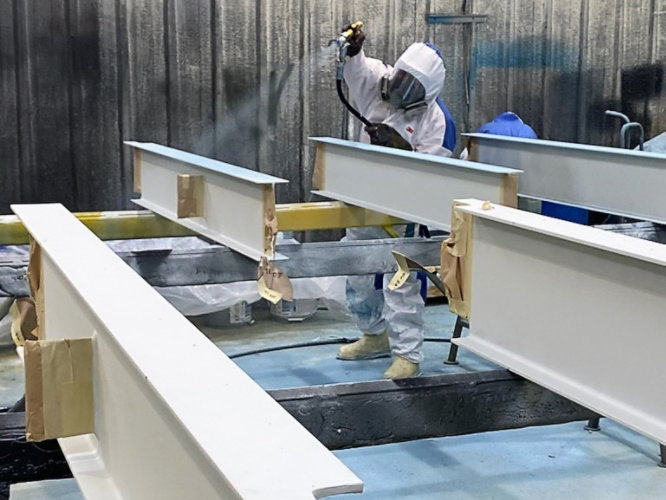
Not all intumescent coatings are the same. Selection depends on the building type, environmental exposure, substrate material, and fire resistance requirements. Here’s a breakdown of the three core categories:
|
Type |
Application Surface |
Drying Time |
Environmental Suitability |
Durability |
Best Use Case |
|---|---|---|---|---|---|
|
Solvent-Based |
Steel, Wood |
Moderate |
Industrial, High-Humidity |
High |
Offshore, Warehouses |
|
Water-Based |
Interior Steel, Wood |
Fast |
Indoor, Low-Humidity |
Moderate |
Commercial Buildings, Homes |
|
Epoxy-Based |
Steel, Concrete |
Slow |
Marine, Harsh Environments |
Very High |
Oil Rigs, Tunnels, Bridges |
Solvent-based coatings offer greater water resistance and adhesion under fluctuating humidity and temperatures, making them a reliable choice for industrial and exterior surfaces. Water-based coatings, on the other hand, are more environmentally responsible and easier to work with indoors, especially in ventilation-limited areas.
Epoxy-based coatings are generally used in extreme conditions where both corrosion resistance and fire resistance are critical. Their high durability comes at the cost of slower drying times and more complex application processes.
Technical Data and Properties
Understanding the technical performance of intumescent coatings is essential for correct application and long-term performance. Below is a summary of critical specifications:
|
Property |
Typical Range |
|---|---|
|
Expansion Ratio |
20:1 to 50:1 |
|
Activation Temperature |
200°C to 250°C |
|
Char Thickness (Expanded) |
10 mm to 30 mm depending on product |
|
Dry Film Thickness (DFT) |
0.5 mm to 3 mm (before expansion) |
|
Fire Resistance Rating |
30 min to 120 min |
|
VOC Content (Solvent-Based) |
250–500 g/L |
These figures are approximate and vary across products. Always refer to manufacturer datasheets and third-party certifications (e.g., UL 263, EN 13381) to ensure suitability for your project’s needs.
Application Requirements and Best Practices
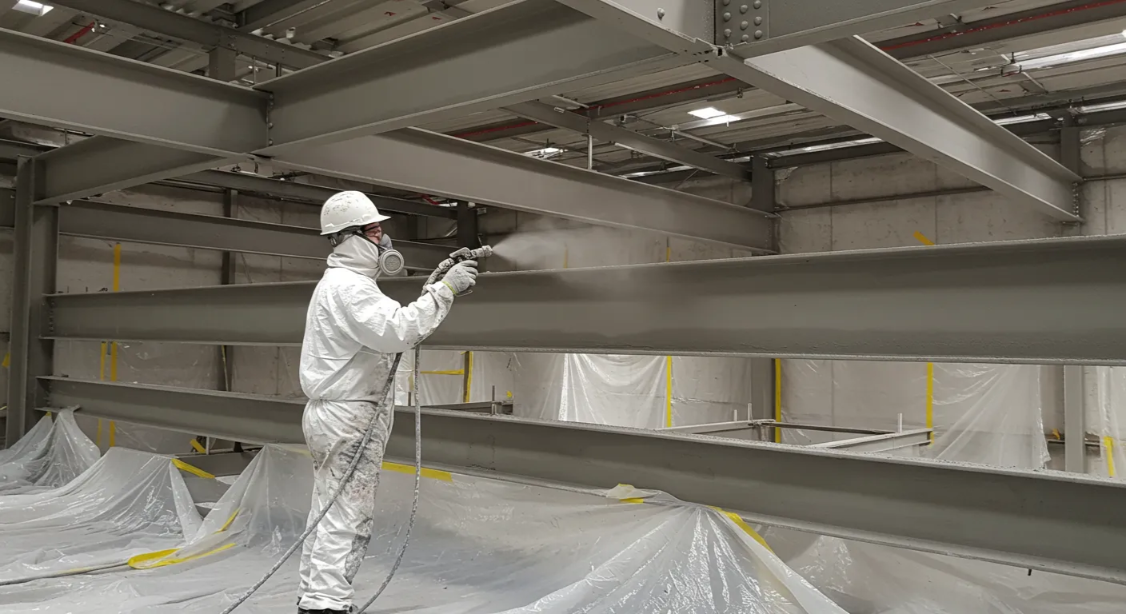
For an intumescent coating to perform as expected, surface preparation and application must be executed correctly. The process is typically multi-step, involving cleaning, priming, coating, and in some cases, top-coating.
Surfaces should be clean, dry, and free of rust, oil, or dust. Any contamination affects adhesion and reduces fire performance. Primers are often needed, particularly on steel, to provide a stable base and prevent corrosion. Not all primers are compatible with all intumescent coatings, so it’s critical to verify system compatibility.
The coating is typically applied via airless spray for consistency and speed, although brushing or rolling is used for small or detailed areas. The final dry film thickness (DFT) is not just a guideline—it is a performance requirement. A lower-than-required DFT may not provide the needed fire resistance. Higher-than-needed DFT can crack during curing and lead to failure under fire conditions.
Curing times depend on environmental conditions, type of coating, and film thickness. Water-based coatings cure faster in warm, dry climates, while solvent and epoxy coatings may require controlled environments or longer wait times before recoating or top-coating.
Pre-Decision Considerations
Before choosing an intumescent coating system, several practical and regulatory considerations must be evaluated. These will directly impact product selection, timeline, and compliance outcomes.
First, determine the building code requirements for fire resistance in your jurisdiction. Is a 30-minute rating sufficient, or does the structure need 120-minute protection? Different occupancy types—such as hospitals, schools, and factories—often have stricter fire code demands.
Next, assess the environment. Indoor climate-controlled spaces can use more types of coatings, including water-based. Outdoor structures require solvent-based or epoxy systems due to their resistance to moisture, UV, and temperature changes. For coastal or chemical-exposed environments, epoxy-based coatings are often the only reliable solution.
Substrate material is another determining factor. Steel requires different bonding characteristics than wood or concrete. Intumescent coatings formulated for steel may crack or delaminate on wood if used improperly. Check manufacturer guidelines for approved surfaces and test adhesion when in doubt.
Access is often overlooked but plays a significant role. Large steel beams with ample working space allow for quick application with sprayers. Tight cavities, ceilings, or overhangs complicate access and may increase labor or compromise application consistency.
Project timelines also influence coating choice. Water-based systems cure faster but may not offer high durability. If the building needs quick turnaround and short-term occupancy, water-based could be an option. For permanent structures requiring long-term performance, solvent or epoxy types offer better resilience.
Real-World Comparison Table
Here’s a comparative view of sample performance metrics to show how different products stack up in key areas:
|
Brand A |
Brand B |
Brand C |
|---|---|---|
|
Water-Based |
Solvent-Based |
Epoxy-Based |
|
2-Hour Rating |
1.5-Hour Rating |
2.5-Hour Rating |
|
Low VOC |
Moderate VOC |
High VOC |
|
Indoor Use |
Indoor/Outdoor |
Extreme Environments |
|
Fast Drying |
Moderate Drying |
Slow Drying |
While not exhaustive, this table offers a framework for evaluating coatings based on performance features. Always use certified fire tests and consult with qualified fire engineers or inspectors when making final selections.
Common Questions
Why is it important to apply the right dry film thickness (DFT)? DFT is the actual barrier that insulates the substrate in a fire. If it’s too thin, the coating will fail prematurely. If it’s too thick, it may crack or not cure properly. Always follow certified test data.
Can intumescent coatings be top-coated with regular paint? Only if the paint is tested for compatibility. Using an incompatible topcoat can prevent the intumescent layer from expanding correctly in a fire.
Is recoating required over time? Yes, particularly in outdoor or high-abrasion environments. Regular inspection will determine if cracks, peeling, or weathering have affected the coating.
Are these coatings toxic during or after application? Solvent-based coatings can release VOCs during application. Adequate ventilation and PPE are essential. Once cured, they are stable and safe.
Do intumescent coatings work alone or need other systems? They are typically one layer of a comprehensive fire safety plan. Combined with alarms, sprinklers, and design measures, they support passive resistance.
Protect Your Structure with the Right Knowledge
Choosing the right intumescent coating is not just about fire resistance—it’s about matching materials, performance expectations, environmental realities, and legal requirements. Fire events don’t wait for second chances, so application errors or wrong product selection can have serious consequences.
Understand the coating’s behavior in fire, its performance under local climate conditions, and its durability across years. Evaluate the substrate type, fire code requirements, and available equipment before committing to a product.
Use this guide to inform smarter decisions based on performance, not just manufacturer claims.
Reviewer: Emily Martinez has 12 years of experience in spray foam insulation. She reviewed this article and suggested ways to make the content more useful for contractors looking to grow their customer base.