
Real Savings Through Residential Spray Foam Insulation
The real savings homeowners get from residential spray foam insulation come from two distinct areas: immediate, direct savings on monthly energy bills, and long-term, indirect savings from avoiding costly home repairs. While the idea of cutting heating and cooling costs by up to 40% is what initially grabs attention, the protection spray foam offers against moisture damage, mold growth, and premature HVAC failure often provides an even greater financial return over time. It’s an investment that pays you back month after month while also acting as a protective measure for your property.
Many people get stuck on the higher upfront cost of spray foam compared to materials like fiberglass, but this perspective is incomplete. To understand the true value, you have to look at the total cost of ownership. This guide, built on professional industry experience, breaks down exactly where the savings come from and how they add up to make spray foam a financially sound choice for many homeowners.
Unpacking the Direct Energy Savings
The most immediate and easily measured savings come from a dramatic reduction in energy consumption. The main reason for this is spray foam’s ability to create an exceptional air seal. According to the U.S. Department of Energy, air leakage through gaps in a home’s exterior shell can be responsible for a huge portion of its energy loss. Conditioned air escapes, and unconditioned air gets in, forcing your HVAC system to work overtime.
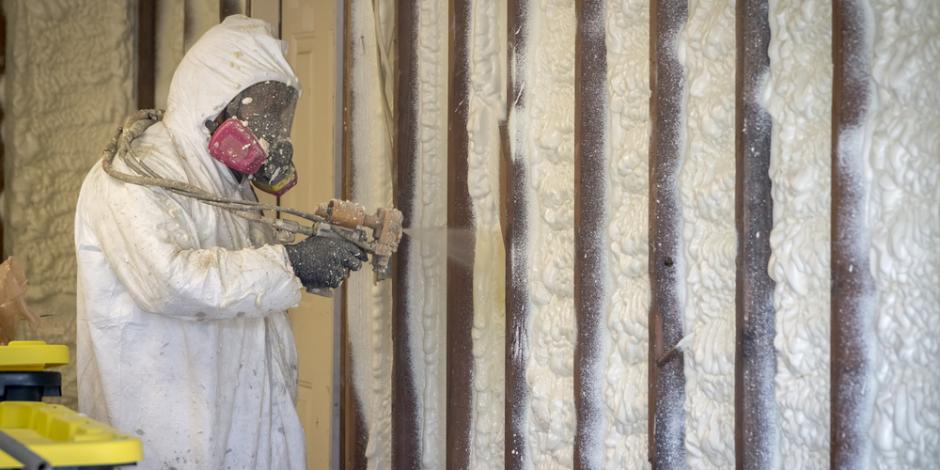
Traditional insulation materials like fiberglass batts or blown-in cellulose don’t stop this air movement. Spray foam, on the other hand, is applied as a liquid that expands to fill every single crack, crevice, and cavity. It adheres to the surrounding materials, creating a solid, continuous barrier that is virtually airtight.

This air seal is the key to real-world performance. By stopping leaks, spray foam insulation ensures that the R-value you pay for is what you actually get. The result is a home that stays warmer in the winter and cooler in the summer with significantly less effort from your heating and cooling systems. This translates directly into lower utility bills, often reducing the heating and cooling portion by a substantial margin.
The Hidden Financial Benefits: Indirect Savings
While lower energy bills are great, some of the most impressive savings from spray foam are less obvious. They come from preventing problems that can cost thousands of dollars to fix.
Extending the Life of Your HVAC System
Your home’s heating and air conditioning system is one of its most expensive and complex components. In a leaky, poorly insulated home, the HVAC unit is forced to run constantly, putting a huge strain on its parts. This continuous operation leads to more frequent breakdowns and a much shorter service life.
By creating an airtight and well-insulated home, spray foam drastically reduces the system’s workload. It cycles on less often and runs for shorter periods. This reduced strain means fewer repairs and a longer lifespan for your equipment, saving you from a premature and very expensive replacement.
Preventing Costly Moisture and Mold Issues
Moisture is the enemy of a healthy home. It can cause wood to rot, drywall to crumble, and lead to mold and mildew, which can be hazardous to your health and extremely expensive to remove. Closed-cell spray foam is a unique insulation material because it is waterproof and acts as a vapor barrier.
When applied in moisture-prone areas like basements, crawl spaces, and attic rooflines, it stops moisture from entering the home’s structure. This prevents condensation from forming on cool surfaces, which is a primary cause of mold. The cost of a professional mold rectification job can easily run into the thousands, making the preventative power of closed-cell foam an incredible long-term financial benefit. This is especially true in hot, humid climates, where encapsulating an uninsulated crawl space with closed-cell foam is a proven strategy to prevent costly and unhealthy mold problems.
Calculating the Return on Investment (ROI)
To properly evaluate the savings, you need to look at the full financial picture, including the initial cost, the payback period, and the increase in home value. Spray foam does have a higher upfront cost, but its superior performance often leads to a faster ROI than other insulation types.
Here is a simplified comparison of how spray foam stacks up against other common options:
|
Feature |
Fiberglass Batts |
Blown-in Cellulose |
Spray Foam Insulation |
|---|---|---|---|
|
Initial Cost |
Low |
Low-Moderate |
High |
|
Air Sealing |
None |
Minimal |
Excellent |
|
Moisture Control |
Poor (can hold moisture) |
Poor (can hold moisture) |
Excellent (closed-cell) |
|
Typical Energy Savings |
10-20% |
15-25% |
20-40% or more |
|
Estimated Payback |
10+ years |
8-10 years |
5-8 years |
Beyond the payback period, spray foam also adds significant value to your home. Energy efficiency is a major selling point for today’s homebuyers. A home with spray foam insulation is seen as a premium, low-maintenance property with guaranteed lower utility bills, which can lead to a higher resale price. To shorten your payback period even further, it’s always a good idea to check for any federal, state, or local utility rebates. These programs can help offset the initial cost of a spray foam installation.
Things to Consider Before You Invest
To make sure you get the maximum savings from a spray foam project, it’s important to plan correctly.
- Get a Professional Energy Audit: This is the best first step. An audit will use tools like a blower door test and an infrared camera to pinpoint exactly where your home is losing the most energy, allowing you to focus your investment where it will have the biggest impact.
- Choose the Right Type of Foam: Open-cell foam is great for soundproofing and interior walls, while closed-cell foam is the right choice for areas that need moisture control and the highest R-value per inch. A good contractor will recommend the right product for each application.
- Hire an Experienced Installer: The savings are entirely dependent on a quality installation. An inexperienced crew can create a mess, apply the foam improperly, and negate all of its benefits. Always vet your contractor carefully.
With these considerations in mind, it’s helpful to review some of the most frequent questions homeowners have about spray foam.
Common Questions About Spray Foam Savings
How much money can I really save with spray foam?
The exact amount depends on your home, climate, and lifestyle, but many homeowners see their heating and cooling costs drop by 20% to 40%. For a home with an average monthly energy bill of $250, that could mean savings of $600 to $1,200 per year.
Is the higher upfront cost of spray foam actually worth it?
When you consider the combined savings from energy bills, avoided HVAC repairs, moisture damage prevention, and increased home value, the long-term ROI for spray foam is often much higher than for cheaper insulation materials.
Can I install spray foam myself to save money?
Absolutely not. This is a common but dangerous misconception. Professional spray foam equipment is expensive and complex, and the chemical components are hazardous during application. A failed DIY attempt will not only perform poorly but can also create a serious health and safety issue in your home.
Will my savings be greater in a hot climate or a cold climate?
Spray foam provides excellent savings in both. In cold climates, it excels at stopping heat from escaping. In hot climates, its air-sealing and thermal resistance are incredibly effective at keeping the oppressive heat and humidity out of your home.
How does sealing my attic with spray foam save me money?
When you apply spray foam to the underside of the roof deck, you create what’s known as a “conditioned” or “unvented” attic. This brings your HVAC system and ductwork inside the insulated part of your home. In a traditional attic, ducts are exposed to extreme temperatures, which causes huge energy losses. A conditioned attic can make your HVAC system up to 15% more efficient on its own.
Are there financing options for a spray foam project?
Yes. Many insulation contractors offer financing plans to help homeowners manage the upfront cost. Additionally, there are often green energy loans available through banks and credit unions that offer favorable terms for energy-efficiency projects.
A Smarter Investment in Your Home
Ultimately, Professional spray foam insulation is a comprehensive solution that makes a home more efficient, durable, and comfortable. By viewing it as a long-term investment in your property’s performance and protection, the higher initial cost becomes a logical and financially sound decision.
Get a Custom Savings Estimate for Your Home
Every home is different, and the best way to understand the potential savings for your specific situation is to get a professional evaluation. An expert can assess your home’s current condition and provide a detailed analysis of how spray foam could benefit you. The experienced team at Premier Insulation offers these types of consultations for homeowners. You can reach them at (229) 554-3939 or by email at [email protected] to schedule an assessment.
Reviewer: Jack Parker, a spray foam professional with 7 years of experience, reviewed this post and helped improve sections dealing with brand clarity and customer communication.