
Spray Foam Services That Help Reduce Energy Costs and Improve Comfort
Professional spray foam services reduce energy costs and improve home comfort by creating a seamless thermal envelope that prevents air leakage and heat transfer. Unlike simple material upgrades that homeowners might attempt on their own, professional services involve a comprehensive approach that includes diagnostic testing, precise chemical application, and safety monitoring. By sealing the gaps, cracks, and crevices that traditional insulation misses, these services stabilize indoor temperatures and significantly lower the workload on heating and cooling systems.
Homeowners often face the challenge of rising utility bills and rooms that never seem to stay at the right temperature. The root cause is frequently an incomplete barrier between the living space and the outdoors. Industry data indicates that air leakage alone contributes to nearly 40% of the energy loss in an average residential building. Addressing this issue requires more than just adding thickness to existing insulation; it requires a strategic application of expanding foam to seal the building structure physically. This guide examines the specific services available to property owners and how each contributes to a more efficient living environment.
Comprehensive Building Envelope Assessments
Before any foam is sprayed, a high-quality service provider begins with a detailed assessment of the building envelope. This diagnostic phase is essential for identifying exactly where energy is escaping and determining the correct type of foam for the specific application. Technicians use specialized tools to “see” invisible air leaks that compromise the home’s efficiency.
Identifying Thermal Weak Points
Thermal imaging cameras are standard tools used during an assessment to detect temperature variations across walls and ceilings. These images reveal where insulation is missing, settled, or performing poorly. By pinpointing these specific areas, the service team creates a targeted plan that addresses the worst offenders first, ensuring the homeowner gets the maximum return on their investment.
Blower Door Testing Protocols
A blower door test involves mounting a powerful fan in an exterior door frame to depressurize the house. This forces outside air to rush in through any unsealed cracks or openings, allowing technicians to locate leaks physically. This data provides a baseline for the home’s airtightness and helps calculate the necessary ventilation requirements once the sealing process is complete.
Attic Encapsulation and Roof Deck Insulation
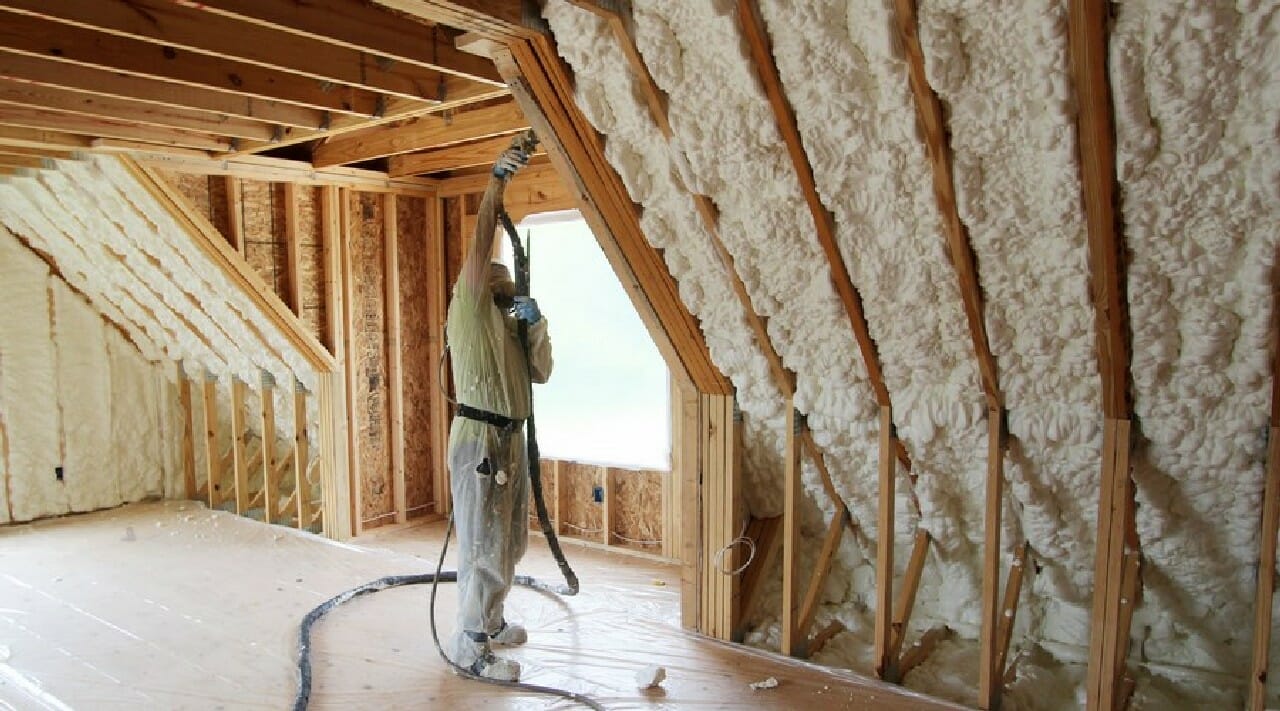
The attic is typically the primary source of heat gain in the summer and heat loss in the winter. Professional attic encapsulation involves applying spray foam directly to the underside of the roof deck rather than the attic floor. This method moves the thermal boundary to the roofline, bringing the attic space into the conditioned envelope of the house.
Stopping the Stack Effect
The “stack effect” occurs when warm air rises and escapes through the top of the house, pulling cold, unconditioned air in from the bottom. Sealing the roof deck effectively puts a lid on the house, stopping this vertical airflow. This stabilization prevents the HVAC system from fighting a constant draft, leading to immediate energy savings and a more consistent temperature across all floors.
Bonus Tip: Inspecting Ventilation Baffles
When insulating the roof deck, it is vital to check that any required intake vents are not blocked unless the system is designed to be completely unvented. A professional installer will ensure that the roof system breathes correctly or is sealed according to manufacturer specifications to prevent moisture buildup.
Managing HVAC in Conditioned Attics
Bringing the attic inside the thermal envelope protects ductwork from extreme temperatures. Ducts running through a 130-degree vented attic lose significant energy, but ducts in a conditioned attic deliver air at the intended temperature. This service alone can improve HVAC efficiency by up to 20%.
Crawl Space Conditioning and Sealing
Homes built on raised foundations often suffer from cold floors and high humidity due to the open space beneath them. Crawl space conditioning services focus on sealing the ground and walls to separate the house from the damp earth below. This process protects the home’s structure and improves indoor air quality.
Controlling Moisture and Humidity
A vented crawl space allows humid outdoor air to enter and condense on cool surfaces, leading to mold growth and wood rot. Service providers install a heavy-duty vapor barrier on the dirt floor and apply closed-cell spray foam to the foundation walls. This combination stops moisture migration and keeps the air beneath the home dry and stable.
Vapor Barriers vs. Full Encapsulation
A simple vapor barrier is a sheet of plastic on the ground, but full encapsulation seals the vents and insulates the walls. Encapsulation is the superior service for energy efficiency because it eliminates the entry of cold winter air and hot summer humidity. This service transforms a damp, dirty area into a clean, semi-conditioned space.
Comparison of Professional Insulation Methods
Choosing between different insulation services requires understanding the performance differences between materials and application methods. While DIY options exist, they rarely match the performance of professional spray foam. The following table outlines how professional spray foam compares to other common insulation strategies regarding efficiency and longevity.
|
Feature |
Professional Spray Foam |
DIY Foam Kits |
Fiberglass Batts |
|---|---|---|---|
|
Air Sealing |
Excellent (Total Seal) |
Good (Variable Quality) |
Poor (Air Permeable) |
|
R-Value Consistency |
High (Uniform application) |
Moderate (Risk of gaps) |
Moderate (Subject to fit) |
|
Lifespan |
80+ Years |
10-20 Years |
15-25 Years |
|
Moisture Control |
Integrated Vapor Barrier |
Minimal |
Absorbs Moisture |
|
Installation Time |
1-2 Days |
Weeks (Labor intensive) |
Days |
|
Safety |
Managed Ventilation |
High Risk if poorly vented |
Low Risk (Irritant) |
Wall Injection and Retrofit Services
For existing homes with finished walls, tearing down drywall to insulate is not a practical option. Injection foam services allow professionals to insulate wall cavities through small holes drilled from the exterior or interior. This minimally invasive technique improves wall R-value and soundproofing without the mess of a full renovation.
Minimizing Construction Disruption
The injection process involves drilling small holes between studs and pumping a specialized foam that expands to fill the void. This foam flows around electrical wires and pipes, ensuring complete coverage. Once the cavity is full, the technician patches the holes, leaving the wall structurally sound and thermally efficient.
Sound Dampening Benefits
Beyond energy savings, filling empty wall cavities significantly reduces noise transmission from the outdoors. Street traffic, lawnmowers, and neighborhood noise are muffled by the dense foam barrier. This service is particularly popular in urban environments where quiet is a luxury.
Things to Consider Before Hiring a Service
Selecting a spray foam provider is a decision that impacts the safety and value of a property. Homeowners should evaluate potential contractors based on their certifications, insurance coverage, and experience with similar projects. A low price often indicates a lack of proper equipment or safety protocols.
Evaluating Contractor Certifications
Reputable companies hold certifications from foam manufacturers and industry organizations like the Spray Polyurethane Foam Alliance (SPFA). These credentials prove that the installers have undergone rigorous training in chemical safety and application techniques. Hiring a certified professional prevents common issues like off-ratio mixing or incomplete curing.
Understanding Re-Entry Times
During the application process, spray foam releases gas that requires the home to be vacated for a specific period, typically 24 hours. A professional service will provide a clear timeline and safety plan for when the family can return. Ignoring these safety windows can lead to health issues, so clear communication is essential.
Common Questions About Spray Foam Services
Property owners frequently ask specific questions regarding the logistics and long-term effects of spray foam services. Addressing these concerns helps clear up misconceptions about cost and safety. The following section answers five key questions regarding these professional services.
How much energy can spray foam actually save?
While results vary based on the home’s age and design, most homeowners see energy bill reductions between 30% and 50%. The most significant savings occur in homes that previously had major air leaks in the attic or crawl space.
Will spray foam affect my home’s resale value?
Energy-efficient upgrades are highly attractive to potential buyers. Documentation of professional spray foam installation can increase resale value by demonstrating lower future operating costs and a modern, well-maintained building envelope.
Is spray foam safe for my family and pets?
Once the foam has fully cured and off-gassed, it is inert and safe for all occupants. Professional services use high-velocity ventilation during installation to remove fumes, ensuring the indoor air quality is safe upon re-entry.
Can spray foam hide roof leaks?
Open-cell foam allows water to pass through, making leaks visible, while closed-cell foam can mask the exact entry point of water. However, closed-cell foam typically prevents the water from entering the attic space at all. Professional roofers and insulators coordinate to ensure the roof deck is sound before application.
How long does a typical installation take?
Most residential projects, such as an attic or crawl space, are completed within one to two days. Larger whole-home retrofits may take three to four days depending on the complexity of the work and the amount of preparation required.
Building a More Efficient Future
Investing in professional spray foam services offers a direct path to a more comfortable, durable, and energy-efficient home. By sealing air leaks and improving thermal resistance, these services solve the fundamental problems that lead to high utility bills and uneven temperatures. Whether through attic encapsulation, crawl space conditioning, or wall injection, the result is a living environment that supports the well-being of its inhabitants for decades.
Connect with Insulation Professionals
H&R Spray Foam Insulation provides expert spray foam services designed to maximize energy savings and home comfort. Their team handles every aspect of the project, from the initial thermal assessment to the final safety check. They focus on delivering custom solutions that address the unique needs of each property.
For homeowners ready to improve their home’s efficiency, the company is available for consultations at (512) 862-9637. To request a detailed service quote or ask specific technical questions, emails can be sent to [email protected]. H&R Spray Foam Insulation is committed to helping clients achieve long-term savings through quality insulation.
Author: With 15 years of banking experience and five years managing H&R Spray Foam Insulation, Edith is passionate about building strong relationships with customers. Her favorite part of the role is connecting with clients and ensuring their needs are met as she works alongside them to improve the health, comfort, and energy efficiency of their homes.
Reviewer: With 7 years in the spray foam insulation business, Ella Adams offered useful feedback on this post, helping make sure the tips were both realistic and easy to apply.