
SSCF Heat Exchanger: A Breakthrough in Compact and Efficient Thermal Transfer
In the evolving field of thermal control, the SSCF heat exchanger has emerged as a specialized solution designed to meet cutting-edge business demands for compact, electricity-efficient, and excessive-performance warmness transfer systems. The acronym SSCF stands for Semi-Welded, Spiral Coil-Finned, which describes the core structural and useful characteristics of this advanced heat exchanger. It is engineered to provide gold standard warmness trade in packages in which space constraints, stress variability, and fluid sorts require particular customization and enhanced durability.
As industries strive for sustainable manufacturing and operational performance, the position of modern additives like the SSCF warmth exchanger turns into an increasing number of critical. An Industrial product manufacturer typically seems to include such generation into systems that require constant performance beneath dynamic conditions, whether in electricity flora, refineries, or chemical production devices. The advanced geometry and creation of SSCF devices offer great enhancements over traditional exchangers, mainly in packages with grimy or viscous fluids, in which clogging and fouling pose operational dangers.
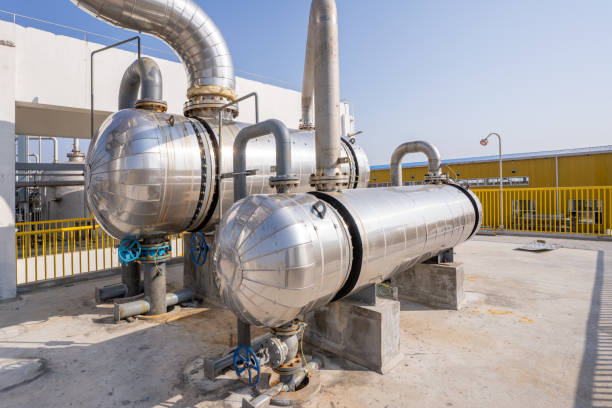
Construction and Working Principle of SSCF Heat Exchangers
Structural Design and Material Configuration
The SSCF warmness exchanger is built the usage of a spiral coil association, frequently semi-welded to facilitate excessive strength and simplicity of protection. This layout integrates a finned surface within the coiled channels to increase the floor region for heat transfer whilst maintaining compactness. The semi-welded configuration permits one side of the exchanger to be opened for cleaning or inspection, a feature specially treasured in industries coping with fouling-inclined fluids.
Materials used in SSCF exchangers generally consist of stainless-steel, carbon metallic, or excessive-overall performance alloys, selected based at the thermal, chemical, and mechanical necessities of the utility. The design reduces dead zones inside the exchanger, that are not unusual in shell-and-tube models, thereby minimizing the chance of fluid stagnation and thermal inefficiency.
Heat Transfer Mechanism
The SSCF warmness exchanger operates on the principle of pressured convection improved through prolonged floor region and spiral waft. As the recent and bloodless fluids enter their respective channels, they go with the flow via the spiral coil paths, which might be intently wound to sell turbulent waft. This turbulence boosts the charge of heat switch whilst preventing deposits from selecting the warmth change surfaces.
The spiral nature of the coil guarantees a counter-modern-day flow arrangement, one of the maximum green configurations for thermal switch. This association permits for a regular temperature gradient throughout the heat exchanger, ensuring higher power recuperation and minimizing losses.
Applications of SSCF Heat Exchangers in Modern Industry
Chemical and Petrochemical Processing
In chemical processing facilities, wherein fluids may be reactive, viscous, or incorporate particulates, the SSCF heat exchanger gives a durable and smooth-to-keep solution. Its semi-welded get right of entry to function allows operators to perform routine renovation with out disassembling the entire unit. The spiral layout helps excessive warmness switch coefficients while ensuring that strain drops stay inside workable limits.
Petrochemical flowers additionally benefit from SSCF technology because of its potential to resist aggressive chemical substances and fluctuating running conditions. These exchangers are regularly used for interchangers, condensers, and reboilers in distillation and response systems where reliable heat control is important.
Food and Beverage Industry
In food and beverage processing, cleanliness and hygiene are non-negotiable. SSCF warmness exchangers meet sanitary layout standards by using easy indoors surfaces and clean-in-vicinity (CIP) competencies. They are utilized in strategies inclusive of pasteurization, sterilization, and cooking, wherein specific thermal manage directly impacts product excellent and protection.
Their spiral creation enables thorough warmth switch in spite of products which have high viscosities, including sauces, syrups, or dairy concentrates. This reduces processing time while keeping the dietary integrity of the food.
Power Generation and HVAC Systems
Power plants require green warmness exchangers to switch strength among distinct fluid streams. SSCF heat exchangers are mainly powerful in closed-loop structures where lengthy-time period balance and efficiency are vital. Their layout supports both high-pressure steam and occasional-temperature coolant packages.
In HVAC structures, SSCF exchangers are utilized in chillers and warmth pumps, wherein their compact length and high efficiency permit optimized temperature manipulate in both residential and business settings. Their resistance to fouling makes them appropriate for variable drift situations that arise in actual-global HVAC operations.
Advantages of Using SSCF Heat Exchangers
Compact Design and Space Efficiency
The spiral coil creation of SSCF heat exchangers permits for a compact footprint, making them ideal for installations wherein area is restricted. Despite their small length, those exchangers offer a huge heat switch area way to the inclusion of prolonged fins within the coil channels.
This compactness simplifies device format and reduces set up expenses. The potential to put in the unit horizontally or vertically provides in addition flexibility, enabling integration into new and existing systems with minimum adjustments.
Enhanced Heat Transfer and Fouling Resistance
The spiral pathway guarantees non-stop contact among the fluid and the warmth transfer floor, creating a high degree of turbulence. This now not only improves warmth transfer performance but also prevents fouling by means of dislodging particles which could settle in conventional heat exchangers.
Fouling resistance extends the maintenance intervals and improves operational reliability. For industries dealing with particulate-weighted down or high-viscosity fluids, this gain drastically reduces downtime and cleansing necessities.
Ease of Maintenance and Inspection
Unlike fully welded gadgets, SSCF heat exchangers characteristic a semi-welded layout that allows one channel to be opened. This layout simplifies ordinary protection obligations consisting of cleaning or inspection and decreases the time and exertions fees related to full disassembly.
Maintenance flexibility also enhances protection, mainly in industries where unsafe fluids are used. Technicians can access the exchanger without traumatic the whole gadget, making sure a safer and greater green maintenance system.
SSCF Heat Exchangers and Industrial Evolution
Supporting Sustainable Operations
With rising environmental consciousness and stricter policies, industries are shifting in the direction of more power-efficient systems. SSCF warmness exchangers aid this shift by way of supplying better energy recovery abilties and minimal thermal losses. Their ability to function correctly even at low temperature differences makes them appropriate for low-grade waste warmth recuperation, a key issue of sustainable power systems.
By integrating SSCF era, industries can reduce gasoline intake and emissions, contributing to broader carbon-reduction strategies. This aligns with worldwide initiatives towards purifier and greater efficient commercial operations.
Integration into Smart Industrial Systems
Modern commercial structures are increasingly adopting smart technologies for real-time tracking and automation. SSCF warmth exchangers can be fitted with sensors that monitor parameters along with temperature, stress, and glide fee. These records factors may be analyzed to optimize performance, agenda protection, and avoid sudden screw ups.
The ability to monitor and manipulate warmth trade approaches remotely enhances universal gadget reliability and helps predictive maintenance techniques. This virtual integration is a giant step in the direction of Industry four.0 and smarter production ecosystems.
Conclusion
The SSCF warmth exchanger represents a fusion of innovative engineering, compact layout, and excessive-efficiency overall performance. Its semi-welded, spiral coil-finned creation enables industries to overcome traditional demanding situations related to fouling, upkeep, and confined space. Whether utilized in chemical vegetation, food processing gadgets, strength structures, or HVAC installations, this exchanger grants superior warmth switch competencies and operational reliability.
As industries flow in the direction of sustainable and smart production practices, the SSCF layout offers a destiny-equipped solution that aligns with current overall performance expectations. Its adaptability, combined with low protection desires and energy-green operation, positions it as a treasured issue in thermal management structures designed by any forward-questioning Industrial product manufacturer.
FAQ
What does SSCF stand for in SSCF warmth exchanger?
SSCF refers to Semi-Welded, Spiral Coil-Finned, which describes the construction style of the warmth exchanger that enhances each warmness transfer and simplicity of protection.
Where is an SSCF warmness exchanger generally used?
It is extensively utilized in chemical processing, electricity technology, meals manufacturing, and HVAC structures where compactness, fouling resistance, and high thermal overall performance are required.
What are the primary advantages of the SSCF design?
Key blessings consist of compact footprint, more suitable warmness transfer thru spiral flow, reduced fouling threat, and simplicity of maintenance because of the semi-welded shape.
Can SSCF exchangers deal with aggressive fluids?
Yes, with the right material choice such as stainless steel or high-performance alloys, SSCF exchangers can operate reliably with competitive or corrosive fluids.
How do SSCF warmness exchangers support strength efficiency?
Their design maximizes thermal recuperation through ensuring continuous warmth switch throughout the coil surfaces, in spite of low temperature differentials, making them best for sustainable operations.