
The Benefits of Smartly Designed Residential Insulation Systems
A smartly designed residential insulation system functions as more than just a barrier against the cold; it acts as a comprehensive environmental separator that manages heat flow, air movement, and moisture simultaneously. By treating the home as a unified system rather than a collection of isolated parts, these advanced designs eliminate the common failure points found in traditional construction. The primary benefit lies in the creation of a continuous, airtight thermal envelope that stabilizes indoor temperatures, drastically reduces energy consumption, and protects the structural integrity of the building from rot and decay.
Many homeowners mistakenly believe that simply adding more thickness to their insulation will solve comfort issues. However, without addressing air leakage and thermal bridging, R-value alone offers diminishing returns. A smart design prioritizes the physics of building science, ensuring that the insulation material aligns perfectly with the air barrier and vapor retarder. This strategic approach results in a home that requires less energy to heat and cool, maintains better indoor air quality, and creates a quieter, more durable living space for its occupants.
The Holistic Approach to Building Envelopes
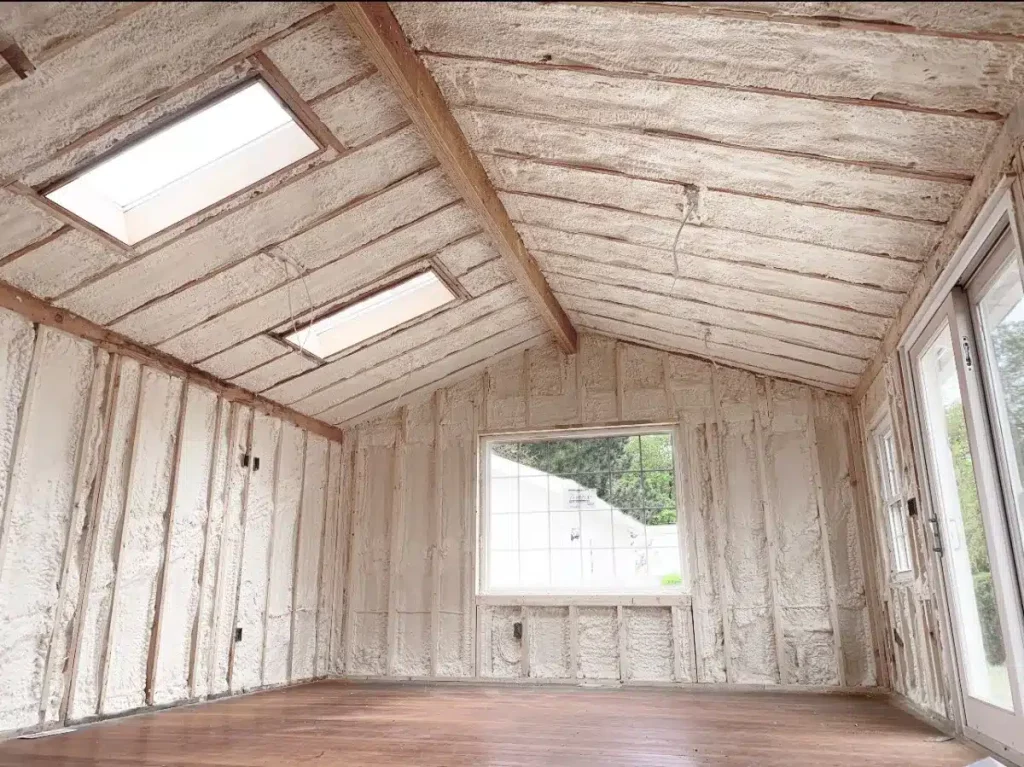
The concept of a “smartly designed” system rests on the understanding that heat, air, and moisture interact constantly. Standard construction often addresses these elements separately, leading to gaps where problems arise. A holistic design integrates these control layers, often using multi-functional materials like closed-cell spray foam that handle all three tasks in a single application.
When insulation is designed as a continuous layer, it wraps the conditioned space without interruption. This is distinct from the “cavity-only” approach, where insulation is merely stuffed between studs. By covering the framing members or sealing the spaces between them completely, the design eliminates thermal bridges—pathways where heat bypasses the insulation through wood or metal studs.
Integrating Air Barriers and Thermal Layers
Air leakage is responsible for a significant portion of a home’s energy loss. Market data indicates that up to 40% of heating and cooling energy is lost through uncontrolled air leaks in a typical residential structure. A smart insulation system places the air barrier on the same plane as the thermal insulation.
This alignment prevents the “wind-washing” effect, where air moves through fibrous insulation like fiberglass, stripping away its heat-retaining properties. By stopping air movement within the insulation material itself, the system ensures that the installed R-value is the actual performing R-value.
The Role of Continuous Insulation
Continuous insulation involves installing a layer of insulation that runs over the top of the framing, rather than just between it. This method keeps the structural components of the house warm and dry. In cold climates, this prevents the studs from becoming cold bridges that attract condensation, thereby protecting the wooden skeleton of the house from moisture damage over the long term.
Bonus Tip: Inspecting Penetrations
During the design or retrofit phase, pay special attention to mechanical penetrations. Pipes, wires, and ducts that pass through the building envelope are common weak points. A smart design specifies detailing these penetrations with expanding foam or specialized gaskets to maintain the integrity of the air barrier.
Tangible Benefits for Homeowners
The advantages of a well-engineered insulation system extend beyond the utility bill. While financial savings are a major driver, the daily experience of living in the home improves noticeably. The indoor environment becomes decoupled from the outdoor weather, creating a sanctuary of consistent comfort.
Improved Indoor Air Quality
Smart insulation designs create a sealed environment that allows for controlled ventilation. Instead of breathing air that leaks in through the crawl space, attic, or garage—carrying dust, pollen, and mold spores—the home relies on filtered mechanical ventilation.
This control over air intake drastically reduces the allergens and pollutants inside the living space. For families with asthma or allergies, this separation from outdoor contaminants is a primary health benefit.
Moisture Control in Wet Climates
In regions with high precipitation, moisture management is critical. A smart system anticipates the direction of vapor drive. In the winter, warm moist air from inside tries to push out. In the summer, humid outdoor air tries to push in.
By using materials with the appropriate vapor permeability, the system prevents moisture from getting trapped inside wall cavities. This proactive moisture management stops mold growth before it can start, preserving the indoor air quality and the resale value of the property.
Comparing Standard Code vs. Smart Design
Building codes represent the minimum legal requirement, not the gold standard for performance. A house built strictly to code may still suffer from drafts, temperature stratification, and higher energy bills. A smart design aims for high performance, exceeding these minimums to deliver long-term value.
The following table illustrates the performance differences between a standard “code-minimum” approach and a smartly designed high-performance system.
|
Feature |
Standard Code Minimum |
Smartly Designed System |
|---|---|---|
|
Air Sealing |
Often incomplete; relies on drywall |
Comprehensive; integrated into insulation |
|
Thermal Bridging |
Significant heat loss through studs |
Minimized via continuous layers or foam |
|
Moisture Strategy |
Basic paper vapor retarders |
Climate-specific vapor control layers |
|
Comfort Level |
Potential cold spots and drafts |
Consistent temperature room-to-room |
|
Lifespan |
Insulation may settle or sag (15-20 yrs) |
Durable materials like SPF (80+ yrs) |
Technical Components of a Smart System
Implementing a smart design requires selecting the right materials for specific zones of the house. Not all insulation works equally well in all locations. A strategic plan assigns the most robust materials to the areas with the highest stress.

Zoning the Home for Efficiency
The attic and the basement (or crawl space) are the two most critical zones. The “stack effect” drives air movement from the bottom to the top of the house. Smart designs often specify spray foam for the roof deck and the rim joist to cap and seal these pressures.
By sealing the “lid” and the “bucket” of the house, the intermediate walls perform better, even if they use less expensive insulation types. This hybrid approach optimizes the budget by spending money where it has the greatest impact on performance.
Attics and Roof Decks
Moving the thermal boundary from the attic floor to the underside of the roof deck is a hallmark of smart design. This creates an “unvented attic” where the attic space becomes part of the conditioned envelope. Ductwork located in this space stops losing heat to the freezing cold winter air, instantly improving the efficiency of the HVAC system.
Bonus Tip: HVAC Sizing
When a home is smartly insulated and air-sealed, the heating and cooling load decreases significantly. Homeowners often find they can install smaller, less expensive HVAC equipment. It is vital to recalculate the load requirement (Manual J) after the insulation upgrade to avoid oversizing the furnace.
Region-Specific Considerations for the Pacific Northwest
Designing for the Pacific Northwest, specifically Climate Zone 4C, requires a heavy focus on moisture tolerance. The “Marine” climate designation means the air is damp for much of the year, even when it is not raining.
Managing Vapor Drive in Seattle
In Seattle, the temperature difference between inside and outside is often moderate, but the humidity is high. A smart insulation system here avoids materials that absorb water, like cellulose or fiberglass, in areas prone to dampness such as crawl spaces.
Closed-cell spray foam is the preferred choice for these applications because it is impermeable to water. It acts as a vapor barrier that keeps the damp earth moisture from rising into the floor joists, preventing the “Seattle rot” that plagues many older foundations.
Preventing Condensation
Condensation occurs when warm air hits a cold surface. By using insulation that adheres directly to the substrate, such as the roof sheathing or concrete foundation walls, the surface temperature is raised. This eliminates the “dew point” potential within the assembly, ensuring the walls remain dry and free from biological growth.
Things to Consider Before Making a Decision
Before committing to a specific insulation strategy, homeowners must evaluate several pre-decision factors. A smart design is not a one-size-fits-all product; it is a customized solution based on the specific needs of the building.
Budget vs. Long-Term Value
High-performance systems, particularly those using spray foam, carry a higher initial cost than traditional batts. Decision-makers should view this as an infrastructure investment rather than a simple expense. The return comes through lower monthly bills and the avoidance of future repairs. Calculating the “cost of ownership” over 10 or 20 years often reveals that the smarter, more expensive system is actually cheaper in the long run.
Existing Structure Limitations
For retrofit projects, the existing structure dictates what is possible. If walls are already finished, injecting foam or adding exterior continuous insulation might be the only options. A professional assessment is necessary to determine which smart design strategies are feasible without requiring a complete gut renovation.
Common Questions About Residential Insulation Design
Does a sealed house need mechanical ventilation?
Yes. When a home is built or renovated to be airtight, natural drafts no longer provide fresh air. A smart design always includes a strategy for mechanical ventilation, such as an Energy Recovery Ventilator (ERV), to bring in fresh, filtered air while retaining the heat.
Can smart insulation designs reduce noise?
Absolutely. A tight building envelope blocks exterior noise from traffic and neighbors. Materials like open-cell spray foam or dense-pack cellulose also dampen sound vibrations between rooms and floors, creating a quieter interior.
Is spray foam the only option for smart design?
While spray foam is often the highest performing material for air sealing and R-value, a smart design can use hybrid approaches. For example, using “flash and batt” (a layer of foam for sealing followed by fiberglass for cost savings) is a common strategy that balances performance and budget.
How does insulation affect the roof’s lifespan?
Unvented attic assemblies (insulation on the roof deck) can slightly increase the temperature of the roof shingles. However, modern shingles are designed to withstand these temperatures. The benefit of keeping the attic cool and dry typically outweighs the negligible impact on shingle life.
Will a smart insulation system increase resale value?
Yes. Energy-efficient homes with documented low utility bills are attractive to buyers. Green building certifications or energy audit reports that verify the quality of the insulation system can differentiate a property in a competitive real estate market.
Final Thoughts on System Performance
Adopting a smartly designed insulation system transforms a residential property from a simple shelter into a high-performance machine. By addressing the physics of heat, air, and moisture simultaneously, these systems solve the root causes of energy waste and discomfort. The result is a home that remains durable against the elements and affordable to operate for decades.
For homeowners in the Pacific Northwest, where moisture is a constant adversary, the value of an airtight, water-resistant envelope cannot be overstated. Investing in a comprehensive design strategy ensures that the insulation performs as intended, providing security, comfort, and health benefits that standard construction simply cannot match.
Learn more about how open-cell spray foam insulation trends are shifting toward sustainable and flexible insulation solutions designed for modern buildings.
Expert Assistance for Your Insulation Strategy
Developing a comprehensive insulation strategy requires professional insight into building science and local climate conditions. The team at Cascadia Spray Foam Insulation of Seattle specializes in designing high-performance envelopes for both new construction and retrofit projects. They assist homeowners in selecting the right materials to achieve optimal energy efficiency and moisture control.
To discuss the specific needs of a residential property or to schedule a site evaluation, readers can contact the company directly. They are available by phone at (425) 386-3500 or can answer questions sent via email to [email protected].
Reviewer: Olivia Thompson has spent 10 years working in spray foam insulation, helping companies grow their visibility. She reviewed this article and provided valuable suggestions to better align the content with customers’ needs and expectations, ensuring it resonates with the target audience.