
The Ultimate Guide to Getting Started with Boxing: Training and Gear Essentials
Beginners can start with shadowboxing to improve form and footwork, followed by basic combinations like the jab-cross-hook. Boxing workout exercises are perfect for building strength, improving endurance, and learning self-discipline. Jump rope drills enhance cardio while increasing coordination and agility. Planks, Russian twists, and mountain climbers are examples of core training that assist you build stability and power for punches. Using a heavy bag to workout helps with timing, technique, and strength. Push-ups, burpees, and high knees in intervals improve explosive power and strength. You need to stay consistent and pay attention to your body. As your fitness level rises, you can slowly increase the intensity. One of the best things about these workouts is that you can do them at home or in a gym. To avoid getting hurt, always warm up with some mild cardio and stretching. Boxing is the only activity that works out your whole body like no other. Whether you’re doing it for health, self-defense, or competition, it works out your whole body. Stay on track, keep an eye on your progress, and most importantly, have fun along the way.
Boxing conditioning to improve endurance
Every boxer needs to work on their endurance. Regular workouts that focus on cardio can help you build up your stamina. Running, sprinting, and cycling are all classic ways to get in shape. These activities make your heart and lungs stronger, which makes it simpler to stay active during tough rounds. Skipping rope is another great approach to improve your timing and footwork while also building your stamina. High-intensity interval training (HIIT) that includes squat leaps, jump lunges, and quick punches can get your body ready for the ring by simulating genuine fights. Try to work out in a way that raises your heart rate and includes breaks to simulate the stop-and-go pattern of boxing rounds.
Why Footwork is Important for Becoming a Great Boxer
Great boxing starts with good footwork. Putting your feet in the right spot helps you stay balanced, make angles, and dodge punches. Begin with simple movements such stepping forward, backward, and to the side. Learn how to pivot to open up new ways to attack or get away from pressure. Ladder drills, cone drills, and shadowboxing with foot mobility are all great strategies to get better at being quick. Always be light on your feet by keeping your knees slightly bent and your weight evenly distributed. Adding agility training to your routine will help you control the speed of a battle. To perfect footwork, you need to be precise, have good rhythm, and be in control.

Strength training to make your punch stronger
Strength training is very important for boxing performance. Building muscle power can make your strikes hit harder, even though brute force isn’t everything. To build overall strength, use compound actions like deadlifts, squats, and bench presses. Add resistance bands, kettlebells, and bodyweight workouts to your routine to build functional power. Using medicine balls and plyometric push-ups to practice punching builds explosiveness. Training two to three times a week is the best way to keep your strength up while still giving yourself time to practice your skills and recover. Strong muscles help absorb strikes and lower the chance of damage, thus every boxer needs to do strength training.
Why Core Workouts Are the Most Important Part of Boxing
Core training is important for boxing because it gives each strike its strength. Your core connects your upper and lower body and gives you the strength to move. Add exercises like planks, leg lifts, side crunches, and motions that twist. Cable woodchops and medicine ball slams are also great ways to build rotational strength. A strong core helps you keep your balance, stand up straight, and hit the target with your punches. Don’t forget about your lower back. Exercises like supermans and back extensions can help you get the most out of your workouts. Doing core exercises on a regular basis not only makes you stronger, but it also makes you less likely to get hurt when you spar or fight for real.
Shadowboxing to Improve Your Technique and Muscle Memory
One of the best ways to train for boxing is to shadowbox. You may improve your technique, picture an opponent, and establish muscle memory without any equipment. Check your form in the mirror to make sure your punches are thrown correctly. Pay attention to your combos, footwork, head movement, and defense. You can also use shadowboxing to warm up or cool down your heart. Adding light weights or resistance bands makes the workout harder. This practice helps you remember how to move, get better at reacting quickly, and feel more sure of yourself. Even if it’s only for five minutes a day, make it a habit to see big gains in your general boxing technique.

Using the heavy bag to build strength and accuracy
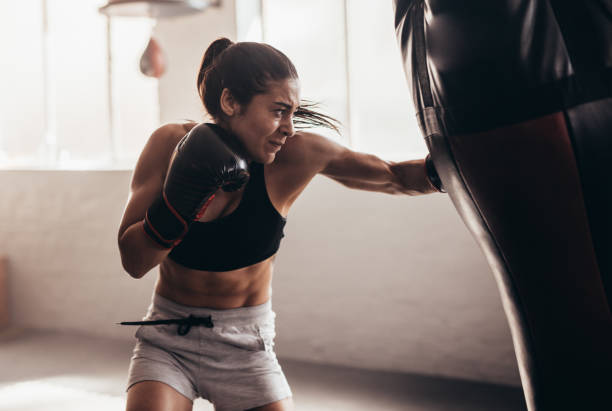
Training with a heavy bag is an important part of boxing. It lets you work on strong punches, improve your combos, and enhance your stamina. Don’t just focus on strength; also focus on technique. To make it feel like a real battle, go around the bag and throw jabs, crosses, hooks, and uppercuts. Always keep your hands up and stay in the right position. Set timed rounds to improve your fitness and make it feel like you’re in a real battle. You can practice body shots, defensive movements, and counter-punching with the bag. It also helps with stress. Heavy bag practice is an important part of your training since it helps you get stronger, improve your rhythm, coordination, and striking accuracy.
Speed bag training can help you get better at coordinating your movements.
Training with a speed bag improves timing, rhythm, and coordination between your hands and eyes. It may appear cool, but it helps your shoulders and arms get stronger. Start out slowly, paying more attention to rhythm than pace. Hit with the bottom of your fist and let the bag bounce back before you hit it again. Over time, you’ll get into a rhythm that sounds like genuine combat. Speed bag training makes you faster and better at timing, which means you can punch faster and defend yourself better. It also helps you focus because your brain has to keep up with the beat. Consistency is important; even just a few minutes a day can make a big difference.
Pad Work for Realistic Training Situations
Pad work gives you a training experience that is always changing. Working with a coach or partner who holds focus mitts can help you improve your technique and decision-making. The holder can yell out combos or pretend to attack you so you can defend. This workout makes your reactions, accuracy, and footwork better. It gives you instant feedback on timing and form. Pad work is another fantastic way to practice fighting without really fighting. Adding movement, defensive lapses, and counters makes it feel more authentic. It’s one of the best and most involved methods to practice what you’ve learned in a semi-live setting, which helps you grow both skill and confidence at the same time.
Learning how to defend yourself to stay in the fight
In boxing, defense is just as important as offense. To be a good fighter, you need to practice slipping, ducking, parrying, and blocking. Head movement activities, reaction drills, and controlled sparring should all be part of drills. Improve your reflexes and defensive timing by using a slip rope or doing mirror work. To guard weak spots, always keep your hands up and your chin tucked. Good defense lowers the chance of getting hurt and gives you chances to attack back. It takes practice and time to develop defensive instincts, but it’s important for staying in the game. If you want to be a smarter and tougher fighter in the ring, train your defense as hard as your offense.
Breathing Methods to Boost Performance
People often forget about breathing technique, yet it’s quite important. Breathing correctly keeps your energy up and your body comfortable. To keep your rhythm and avoid getting tired, breathe in through your nose and out sharply with each punch. Controlled breathing can also help you relax, focus better, and keep your heart rate steady. To make the habit stick, practice breathing techniques while shadowboxing and working with pads. A lot of boxers employ breath timing to keep their fights moving. Diaphragmatic breathing and breath-hold exercises can also help your lungs work better by making them stronger. Breathing correctly is an important element of getting ready for boxing since it helps you stay calm under pressure.
Choosing the Right Beginner Boxing Equipment
Choosing the right beginner boxing equipment ensures safety and comfort while you train. At minimum, start with quality gloves that offer proper wrist support, hand wraps to protect knuckles, and a mouthguard. Look for gloves designed for your training focus—bag work, sparring, or fitness. A jump rope helps with cardio, and focus mitts or a reflex ball build speed and coordination. Consider breathable athletic wear and boxing shoes for mobility and grip. As you progress, investing in headgear and groin protectors becomes important for sparring. Be Happy Boxing offers high-quality beginner gear designed for all skill levels. The right equipment prevents injury and enhances your training experience.
Conclusion
Boxing offers more than just physical fitness—it builds mental toughness, confidence, and discipline. By focusing on key elements like endurance, technique, strength, and defense, beginners can build a strong foundation. Equipping yourself with the right gear, including gloves, wraps, and shoes, ensures a safer and more effective training journey. Integrating exercises like shadowboxing, footwork drills, heavy bag training, and speed bag routines helps develop a complete skill set. With consistent effort and proper guidance, anyone can benefit from boxing. Whether you’re aiming to compete or just stay in shape, starting with the basics sets the tone for lasting success. Begin your journey with trusted guidance from Be Happy Boxing and unlock your full potential.