
What Makes Air Sealing Essential for Modern Energy Standards
Modern building science has shifted its focus from simply adding more insulation to prioritizing airflow control within a structure. While traditional approaches emphasized higher R-values, current energy standards recognize that air leakage is the primary pathway for heat loss and moisture intrusion. Professional air sealing addresses this issue by controlling unwanted air movement, ensuring a building can meet efficiency goals something insulation thickness alone cannot achieve.
Achieving a high-performance home requires viewing the structure as a complete system in which the thermal and pressure boundaries align perfectly. Industry professionals know that uncontrolled air leaks can account for up to 40% of heating and cooling costs. This article examines why rigorous air sealing is now a non-negotiable requirement for meeting modern energy codes and ensuring long-term structural durability.
The Science Behind Air Leakage and Energy Loss
Air leakage fundamentally alters how a building manages temperature and humidity. When conditioned air escapes through cracks and gaps, the HVAC system must work overtime to replace it, leading to higher energy consumption and inconsistent comfort levels. Understanding the physics of airflow helps property owners appreciate why sealing these gaps is just as important as the insulation material itself.
Thermal Bypass and Convection
A thermal bypass occurs when air moves through or around insulation, effectively rendering the material useless. Fiberglass batts, for example, act like a wool sweater; they keep you warm if the air is still, but the wind blows right through them. Without a dedicated air barrier, wind washing creates convective loops inside wall cavities, stripping heat away from the living space and depositing it outdoors.
The Stack Effect Phenomenon
The stack effect drives much of the air infiltration in multi-story buildings. In winter, warm indoor air rises, creating a positive pressure at the top of the house, forcing air out through attic leaks. This escape creates negative pressure at the bottom, sucking cold outdoor air in through the foundation and basement rim joists to replace what was lost.
Bonus Tip: Inspecting the Attic Hatch
The attic access door is often the single most significant air leak in a ceiling assembly. Adding weatherstripping and treating the hatch as an exterior door can significantly reduce heat loss. A simple latch system pulls the door tight against the seal, preventing the stack effect from pumping expensive heated air directly into the unconditioned attic space.
Quantifying Air Loss Metrics
Building scientists measure air leakage using a metric called Air Changes Per Hour (ACH) at 50 Pascals of pressure. This specific measurement quantifies how many times the entire volume of air in a house is replaced by outside air in one hour.
Comparing Air Barrier Methodologies
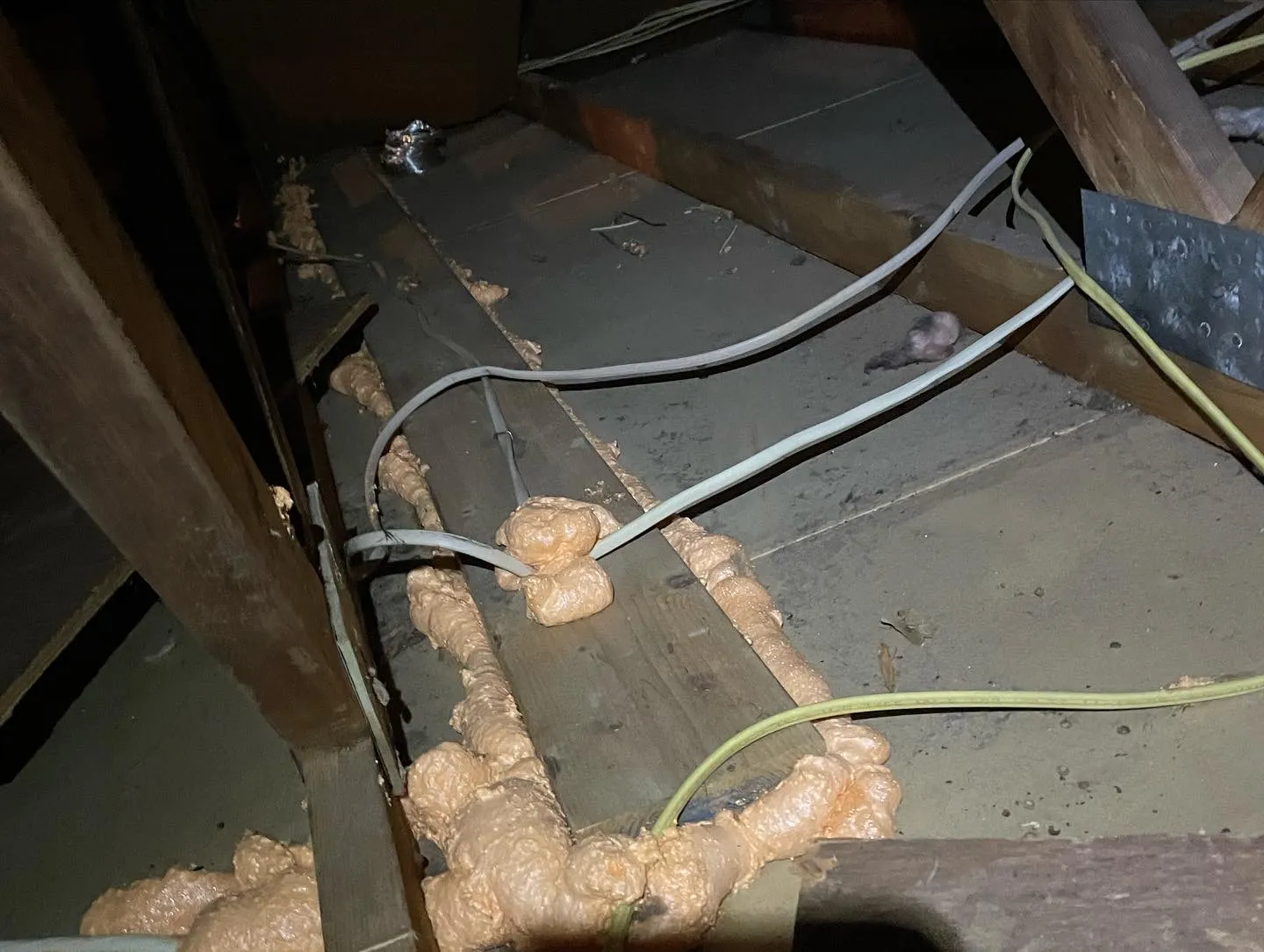
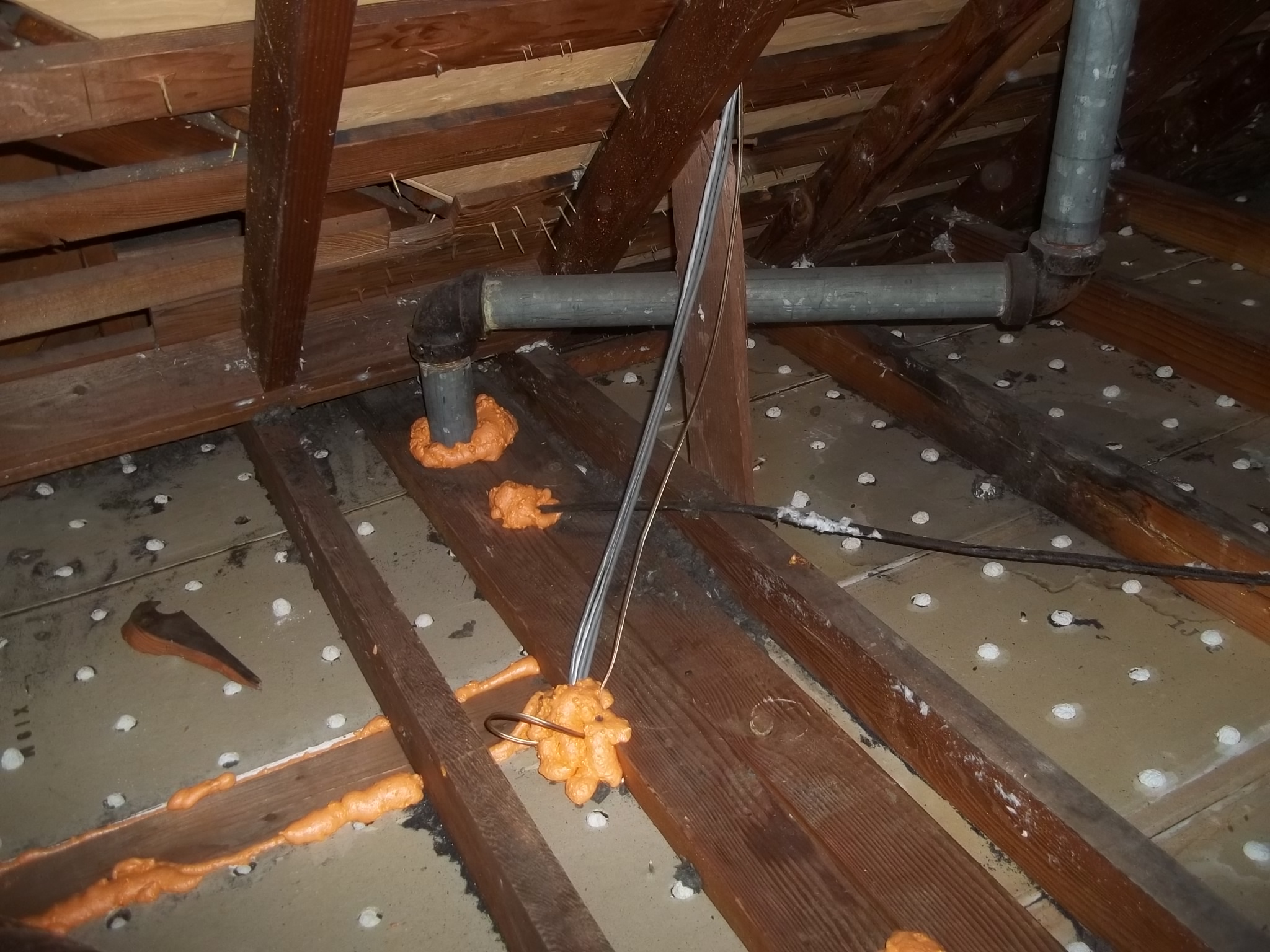
Different construction methods offer varying levels of success in stopping airflow. While caulking and taping can address visible gaps, they often fail to seal the thousands of microscopic cracks found in standard building materials. Spray foam insulation has emerged as a leading solution because it expands to create a monolithic barrier that provides both thermal resistance and air tightness.
Material Effectiveness Analysis
The following table compares standard methods used to establish an air barrier in residential construction.
|
Method |
Application |
Air Sealing Effectiveness |
Durability |
|---|---|---|---|
|
Spray Foam |
Cavities, Attics, Rim Joists |
High (Expands to fill voids) |
Permanent |
|
House Wrap |
Exterior Sheathing |
Medium (Depends on taping) |
Can tear during siding install |
|
Caulk/Sealant |
Windows, Doors, Cracks |
Low to Medium (Labor-intensive) |
Degrades over time |
|
Gaskets |
Sill Plates, Outlets |
Low (Spot treatment only) |
Good if not compressed unevenly |
Integration with Mechanical Systems
When a building is air-sealed correctly, mechanical systems operate in a stable environment. This allows for precise sizing of heating and cooling equipment. An airtight home requires smaller furnaces and air conditioners, reducing upfront equipment costs and resulting in quieter, more efficient operation throughout the year.
Humidity Control in Coastal Climates
For residents in humid areas like the Eastern Shore of Maryland, air sealing is critical for moisture management. Leaky homes allow humid summer air to infiltrate wall cavities, where it can condense on cool surfaces. By blocking this airflow, the building envelope prevents the moisture accumulation that leads to mold growth and structural rot.
Things to Consider Before Making a Decision
Property owners must evaluate their ventilation strategy before committing to extensive air sealing. As the saying goes, “build it tight, ventilate it right.” A home that stops air leaks also prevents accidental infiltration of fresh air, so a mechanical ventilation system is often necessary to ensure healthy indoor air quality.
Assessing Existing Conditions
In retrofit projects, finding where air escapes is key to improving energy efficiency. Leaks are often hidden in areas like lighting fixtures, plumbing openings, and wall-to-roof connections. Professional energy audits with thermal imaging help pinpoint problem spots for precise, effective sealing.
- Common Leak Areas: Recessed lighting, plumbing penetrations, and wall-to-roof junctions are frequent sources of air loss.
- Thermal Imaging: Detects invisible gaps that allow conditioned air to escape.
- Targeted Sealing: Focused approach reduces costs by addressing only the problem areas.
- Improved Efficiency: Sealing leaks minimizes drafts, lowers energy bills, and enhances indoor comfort.
- Retrofit Success: Identifying and fixing leaks is the first step toward a more airtight, energy-efficient home.
Bonus Tip: Rim Joist Priority
The rim joist area in basements and crawl spaces is a notorious source of leakage that is difficult to seal with caulk alone. This single improvement often yields the highest return on investment for comfort in older homes.
Conclusion
Air sealing represents a fundamental component of modern energy efficiency that goes beyond simple temperature control. By treating the building envelope as a continuous barrier, property owners can achieve superior comfort, lower utility costs, and enhanced durability. When combined with expert insulation services, this approach reflects a broader understanding that controlling airflow is essential for managing moisture and maintaining indoor air quality.
Whether building new or renovating, prioritizing air tightness delivers value that lasts for the life of the property; it is the invisible shield that ensures all other energy systems function at their peak potential.
Taking the Next Step
For those ready to improve their home’s performance, Peninsula Insulation offers specialized services to identify and seal critical air leaks. They understand the local climate challenges and tailor their solutions to deliver measurable results.
To schedule an assessment or discuss specific air sealing needs, interested parties can contact the company directly. Send inquiries via email to [email protected] or call (410) 770-2624 to speak with a qualified representative. The team is prepared to help transform any property into a model of modern efficiency.
Questions People Ask About Air Sealing
Is air sealing necessary if I have sound insulation?
Yes, insulation and air sealing perform two different functions. Insulation resists heat flow, while air sealing stops air movement. Without air sealing, air currents can move through many types of insulation, reducing their effective R-value and allowing drafts to compromise comfort.
Will sealing my house make it too tight?
A house can only be “too tight” if it lacks proper mechanical ventilation. Modern building codes require tight construction to save energy but also mandate ventilation systems, such as energy recovery ventilators (ERVs), to bring in fresh, filtered air while expelling stale air.
Can I air seal an older home?
Absolutely. Older homes typically benefit the most from air sealing because they were often built with little regard for airflow control. Strategic sealing in attics and basements can significantly reduce drafts and energy bills without altering the building’s historic character.
How do I know if my air sealing worked?
The most reliable way to verify the work is through a blower door test. This test pressurizes the house and measures the rate of air leakage. Comparing the results before and after the project provides concrete data on the reduction in air infiltration.
Does air sealing help with allergies?
Yes, sealing air leaks reduces the infiltration of outdoor allergens like pollen, dust, and pollutants. It also helps control indoor humidity, which discourages the growth of dust mites and mold, creating a healthier environment for allergy sufferers.
Author: Wil Perkins is the founder of Peninsula Insulation and a long-time resident of Easton, Maryland. With a hands-on approach and nearly five years in the insulation business, Wil leads a team known for professional service and quality work. He’s committed to providing the best Spray Foam Insulation solutions and lasting results for every project.
Reviewer: Emily Martinez has 12 years of experience in spray foam insulation. She reviewed this article and suggested ways to make the content more useful for contractors looking to grow their customer base.