
Where Open-Cell Foam Works Best in Residential Construction in Hailey, ID
Open-cell foam works best in residential construction in Hailey, ID, when installed in interior applications such as attic floors, roof decks, rim joists, and interior partition walls. These areas benefit from open-cell foam’s excellent air sealing and sound dampening properties while avoiding moisture-related complications. Because Hailey experiences cold winters and dry summers, interior spaces with low vapor exposure are ideal for this insulation type.
This article outlines where open-cell foam should and should not be applied in Hailey homes, supported by technical data, usage comparisons, and critical decision-making factors specific to this region.
Best Use Areas for Open-Cell Foam in Hailey Homes
Unvented Attic Rooflines and Attic Floors
Open-cell foam is highly effective when sprayed on the underside of roof sheathing or directly over attic floors in unvented attic assemblies. In Hailey’s dry, variable climate, the foam’s vapor-permeable nature is rarely an issue in these controlled attic environments. The insulation creates a consistent thermal barrier and eliminates air leaks.
Bonus Tip: Always confirm that the attic has proper conditioning or add a vapor-retarder paint if required by code.
Rim Joists and Framing Gaps
Rim joists are a known source of air leaks. Open-cell foam expands aggressively and adheres to wood, concrete, and metal, making it ideal for sealing small framing voids and rim areas in wood-framed homes. The low density allows for movement and shifting of framing without losing adhesion or insulation integrity.
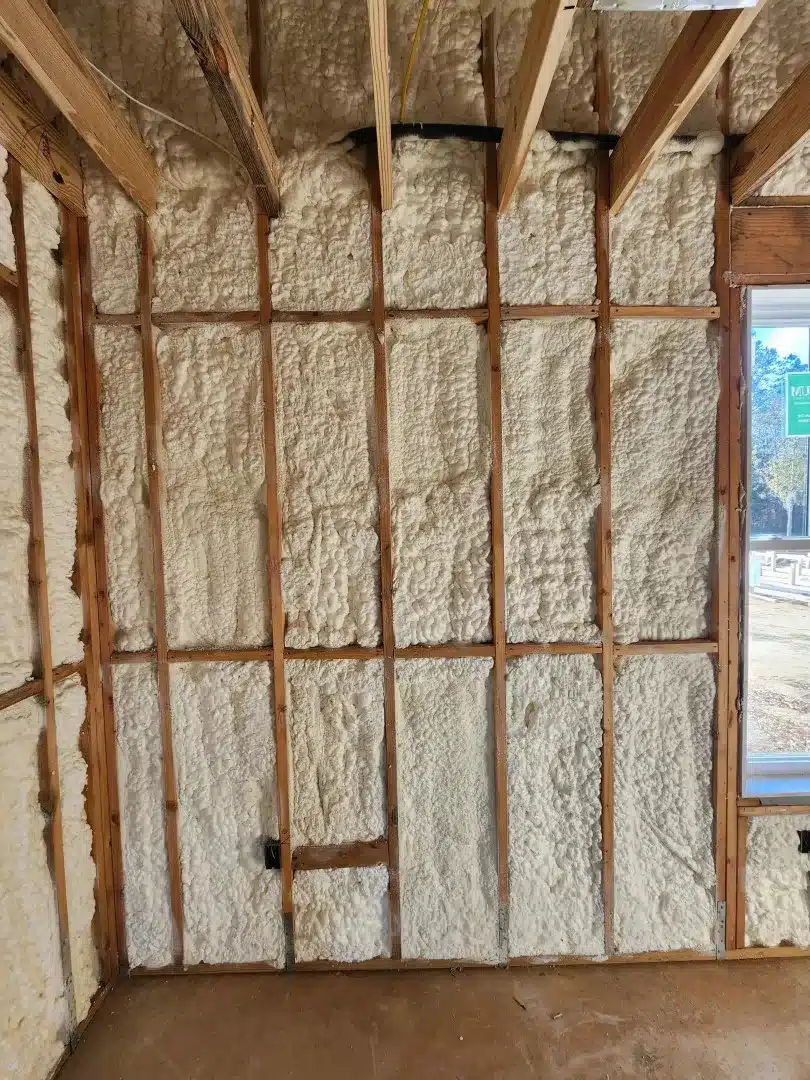
Interior Partition Walls and Ceilings
Open-cell foam is optimal for walls between bedrooms, bathrooms, or home offices. Its sound-dampening properties provide privacy and noise control. Unlike closed-cell foam, it doesn’t create a rigid barrier that transmits vibration. This makes it popular for floor-ceiling interfaces between stories in multi-level homes.
Basement Ceiling Cavities
When insulating between floor joists above unfinished basements, open-cell foam helps reduce air movement, keeps floors warmer, and buffers noise from below. These basement ceilings are protected from exterior moisture sources, making vapor permeability less of a concern.
Comparison Table: Open-Cell vs Closed-Cell Foam
|
Feature |
Open-Cell Foam |
Closed-Cell Foam |
|
Density |
~0.5 lb/ft³ |
~2.0 lb/ft³ |
|
R-Value per inch |
~3.6 to 3.8 |
~6.0 to 7.0 |
|
Moisture Barrier |
No |
Yes |
|
Air Seal |
Yes |
Yes |
|
Vapor Permeability |
High |
Low |
|
Sound Dampening |
Strong |
Minimal |
|
Structural Rigidity |
Soft, flexible |
Rigid, adds shear strength |
|
Best Locations |
Attics, rim joists, interior walls |
Crawlspaces, exteriors, basements |
Technical Specifications of Open-Cell Foam
|
Property |
Value |
|
R-Value per inch |
R-3.6 – R-3.8 |
|
Sound Transmission Class |
STC 37–39 (assembly dependent) |
|
Vapor Permeability |
10–16 perms at 3.5 inches |
|
Air Leakage Rate |
≤0.02 L/s/m² @ 75 Pa |
|
Core Density |
0.4 – 0.6 lb/ft³ |
|
Application Thickness |
3 – 5 inches (interior use) |
|
Cure Time |
24 hours (full set) |
|
Expansion Rate |
100x original volume |
Regional Considerations in Hailey, ID
Hailey’s cold, arid climate (Zone 5) features below-freezing winters and low humidity year-round. Open-cell foam performs well under these conditions when installed indoors or away from direct exposure to vapor intrusion or external moisture. The lack of heavy rainfall and low humidity means fewer risks of condensation, provided that foam is kept inside the conditioned envelope of the home.
Market Fact: According to Idaho residential building permit data (2024), 64% of single-family homes in Cassia County used open-cell foam in interior cavities, primarily attics and rim joists, due to its cost-effectiveness and thermal performance.
Things to Consider Before Making a Decision
Climate Compatibility
While open-cell foam performs well in Hailey, always avoid using it in areas with high vapor drive unless paired with vapor retarders. Crawlspaces, below-grade walls, and foundations are better suited for closed-cell insulation due to water resistance.
Vapor Management
Because open-cell foam allows moisture to pass through, it’s essential to install it only where vapor accumulation won’t cause rot or mold. Attics and living spaces generally meet this criterion in Hailey.
Structural Strength
Open-cell foam does not add structural rigidity. If the insulation is needed to support or reinforce walls or roofs (e.g., in pole barns or sheds), closed-cell is more appropriate.
Sound Isolation Needs
For bedrooms, nurseries, and home offices, open-cell foam excels in reducing airborne sound transmission between rooms.
Budget Limitations
Open-cell foam is significantly less expensive per inch than closed-cell. For homeowners on a budget prioritizing air sealing and acoustic insulation, open-cell is a strong choice.
Code Compliance
Local Hailey building codes typically allow open-cell foam in attic and wall assemblies if fire ignition barriers and vapor diffusion retarders are installed where applicable. Always check current local building code.
HVAC Impact
Because open-cell foam reduces air changes per hour (ACH), it may affect indoor air pressure. Coordinate with your HVAC installer to ensure balanced air exchange post-installation.
Bonus Tip: Always request thermal imaging or blower door testing post-installation to verify effective air sealing and insulation continuity.
Common Questions
Can open-cell foam be used on exterior walls in Hailey?
It can, but it’s not recommended unless a vapor retarder or weather-resistive barrier is included. In cold climates like Hailey’s, exterior walls must prevent vapor from reaching cold sheathing where it can condense.
Is open-cell foam water-resistant?
No. While it does not retain liquid water, it allows vapor to pass through and can absorb humidity. Use closed-cell foam where moisture contact is expected.
How thick should open-cell foam be in attics?
Typically, 5 to 6 inches of open-cell foam is used in attic rooflines to meet code requirements for thermal resistance in Climate Zone 5.
Does open-cell foam degrade over time?
No. Once cured, it retains its form and performance for the life of the home, assuming it remains dry and undisturbed.
FAQ
Where is open-cell foam ideal in Hailey homes?
Interior walls, attics, rim joists, and floors above unconditioned spaces where moisture exposure is low
Is it safe to install open-cell foam in basement walls?
No. Use only in basement ceilings or above-grade interior spaces unless a vapor barrier is included
Can open-cell foam improve HVAC efficiency?
Yes. It creates a consistent air seal that reduces load on HVAC systems and improves indoor comfort
What is the soundproofing benefit of open-cell foam?
It reduces airborne sound transmission and helps isolate room noise in homes with shared walls or multi-story layouts
Should I combine open-cell with other insulation types?
Yes. It’s common to use open-cell inside the home and closed-cell in high-moisture or structural areas
Conclusion
Open-cell spray foam insulation in Hailey, ID offers high-performance air sealing and acoustic control when used correctly in residential construction. Its strengths lie in interior spaces—such as attics, interior walls, rim joists, and ceilings above basements—where its vapor permeability doesn’t pose a risk. In these areas, it provides excellent insulation at a lower cost than closed-cell foam. Understanding how Hailey’s dry climate influences moisture movement is critical to safe and effective application.
Choose insulation based on moisture exposure, space function, and energy performance goals to get the best value and safety from your installation.
Ready to Achieve Greater Efficiency and Comfort?
Apply these insights now: Schedule your insulation evaluation with Valley Spray Works. Understand exactly where open-cell foam delivers value in your Hailey home.
Contact Details
Company Name: Valley Spray Works
Phone: (208) 490-9260
Email: [email protected]
Reviewer:
Emily Martinez has 12 years of experience in spray foam insulation. She reviewed this article and suggested ways to make the content more useful for contractors looking to grow their customer base.