
Why Spray Foam Is the Preferred Choice for Modern Residences
Spray foam insulation dominates modern residential construction because it delivers superior thermal performance, air sealing, and moisture control in a single application. This foam technology creates an airtight barrier that eliminates thermal bridging while providing R-values ranging from R-3.6 to R-6.5 per inch—significantly outperforming traditional materials like fiberglass batts (R-2.9 to R-3.8 per inch).
Modern homeowners choose advanced residential spray foam insulation services because it addresses multiple building envelope challenges simultaneously. The foam expands to fill gaps, cracks, and irregular spaces that conventional insulation cannot reach, creating a continuous thermal barrier that reduces energy consumption by 20-50% compared to traditional insulation methods.
Thermal Performance Advantages
Spray foam’s cellular structure provides exceptional thermal resistance through its low thermal conductivity and air-sealing properties. Closed-cell foam delivers the highest R-value per inch among residential insulation materials, making it ideal for applications where space constraints limit insulation thickness.
The foam’s expansion characteristics allow it to conform to irregular surfaces and penetrate small crevices that compromise traditional insulation performance. This comprehensive coverage eliminates convective heat transfer—a major source of energy loss in conventionally insulated homes.

R-Value Comparison Table
|
Insulation Type |
R-Value per Inch |
Air Sealing |
Moisture Resistance |
|
Closed-Cell Spray Foam |
R-6.0 to R-6.5 |
Excellent |
Vapor Barrier |
|
Open-Cell Spray Foam |
R-3.6 to R-3.8 |
Excellent |
Permeable |
|
Fiberglass Batts |
R-2.9 to R-3.8 |
Poor |
Poor |
|
Cellulose |
R-3.2 to R-3.8 |
Fair |
Fair |
|
Rigid Foam Board |
R-4.0 to R-6.5 |
Good |
Variable |
Bonus Tip: Closed-cell spray foam provides structural reinforcement, increasing wall strength by up to 250% while delivering maximum thermal performance.
Air Sealing Performance
Traditional insulation materials require separate air sealing measures to achieve optimal performance. Spray foam eliminates this step by creating an integrated thermal and air barrier system. The foam’s adhesive properties bond directly to framing materials, creating a monolithic envelope that prevents air infiltration.
Blower door tests consistently show homes insulated with spray foam achieve air changes per hour (ACH) rates below 3.0, often reaching 1.5 ACH or lower. These results exceed ENERGY STAR requirements and significantly reduce heating and cooling loads.
Technical Performance Specifications
|
Performance Metric |
Closed-Cell Foam |
Open-Cell Foam |
Industry Standard |
|
Air Permeability |
0.02 L/(s·m²) @ 75 Pa |
0.05 L/(s·m²) @ 75 Pa |
<0.02 L/(s·m²) @ 75 Pa |
|
Vapor Permeance |
0.8-1.5 perms |
16+ perms |
Variable |
|
Compressive Strength |
25-40 psi |
0.5-1.0 psi |
N/A |
|
Density |
1.7-2.2 lb/ft³ |
0.4-0.6 lb/ft³ |
N/A |
Moisture Management Benefits
Closed-cell spray foam functions as a vapor retarder, preventing moisture migration through the building envelope. This characteristic reduces condensation risk within wall assemblies and helps maintain indoor air quality by preventing mold growth.
Open-cell spray foam allows vapor transmission while maintaining air sealing properties, making it suitable for climates where vapor permeability is beneficial. Both formulations resist moisture absorption, maintaining their insulating properties even in humid conditions.
Bonus Tip: Spray foam’s moisture resistance eliminates the need for separate vapor barriers in most applications, simplifying installation and reducing material costs.
Application Versatility
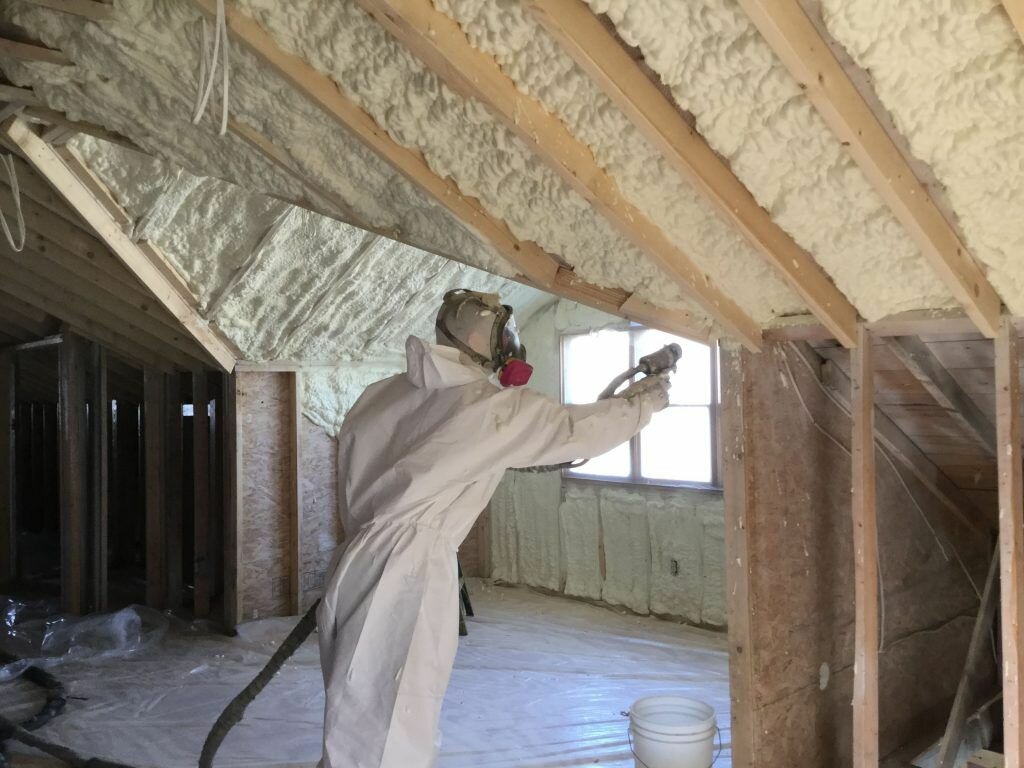
Spray foam adapts to various residential applications, from new construction to retrofit projects. The material’s ability to expand and conform makes it effective in challenging installations like cathedral ceilings, rim joists, and irregular framing configurations.
Professional contractors can adjust foam density and expansion rates to match specific application requirements. This flexibility allows optimization for different climate zones and building performance targets.
Installation Applications Comparison
|
Application Area |
Closed-Cell Suitability |
Open-Cell Suitability |
Key Benefits |
|
Exterior Walls |
Excellent |
Good |
Maximum R-value, vapor control |
|
Attic Spaces |
Good |
Excellent |
Sound dampening, breathability |
|
Crawl Spaces |
Excellent |
Fair |
Moisture resistance, pest deterrent |
|
Rim Joists |
Excellent |
Good |
Structural reinforcement, air sealing |
|
Cathedral Ceilings |
Excellent |
Good |
Continuous insulation, no thermal bridging |
Energy Efficiency Impact
Market data indicates spray foam insulated homes consume 20-50% less energy for heating and cooling compared to homes with traditional insulation. This performance improvement translates to significant utility bill reductions and enhanced occupant comfort through more consistent indoor temperatures.
The foam’s air sealing properties reduce HVAC system runtime, extending equipment life and reducing maintenance requirements. Many homeowners report achieving desired comfort levels with smaller, more efficient HVAC systems.
Things to Consider Before Making a Decision
Building code compliance varies by jurisdiction, with some areas requiring specific installation certifications or inspection procedures for spray foam applications. Verify local requirements before selecting spray foam insulation.
Climate zone considerations affect foam type selection. Cold climates typically benefit from closed-cell foam’s vapor control properties, while mixed climates may prefer open-cell foam’s breathability. Consult with local building professionals to determine optimal specifications.
Professional installation requirements increase project costs compared to DIY-friendly materials. However, proper installation ensures performance warranties and building code compliance. Factor installation costs into budget planning and obtain multiple contractor quotes.
Indoor air quality concerns arise if spray foam cures improperly. Choose certified installers who follow manufacturer specifications and allow proper curing time before occupancy. Quality installation eliminates off-gassing concerns and ensures long-term performance.
Bonus Tip: Schedule spray foam insulation during mild weather conditions to optimize curing and expansion characteristics.
Common Questions
Installation timing affects project schedules. Spray foam requires specific temperature and humidity conditions for optimal application. Plan installation during suitable weather periods and coordinate with other trades to avoid conflicts.
Cost considerations extend beyond material prices. Professional installation, equipment requirements, and potential ventilation modifications affect total project costs. Compare lifecycle costs including energy savings rather than initial installation expenses alone.
Performance longevity varies by foam type and installation quality. Properly installed spray foam maintains its properties for the building’s lifetime, while poor installation can lead to performance degradation and costly remediation.
Spray Foam FAQ
How does spray foam compare to other insulation materials in terms of long-term performance? Spray foam maintains its R-value and air sealing properties throughout the building’s lifetime, while traditional materials may settle, compress, or develop gaps over time. This stability ensures consistent energy performance without degradation.
What factors determine whether to choose open-cell or closed-cell spray foam? Climate conditions, moisture management requirements, and structural considerations determine foam type selection. Closed-cell foam suits applications requiring maximum R-value and vapor control, while open-cell foam works well where breathability and sound dampening are priorities.
Are there specific building codes or regulations that affect spray foam installation? Building codes vary by location but generally require professional installation, fire safety considerations, and proper ventilation during application. Some jurisdictions mandate specific certification requirements for installers or inspection procedures.
How does spray foam installation affect indoor air quality? Properly installed and cured spray foam does not impact indoor air quality negatively. Installation requires temporary ventilation and occupancy restrictions during curing, but creates no ongoing air quality concerns when applied correctly.
What maintenance requirements does spray foam insulation have? Spray foam requires minimal maintenance once properly installed. Periodic visual inspections can identify any damage from mechanical systems or pest activity, but the material itself does not require replacement or additional treatment under normal conditions.
Make the Right Decision
Proper spray foam insulation contractor delivers superior thermal performance, air sealing, and moisture control in modern residential construction. The technology addresses multiple building envelope challenges while providing long-term energy savings and improved occupant comfort.
Evaluate your specific climate conditions, building requirements, and budget constraints when selecting insulation materials. Consider both initial costs and long-term energy savings to make an informed decision that aligns with your performance goals and financial objectives.
Reviewer: Emma Robinson contributed her knowledge from 8 years working with the spray foam industry. Her review helped shape this content with ideas grounded in what contractors and homeowners actually value.