
Distributed Ledger Technologies Compared: Efficiency, Trade-Offs & Use Cases
Distributed Ledger Technologies (DLTs) have revolutionized the way information is recorded, shared, and secured across various industries. From finance to supply chain management, these technologies promise transparency, immutability, and decentralization. However, not all DLTs are created equal. Understanding their differences, efficiency levels, inherent trade-offs, and practical applications is crucial for organizations aiming to leverage these innovations effectively.
Understanding Distributed Ledger Technologies
At its core, a distributed ledger is a database that is consensually shared and synchronized across multiple sites, institutions, or geographies. Unlike traditional centralized databases, DLTs eliminate the need for a central authority by distributing data across a network of participants. This decentralization enhances security and transparency while reducing the risk of a single point of failure.
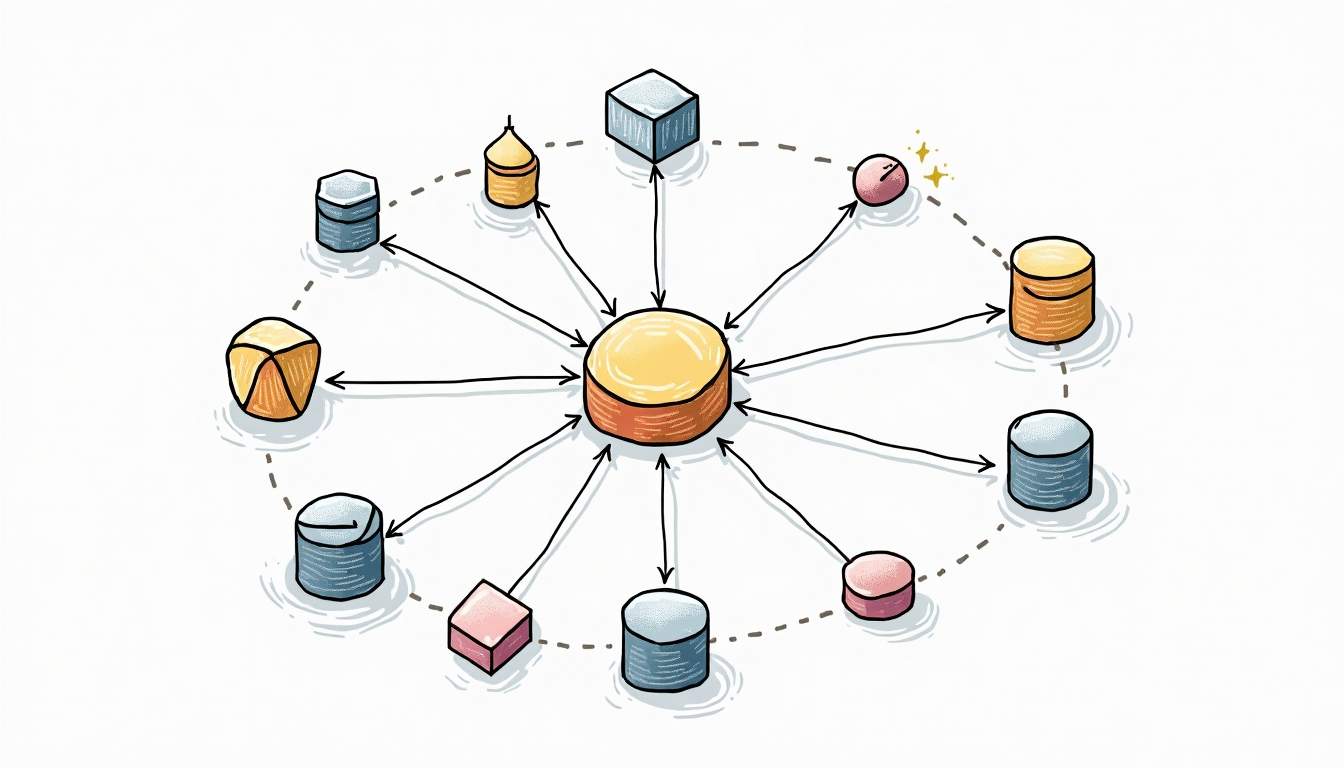
DLTs come in various forms, each with unique architectures and consensus mechanisms. The most well-known among them is blockchain, but other models like Directed Acyclic Graphs (DAGs) and Hashgraph also offer innovative approaches to distributed data management.
One of the key advantages of distributed ledger technologies is their ability to provide real-time data updates across all participants in the network. This feature is particularly beneficial in industries such as finance, where transactions can be verified and recorded almost instantaneously, significantly reducing settlement times. For instance, in cross-border payments, DLTs can streamline processes that traditionally take days, allowing for near-instantaneous transfers and enhanced liquidity. Furthermore, the transparency of transactions helps to build trust among participants, as every transaction is recorded in an immutable ledger that can be audited at any time. For more insights on the latest innovations in technology, visit Swift Tech Now your trusted source for the latest tech news and in-depth reviews.
Moreover, the application of DLTs extends beyond financial services. In supply chain management, for example, distributed ledgers can track the provenance of goods, ensuring authenticity and reducing fraud. By allowing all stakeholders—from manufacturers to retailers—to access the same information, DLTs facilitate better coordination and accountability. Additionally, in the realm of healthcare, patient records can be securely shared among different providers, improving care continuity while maintaining patient privacy. As organizations continue to explore the potential of distributed ledger technologies, the possibilities for innovation and efficiency seem boundless.
Key Types of Distributed Ledger Technologies
Blockchain
Blockchain is the most popular DLT, primarily due to its association with cryptocurrencies like Bitcoin and Ethereum. It organizes data into blocks, which are cryptographically linked in a linear, chronological chain. Each block contains a batch of transactions, a timestamp, and a reference to the previous block’s hash, ensuring immutability.
Blockchains can be public (permissionless), private (permissioned), or consortium-based, each catering to different use cases and governance models. Public blockchains allow anyone to participate, while private blockchains restrict access to known entities, enabling faster transactions and more control.
Directed Acyclic Graphs (DAGs)
DAGs represent an alternative to blockchain by structuring transactions in a graph rather than a chain. Instead of grouping transactions into blocks, each transaction confirms one or more previous transactions, creating a web-like structure. This approach can increase scalability and reduce transaction fees.
Projects like IOTA and Hedera Hashgraph utilize DAG-based systems to facilitate high-throughput and feeless transactions, making them suitable for Internet of Things (IoT) applications and microtransactions.
Hashgraph
Hashgraph is a consensus algorithm that uses a gossip protocol combined with virtual voting to achieve fast, fair, and secure consensus. Unlike blockchain’s linear structure, Hashgraph’s approach allows for asynchronous Byzantine Fault Tolerance (aBFT), meaning it can tolerate malicious actors without compromising network integrity.
Hashgraph offers high throughput and low latency, making it attractive for enterprise applications requiring speed and fairness, such as financial markets and supply chain tracking.
Efficiency in Distributed Ledger Technologies
Transaction Speed and Throughput
One of the most critical efficiency metrics for DLTs is transaction speed—the time it takes to confirm a transaction—and throughput, which measures how many transactions a network can process per second (TPS). Public blockchains like Bitcoin typically handle around 7 TPS, while Ethereum processes roughly 15-30 TPS, which can lead to congestion during peak times.
In contrast, DAG-based systems and Hashgraph boast significantly higher throughput. For example, Hedera Hashgraph claims thousands of TPS with finality in seconds, and IOTA’s Tangle can theoretically scale infinitely as more participants join the network. These performance advantages make them suitable for real-time applications.
Energy Consumption
Energy efficiency is another vital consideration, especially given the environmental concerns surrounding some DLTs. Proof-of-Work (PoW) blockchains like Bitcoin consume vast amounts of electricity due to their mining processes. This has prompted many networks to explore alternative consensus mechanisms.
Proof-of-Stake (PoS), used by newer blockchains such as Ethereum 2.0, significantly reduces energy consumption by replacing miners with validators who stake tokens to secure the network. DAGs and Hashgraph also consume less energy since they do not rely on intensive mining operations, making them more sustainable choices.
Scalability Challenges
Scalability remains a persistent challenge for many DLTs. While blockchain networks struggle with increasing TPS without sacrificing decentralization or security, DAGs and Hashgraph attempt to address these limitations through innovative data structures and consensus algorithms.
However, scalability often involves trade-offs. For instance, some permissioned blockchains achieve high scalability by limiting the number of validating nodes, which can reduce decentralization. Understanding these compromises is essential when selecting a DLT for specific needs.
Trade-Offs in Distributed Ledger Technologies
Decentralization vs. Performance
One of the fundamental trade-offs in DLT design is between decentralization and performance. Highly decentralized networks like Bitcoin prioritize security and censorship resistance but often suffer from slower transaction speeds and higher fees. Conversely, permissioned blockchains or DAG-based systems may offer better performance but at the cost of reduced decentralization.

Organizations must evaluate their priorities: whether the emphasis is on trustlessness and openness or on efficiency and control. This decision often depends on the use case and regulatory environment.
Security vs. Usability
Security is paramount in distributed ledgers, but it can sometimes hinder usability. Complex consensus mechanisms and cryptographic protocols ensure data integrity but may introduce latency or complicate user interactions. For example, multi-signature wallets and on-chain governance enhance security but can slow down transaction approval.
Balancing security with user experience is critical, especially for applications targeting mainstream adoption, such as retail payments or identity verification.
Immutability vs. Flexibility
Immutability—the inability to alter recorded data—is a hallmark of many DLTs, ensuring trust and accountability. However, this can conflict with the need for flexibility, such as correcting errors or complying with regulatory requirements like GDPR’s right to be forgotten.
Some permissioned blockchains incorporate governance mechanisms allowing authorized parties to modify or delete data under strict conditions. This hybrid approach attempts to reconcile immutability with practical business needs.
Use Cases Across Industries
Financial Services
DLTs have found early adoption in financial services, transforming payments, settlements, and asset management. Blockchain enables faster cross-border payments by eliminating intermediaries and reducing settlement times from days to minutes.
Decentralized finance (DeFi) platforms leverage smart contracts on blockchains like Ethereum to offer lending, borrowing, and trading without traditional banks. Meanwhile, permissioned ledgers facilitate secure and compliant interbank settlements.
Supply Chain Management
Transparency and traceability are critical in supply chains, where goods pass through multiple stakeholders. DLTs provide an immutable record of product provenance, ensuring authenticity and reducing fraud.
For example, Walmart uses blockchain to track food products from farm to shelf, enabling rapid identification of contamination sources. Similarly, pharmaceutical companies employ DLTs to combat counterfeit drugs by verifying each step in the distribution process.
Healthcare
Healthcare benefits from DLTs by improving data interoperability and patient privacy. Distributed ledgers enable secure sharing of medical records among authorized providers, enhancing care coordination while maintaining patient consent.
Additionally, DLTs can streamline clinical trials by providing transparent and tamper-proof records of data collection and analysis, increasing trust in results.
Internet of Things (IoT)
IoT devices generate massive amounts of data requiring secure, scalable networks. DAG-based DLTs like IOTA are specifically designed to handle microtransactions and data exchanges between devices without fees.
This capability supports applications such as smart cities, autonomous vehicles, and energy grids, where devices must communicate efficiently and securely in real time.
Digital Identity and Governance
DLTs offer innovative solutions for digital identity management by giving individuals control over their personal data. Self-sovereign identity systems enable users to share verified credentials without relying on centralized authorities.
Governments and organizations are exploring blockchain for voting systems, land registries, and public records to enhance transparency, reduce fraud, and increase citizen trust.
Choosing the Right Distributed Ledger Technology
Selecting the appropriate DLT depends on a thorough understanding of the specific requirements, constraints, and goals of a project. Factors such as transaction speed, scalability, security, governance, and regulatory compliance must be carefully weighed.
For projects demanding high decentralization and censorship resistance, public blockchains remain the preferred choice. Enterprises prioritizing performance and control may opt for permissioned blockchains or Hashgraph-based solutions. Meanwhile, IoT and microtransaction-heavy applications might benefit from DAG architectures.
Ultimately, hybrid approaches and interoperability between different DLTs are emerging trends that promise to combine the strengths of various technologies, paving the way for more versatile and robust distributed systems.
Conclusion
Distributed Ledger Technologies offer transformative potential across numerous sectors, but understanding their efficiency, trade-offs, and use cases is essential to harnessing their full power. Blockchain, DAGs, and Hashgraph each bring unique advantages and challenges, influencing their suitability for different applications.
As the technology matures, ongoing innovation and collaboration will likely address current limitations, enabling more scalable, secure, and user-friendly distributed ledgers. Organizations that stay informed and strategically select the right DLT for their needs will be well-positioned to thrive in the decentralized future.